
Why Vitalik Buterin Argues L2s No Ethereum Effectively
A Shift in Tone From Ethereum’s Architect
Ethereum co-founder Vitalik Buterin has recently struck a more critical tone regarding the role of Layer-2 (L2) solutions, arguing that they are no longer scaling Ethereum in the way originally envisioned.
This marks a notable evolution in Ethereum’s internal discourse. For years, rollups and L2s were positioned as the primary solution to Ethereum’s scalability constraints. Buterin’s reassessment suggests that while L2s solved some bottlenecks, they may now be introducing new systemic limitations.
What L2s Were Meant to Achieve
Layer-2 networks—such as optimistic and zero-knowledge rollups—were designed to:
- Offload transaction execution from Ethereum mainnet
- Reduce fees while retaining Ethereum’s security
- Allow Ethereum to scale without sacrificing decentralisation
In theory, Ethereum would become a settlement layer, while L2s handled high-volume activity.
The Core Criticism: Scaling Has Become Fragmentation
According to Buterin, the current L2 landscape no longer delivers unified scaling, but rather ecosystem fragmentation.
Key concerns include:
1. Liquidity Fragmentation
Assets, users, and applications are spread across dozens of L2s, each with:
- Separate liquidity pools
- Bridge dependencies
- Inconsistent security assumptions
This reduces capital efficiency and undermines Ethereum’s composability.
2. User Experience Complexity
From the user’s perspective:
- Bridging remains slow, risky, and confusing
- Fees are unpredictable across layers
- Applications behave inconsistently
Instead of “Ethereum scaling,” users experience multiple semi-isolated Ethereum-like environments.
3. Diminishing Marginal Returns
Early L2s delivered dramatic fee reductions. However, as the ecosystem matures:
- Incremental improvements yield smaller gains
- Competition among L2s shifts toward incentives rather than efficiency
- Scaling benefits increasingly accrue to individual rollups, not Ethereum as a whole
Security and Trust Assumptions Are Diverging
Another issue highlighted by Buterin is that many L2s rely on:
- Upgradeable contracts
- Centralised sequencers
- Governance mechanisms outside Ethereum’s consensus
While these trade-offs may be pragmatic, they weaken the claim that all L2 activity is equivalently “secured by Ethereum.”
Ethereum’s Base Layer Is Becoming the Bottleneck Again
Ironically, the success of L2s has re-exposed constraints at the base layer:
- Data availability limits
- Blob space competition
- Fee pressure during peak demand
This has led Buterin to emphasise that L1 scalability and protocol-level upgrades remain essential, rather than outsourcing scaling entirely to rollups.
What This Means for Ethereum’s Roadmap
Buterin’s comments do not imply abandoning L2s. Instead, they signal a recalibration of priorities:
- Stronger focus on L1 throughput and data availability
- Better standardisation across rollups
- Reduced reliance on bridges
- Exploration of native rollup-like execution models
The long-term vision appears to be fewer trust assumptions, tighter integration, and less fragmentation.
Market and Ecosystem Implications
For developers and investors, this shift has important implications:
- Not all L2s will remain economically viable
- Network effects may consolidate around fewer dominant rollups
- Infrastructure plays enabling interoperability may gain relevance
- Ethereum’s valuation narrative may shift back toward L1 fundamentals
L2 tokens and ecosystems may face greater scrutiny regarding their long-term role.
IFCCI Assessment: A Necessary Course Correction
The IFCCI Research Division assesses that Buterin’s critique reflects maturation rather than failure.
Key takeaways:
- L2s solved first-order scaling problems
- Second-order issues—fragmentation, UX, trust—are now dominant
- Sustainable scaling requires deeper protocol integration
Ethereum’s challenge is no longer raw throughput, but coherence at scale.
Conclusion
Vitalik Buterin’s assertion that L2s are no longer scaling Ethereum effectively highlights a critical inflection point in the network’s evolution. While rollups remain indispensable, they are no longer a sufficient answer on their own.
The next phase of Ethereum scaling will likely depend less on adding more layers, and more on making the entire system behave as one—technically, economically, and experientially.
Related Articles

What Does IFCCI Do? Advancing Financial Education, Certification and Research
7 Aug 2026
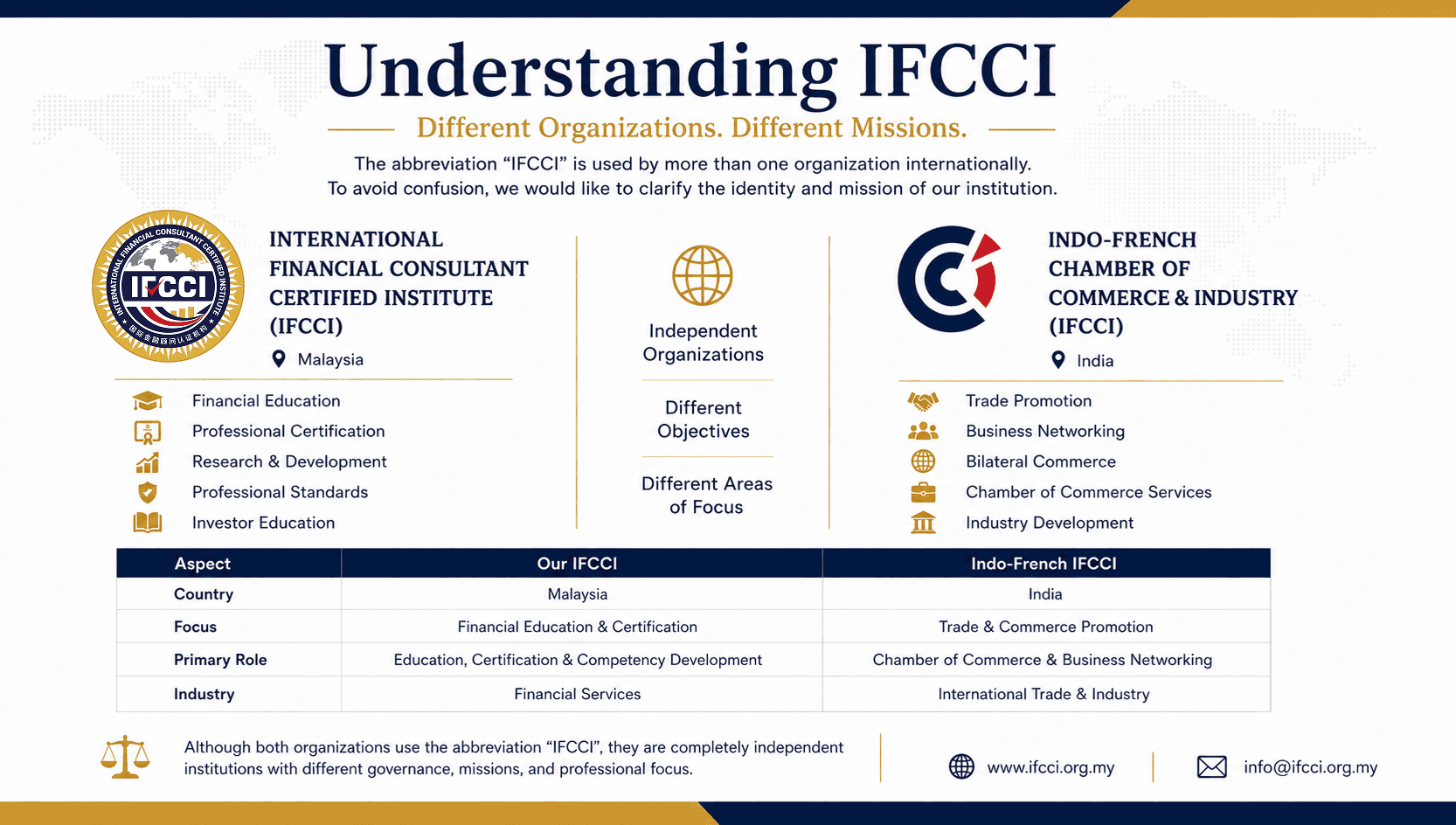
Understanding IFCCI: International Financial Consultant Certified Institute and Other Organizations Using the IFCCI Acronym
27 Jul 2026

Why International Financial Skills Championships Matter in Developing Global Financial Excellence
13 Jul 2026