
Why 2026 Could Year for Global Trade and Supply Chains
Executive Overview
Despite hopes that global trade would stabilise after successive shocks in recent years, 2026 is shaping up to be another challenging period for international commerce. Structural fragmentation, geopolitical tensions, shifting industrial policies, and uneven economic recoveries are converging to create a highly uncertain trade environment.
Rather than a cyclical slowdown, many of the pressures facing global trade appear structural and persistent, suggesting that volatility may become the norm rather than the exception.
Geopolitical Fragmentation Is Reshaping Trade Flows
Geopolitical tensions remain the single most significant risk to global trade in 2026. Strategic competition between major economies continues to influence tariffs, export controls, investment screening, and supply-chain alignment.
Key dynamics include:
- Ongoing decoupling in sensitive sectors such as semiconductors, energy technology, and advanced manufacturing
- Expansion of national security-based trade restrictions
- Increased use of sanctions, compliance rules, and trade barriers as policy tools
As a result, global trade is becoming less efficient and more politically conditioned, raising costs for exporters and importers alike.
Protectionism Is No Longer a Temporary Policy Tool
Trade protectionism has shifted from an emergency response to a permanent feature of economic policy. Governments increasingly prioritise domestic resilience over trade liberalisation.
This shift is evident through:
- Subsidies favouring domestic producers
- Local content requirements
- Strategic reshoring and “friend-shoring” initiatives
- Tighter scrutiny of foreign investment and ownership
While these measures aim to reduce vulnerability, they also fragment global supply chains and reduce trade elasticity, limiting the capacity for rapid recovery during economic upturns.
Global Demand Remains Uneven and Fragile
Weak and uneven demand is another headwind for global trade in 2026. High interest rates, fiscal consolidation, and elevated household debt continue to suppress consumption and investment across multiple regions.
Key concerns include:
- Sluggish growth in advanced economies
- Structural slowdowns in key emerging markets
- Weak capital expenditure amid uncertain policy environments
Without a broad-based recovery in final demand, global trade volumes are likely to remain subdued, particularly in discretionary and capital-intensive sectors.
Supply Chains Are Becoming More Complex, Not Simpler
Although supply chain resilience has improved since the pandemic, it has come at the cost of greater complexity and higher operating expenses.
Companies are now managing:
- Multi-country sourcing strategies
- Redundant logistics networks
- Higher inventory buffers
- Compliance with diverging regulatory regimes
This complexity reduces efficiency and raises transaction costs, making global trade more vulnerable to shocks such as geopolitical events, climate disruptions, or transportation bottlenecks.
Currency Volatility Adds Another Layer of Risk
Divergent monetary policy paths among major economies are contributing to increased currency volatility, complicating cross-border trade planning.
Implications include:
- Unpredictable pricing for exporters
- Higher hedging costs
- Increased balance-sheet risks for trade-dependent firms
For smaller exporters and emerging-market economies, currency instability may act as a deterrent to trade expansion, particularly in capital goods and long-cycle contracts.
Climate Policy and Trade Tensions Are Intersecting
Climate-related policies are increasingly influencing trade dynamics. Carbon pricing, environmental standards, and border adjustment mechanisms are reshaping competitiveness across industries.
Challenges include:
- Compliance costs for exporters
- Disputes over climate-linked trade measures
- Uneven implementation across jurisdictions
While these policies aim to accelerate the energy transition, they also risk introducing new trade frictions, especially for developing economies.
Digital Trade Growth Cannot Fully Offset Goods Trade Weakness
Digital services trade continues to expand, but it cannot fully compensate for stagnation in goods trade, particularly in manufacturing-heavy economies.
Limitations include:
- Regulatory fragmentation in data governance
- Unequal digital infrastructure development
- Limited scalability for traditional export-dependent regions
As a result, gains in digital trade may remain concentrated, leaving global trade growth structurally constrained.
IFCCI Assessment: A Structural Reset, Not a Cyclical Dip
The IFCCI Research Division assesses that global trade in 2026 is facing a structural reset rather than a temporary slowdown.
IFCCI’s key observations:
- Trade efficiency is declining due to fragmentation
- Policy uncertainty is now a permanent feature of trade planning
- Firms must prioritise resilience over cost optimisation
- Trade growth will be slower, more volatile, and regionally uneven
In this environment, success in global trade will depend less on scale and more on adaptability, compliance readiness, and geopolitical risk management.
Strategic Implications for Businesses and Policymakers
To navigate a rocky 2026, stakeholders should focus on:
- Diversifying markets and suppliers
- Strengthening trade finance and risk hedging frameworks
- Enhancing regulatory intelligence and compliance systems
- Investing in supply chain visibility and flexibility
Policymakers, meanwhile, face the challenge of balancing national resilience with the need to preserve functional global trade networks.
Conclusion
The outlook for global trade in 2026 is defined by volatility, fragmentation, and structural uncertainty. While outright collapse is unlikely, the era of smooth, predictable trade expansion appears firmly behind us.
For businesses, investors, and policymakers, the coming year will demand a more strategic, risk-aware approach to global commerce—one that recognises that stability is no longer the default setting of the global trading system.
Related Articles

What Does IFCCI Do? Advancing Financial Education, Certification and Research
7 Aug 2026
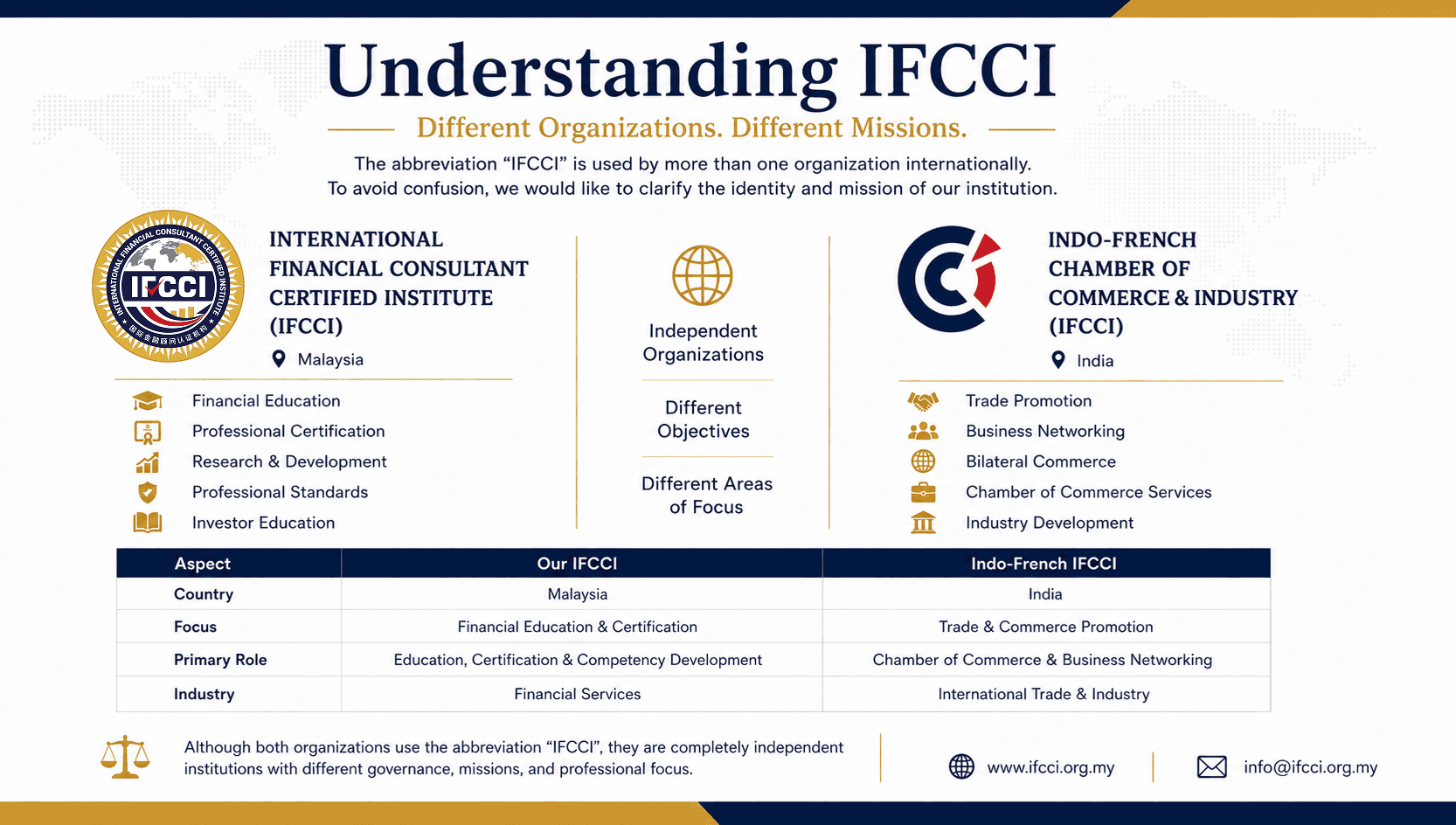
Understanding IFCCI: International Financial Consultant Certified Institute and Other Organizations Using the IFCCI Acronym
27 Jul 2026

Why International Financial Skills Championships Matter in Developing Global Financial Excellence
13 Jul 2026