
How Ethereum Went From a Teenager’s Dream to a Blockchain Giant
Ever wondered how the world’s second-largest cryptocurrency came to be?
Here’s the story of Ethereum — from a 19-year-old’s bold vision to a blockchain ecosystem now worth hundreds of billions of dollars.
In this (very important) history lesson, you’ll discover how a teenage programmer imagined a “world computer” that could run unstoppable applications, how a team of co-founders brought that dream to life, and how Ethereum survived early crises to revolutionize blockchain technology forever.
The Teen Genius with a Wild Idea (2013–2014)
Picture this: It’s 2013. While most 19-year-olds are figuring out college plans, Vitalik Buterin is busy inventing a new blockchain platform.
Already active in the Bitcoin community (he co-founded Bitcoin Magazine), Vitalik proposed adding more features to Bitcoin’s blockchain. When the core developers said “Nah, we’re good,” Vitalik did what any ambitious teenager would: he decided to build his own blockchain — one that supported smart contracts and decentralized apps.
He named it Ethereum, a term inspired by browsing Wikipedia’s science fiction pages. He liked “ether” — a mysterious substance once thought to fill the universe — which fit perfectly with his vision of a “world computer” that could run anything, everywhere.
Nothing screams “cutting-edge financial tech” like naming your billion-dollar project after a sci-fi concept you found online!
Building the Dream Team
Ethereum wasn’t a solo act. Vitalik assembled a group of like-minded visionaries — the original “first five” co-founders:
- Mihai Alisie, co-founder of Bitcoin Magazine
- Anthony Di Iorio, founder of the Toronto Bitcoin Meetup Group (TBMG)
- Amir Chetrit, previously working on the Colored Coins project
- Charles Hoskinson, founder of Cardano and former Bitcoin educator at TBMG
The team soon grew to eight, including:
- Gavin Wood, a computer scientist who read Ethereum’s whitepaper and joined to help develop the project’s vision and technical core. He created Solidity, the programming language that powers Ethereum smart contracts.
- Jeffrey Wilcke, an early blockchain developer known for Mastercoin.
- Joseph Lubin, who went on to found ConsenSys, the powerhouse behind MetaMask and other Ethereum tools.
Gavin Wood shifted Ethereum’s concept from “programmable money” to a general-purpose computing platform — basically, turning the blockchain into a worldwide computer.
In April 2014, he authored Ethereum’s technical specs, known as the Yellow Paper, famously crediting himself by name and leaving out the rest.
Launching the Vision: Raising Money and Building (2014–2015)
In January 2014, the team unveiled Ethereum at a Bitcoin conference in Miami — and promptly moved into a house together to hack code and debate blockchain philosophy (yes, that’s how crypto startups roll).
They needed funding, so they created a Swiss company and nonprofit foundation — because Switzerland + blockchain = trust, right?
They then launched one of crypto’s first big crowdsales in mid-2014: people sent Bitcoin in exchange for future Ethereum tokens — a network that didn’t even exist yet!
The gamble paid off: over 31,000 BTC (around $18 million back then) poured in, and 60 million ETH tokens were sold.
With this cash, the team built Ethereum clients in multiple programming languages (C++, Go, Python) to catch bugs early and keep the codebase strong.
“It’s Alive!” — Ethereum Goes Live (2015)
After a year of hard work (and countless cups of coffee), Ethereum launched its first live version, Frontier, on July 30, 2015.
This was a bare-bones, developer-focused release — basically a “please excuse the dust” phase — but it worked.
Miners began earning ether, and developers deployed smart contracts on a live blockchain. The floodgates for innovation were open.
The DAO Disaster: $50 Million Gone (2016)
Ethereum’s first big test came in 2016 with The DAO — a decentralized venture fund that raised $150 million in ETH.
Instead of being managed by people, The DAO was run by smart contracts. What could go wrong?
Well, in June 2016, a hacker exploited a code flaw and drained around $50 million worth of ETH.
This sparked intense debate: “Is code law, or can we intervene?”
The community voted to hard fork Ethereum’s blockchain to undo the theft. This split the network in two:
- The majority adopted the new, hacked-funds-reversed chain (today’s Ethereum or ETH)
- A smaller group stuck with the original chain, including the hack, now called Ethereum Classic (ETC)
Blockchain drama, blockchain soap opera.
When Kitties Broke the Network (2017–2018)
Ethereum’s breakout moment arrived during the ICO boom of 2017, when projects flocked to the platform to raise millions.
But the real headline grabber was CryptoKitties, a game where users collected and bred digital cats on the blockchain.
So popular, these virtual felines nearly crashed the entire Ethereum network, causing congestion and skyrocketing transaction fees.
If digital cats could jam the system, serious financial apps had big scaling problems ahead.
Scaling Up: The Road to Ethereum 2.0 (2018–2021)
Recognizing the growing pains, Ethereum’s developers embarked on the massive overhaul called Ethereum 2.0.
The goals? Replace energy-hungry proof-of-work mining with efficient proof-of-stake validation, and add sharding to handle many transactions simultaneously.
Progress was slow but steady. In December 2020, they launched the Beacon Chain, a test network running proof-of-stake parallel to the main chain.
It allowed users to stake ETH and become validators — but didn’t yet handle actual transactions. Think of it as building a new engine next to a running car.
The Merge: Goodbye Mining, Hello Proof of Stake (2022)
On September 15, 2022, Ethereum completed The Merge, swapping its consensus mechanism from proof-of-work to proof-of-stake — without missing a beat.
This major upgrade cut Ethereum’s energy use by over 99% — going from “small country” level electricity consumption to that of a modest office building.
The transition was smooth, and the community celebrated with memes (because of course).
Life After The Merge: More Upgrades and Scaling (2023–Present)
In April 2023, the Shanghai upgrade finally let stakers withdraw their locked ETH — no more “Hotel California” where you check in but never leave.
More recently, Ethereum introduced the Dencun upgrade (March 2024), featuring “proto danksharding” — yes, blockchain developers have a quirky sense of humor.
This innovation improves Layer 2 solutions like rollups, making transactions cheaper and faster.
Looking ahead, Ethereum is still evolving — with full sharding and other enhancements on the roadmap.
From a Teenager’s Whitepaper to a Blockchain Titan
From Vitalik’s teenage vision of a “world computer” to an ecosystem worth hundreds of billions, Ethereum’s journey has been a wild ride full of innovation, setbacks, and reinvention.
And true to crypto tradition, it’s still “almost done” with its next big upgrade.
Related Articles

What Does IFCCI Do? Advancing Financial Education, Certification and Research
7 Aug 2026
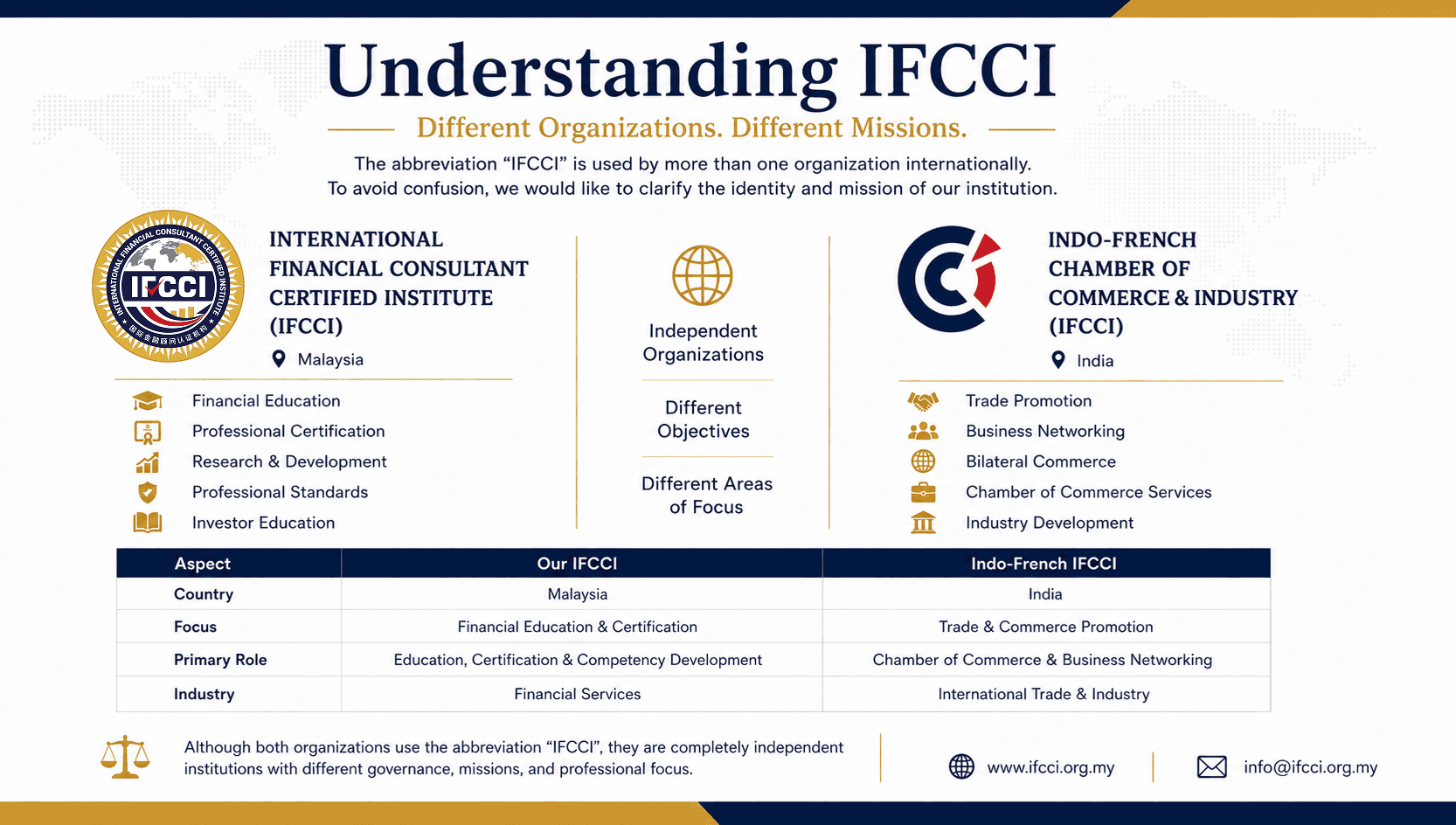
Understanding IFCCI: International Financial Consultant Certified Institute and Other Organizations Using the IFCCI Acronym
27 Jul 2026

Why International Financial Skills Championships Matter in Developing Global Financial Excellence
13 Jul 2026