
In the simplest terms: money—specifically, currencies.
Since there’s no physical product being exchanged, forex trading can seem a bit abstract. A helpful (though imperfect) analogy is to think of buying a currency like buying shares in a country. Just as company shares reflect a firm’s value, currency values reflect the market’s sentiment on a country’s current and future economic outlook.
For example, when you buy the Japanese yen (JPY), you’re essentially investing in Japan’s economy. You’re betting that its economy is strong—or will strengthen over time. When you later sell the yen, your goal is to profit from favorable movements in its exchange rate.

In general, a currency’s exchange rate compared to others reflects the relative health and performance of its economy.
By the time you complete your forex education, you’ll be ready to navigate the world of currency trading with confidence.
Major Currencies
Although there are many currencies in the world, beginner forex traders usually start with the major currencies—the most actively traded and linked to the world’s largest economies.
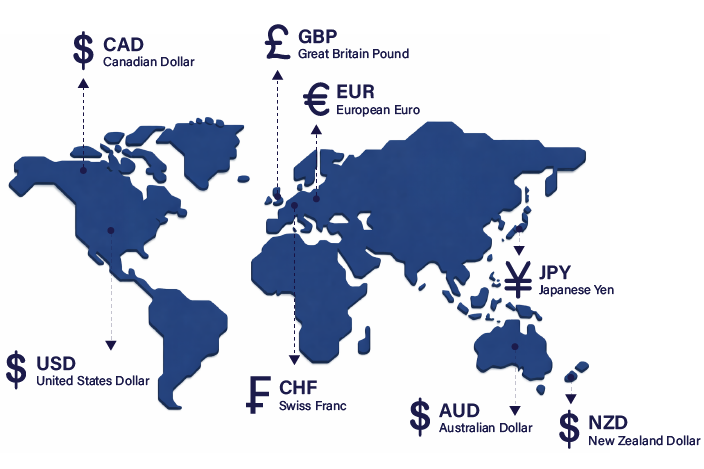
There’s some debate over which currencies are considered “majors.” Conservative traders often limit the list to:
- USD – United States Dollar (Buck)
- EUR – Eurozone Euro (Fiber)
- JPY – Japanese Yen (Yen)
- GBP – British Pound (Cable)
- CHF – Swiss Franc (Swissy)
Others include these three commodity currencies due to their strong ties to global commodity markets:
- AUD – Australian Dollar (Aussie)
- NZD – New Zealand Dollar (Kiwi)
- CAD – Canadian Dollar (Loonie)
For simplicity, we treat all eight as the “majors.”
Currency Codes
Currency symbols are always three letters. The first two typically represent the country, while the third indicates the currency name—usually the first letter of that currency.
These are known as ISO 4217 currency codes, standardized in 1973 by the International Organization for Standardization (ISO).
For example:
- NZD = NZ (New Zealand) + D (Dollar)
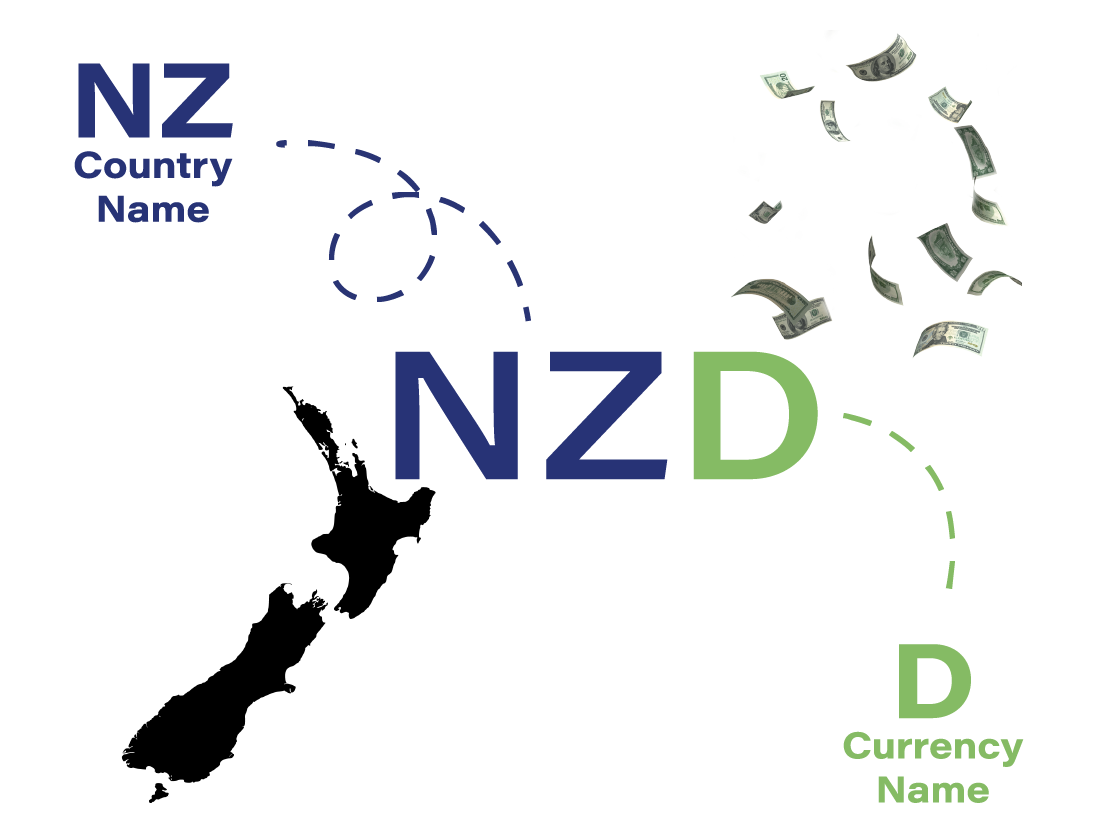
Simple, right?
These “majors” dominate global forex trading due to their liquidity, stability, and economic influence.
Related Articles

What Does IFCCI Do? Advancing Financial Education, Certification and Research
7 Aug 2026
Understanding IFCCI: International Financial Consultant Certified Institute and Other Organizations Using the IFCCI Acronym
27 Jul 2026

Why International Financial Skills Championships Matter in Developing Global Financial Excellence
13 Jul 2026