
What Is Bitcoin?
Well, that depends on who you ask.
If you asked Warren Buffett, he’d probably say it’s “rat poison squared.” (Even though he later backed a digital bank focused on crypto… ironic, right?)
Unless you’ve been completely off the grid—or too busy binge-watching Netflix—you’ve definitely heard of Bitcoin by now.
Bitcoin: The Original Cryptocurrency
Bitcoin is often referred to as the first cryptocurrency—the one that started it all.
It’s a new form of money. A digital currency that allows people to store, send, and receive value online—without banks or traditional financial intermediaries.
Unlike fiat currencies (like the U.S. dollar or British pound), Bitcoin isn’t issued or controlled by any government or central bank. Instead, it runs on code—rules programmed into software.
The Mysterious Creator: Satoshi Nakamoto
Bitcoin was introduced in 2008 by someone (or some group) using the alias Satoshi Nakamoto.
To this day, no one knows who Satoshi really is.
Could be a man, a woman, a team of coders, or even a highly advanced space alien. 👽 No one knows for sure. So I like to call Satoshi the “Bitcoin God.”
What we do know is that on October 31, 2008, Satoshi published a whitepaper titled:
“Bitcoin: A Peer-to-Peer Electronic Cash System.”
This 12-page document outlined how Bitcoin would work and introduced the core ideas behind the technology.
Whitepaper: A document explaining a crypto project’s purpose, technology, and how it operates.
The Birth of Bitcoin
In January 2009, the first version of Bitcoin’s software (v0.1) was released on a cryptography mailing list.
Bitcoin’s code limited its total supply to 21 million coins, which are created through a process called mining—a digital competition where computers solve puzzles, and winners are rewarded with new bitcoins.
As of now, over 19 million bitcoins have already been mined, with the final one expected around the year 2140.
Bitcoin vs. Traditional Money
Unlike traditional currencies, which central banks can print endlessly, Bitcoin has a hard cap. This built-in scarcity is one of the key reasons many believe it has value.
Satoshi also made Bitcoin open-source, meaning anyone can view or contribute to the code. Much like Wikipedia, Bitcoin is maintained by a global group of volunteers and developers.
Then, in April 2011, Satoshi sent a final message:
“I’ve moved on to other things.”
And just like that… he disappeared.
No dramatic farewell. No spotlight. Just poof. Gone.
Bitcoin Without Satoshi
Even without its creator, Bitcoin didn’t die—it thrived.
Today, more than a decade later, Bitcoin continues to operate around the world, allowing people to send and receive digital currency without needing banks or middlemen.
A Brief History of Bitcoin’s Price
Bitcoin didn’t start out worth much. In October 2009, you could buy 1,309 BTC for $1. 🤯
But things changed quickly:
- Feb 10, 2011 – 1 BTC = $1
- Mar 31, 2013 – BTC hits $100
- Nov 28, 2013 – Breaks $1,000
- Nov 29, 2017 – Surpasses $10,000
- Nov 2021 – Reaches $68,000
- Mar 2024 – Surpasses $75,000
- Dec 4, 2024 – Breaks $100,000
And after Donald Trump won the 2024 U.S. election, crypto mania returned, pushing Bitcoin even higher.
Satoshi’s Billion-Dollar Wallet
Here’s the kicker:
Satoshi Nakamoto still owns over 1 million BTC.
Yet none of it has ever been touched.
Clearly, getting rich wasn’t the point of creating Bitcoin.
What’s Next?
In the next lesson, we’ll explore why Bitcoin was created—and the problems it was designed to solve.
Related Articles

What Does IFCCI Do? Advancing Financial Education, Certification and Research
7 Aug 2026
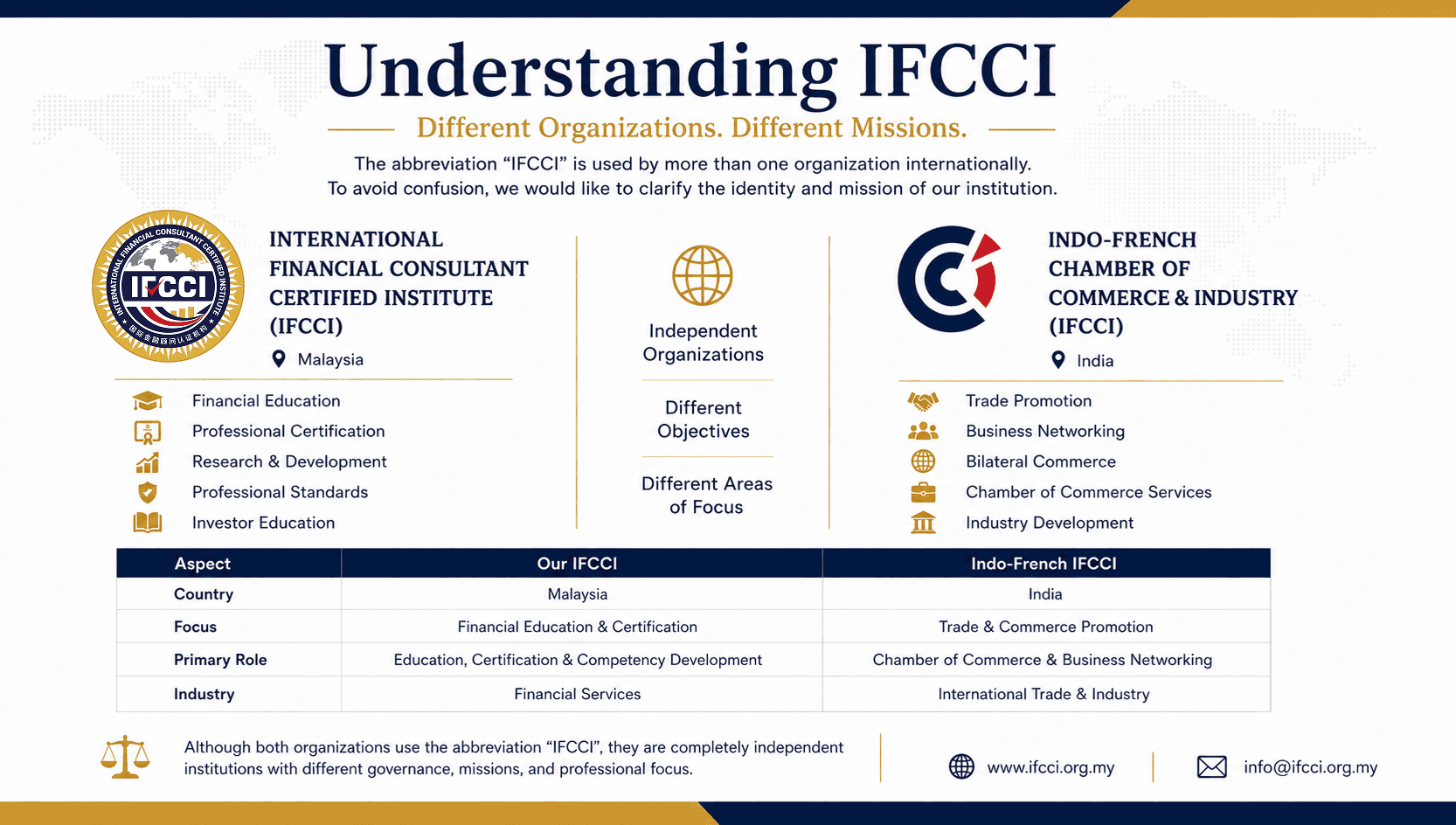
Understanding IFCCI: International Financial Consultant Certified Institute and Other Organizations Using the IFCCI Acronym
27 Jul 2026

Why International Financial Skills Championships Matter in Developing Global Financial Excellence
13 Jul 2026