
WEF Flags Economic Downturn, and Bubble Risks for Malaysia
WEF flags economic downturn, inflation, asset bubbles as key risks for Malaysia
The World Economic Forum (WEF) has identified economic slowdown risks, persistent inflationary pressures and the build-up of asset price bubbles as key vulnerabilities facing Malaysia, underscoring the need for sustained policy vigilance and structural resilience.
Macroeconomic risks remain elevated
In its latest regional risk assessment, the WEF noted that while Malaysia’s economic fundamentals remain relatively sound, external headwinds and domestic imbalances could pose challenges over the medium term. Slower global growth, particularly in major trading partners, may weigh on export performance and investment sentiment.
The forum cautioned that Malaysia’s open and trade-dependent economy leaves it exposed to shifts in global demand, financial market volatility and geopolitical uncertainty.
Inflation pressures still a concern
Despite signs of easing price pressures globally, the WEF warned that inflation risks in Malaysia remain uneven, particularly from supply-side factors such as food costs, energy prices and currency movements. These pressures could erode household purchasing power if left unchecked.
The report highlighted that managing inflation expectations will be critical to sustaining domestic consumption and maintaining macroeconomic stability.
Asset bubble risks under scrutiny
The WEF also flagged the potential formation of asset price bubbles, especially in segments where liquidity conditions have remained accommodative for extended periods. Elevated valuations in selected property and financial asset markets could pose risks to financial stability if market corrections occur abruptly.
Authorities were urged to closely monitor leverage levels and speculative activity, while ensuring prudential safeguards remain robust.
Policy discipline and reforms key to resilience
According to the WEF, Malaysia’s ability to navigate these risks will depend on maintaining prudent fiscal management, safeguarding monetary policy credibility and accelerating structural reforms. Enhancing productivity, diversifying growth drivers and strengthening social safety nets were cited as priorities to bolster long-term resilience.
The forum added that coordinated policy responses and clear communication would be essential in preserving investor confidence amid an increasingly uncertain global environment.
Outlook
While the near-term outlook remains manageable, the WEF stressed that proactive risk management will be crucial to prevent cyclical pressures from evolving into systemic challenges. Malaysia’s policy flexibility and reform momentum will play a decisive role in shaping economic outcomes in the years ahead.
Related Articles

What Does IFCCI Do? Advancing Financial Education, Certification and Research
7 Aug 2026
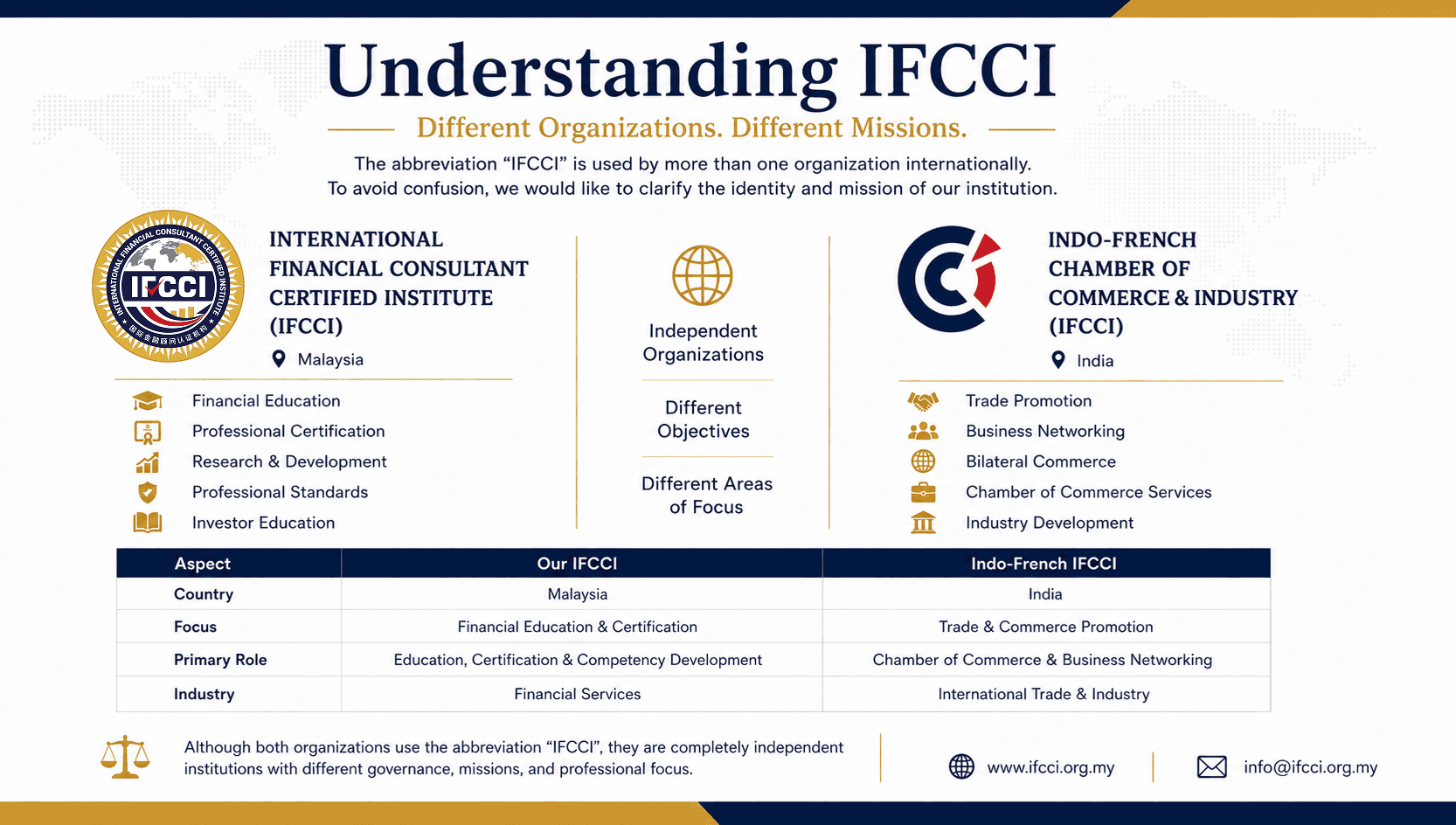
Understanding IFCCI: International Financial Consultant Certified Institute and Other Organizations Using the IFCCI Acronym
27 Jul 2026
Why International Financial Skills Championships Matter in Developing Global Financial Excellence
13 Jul 2026