
Weekly Global Economic and Market Outlook: Policy, Inflation
Global Growth: Resilient but Uneven
This week’s data reinforced a familiar theme: global growth remains resilient, though uneven across major regions.
- The United States continues to display steady consumer demand, though momentum is moderating.
- Europe faces slower industrial activity amid soft external demand.
- Asia shows mixed performance, with export-sensitive economies adjusting to global trade conditions.
Leading indicators suggest expansion persists, but at a more sustainable pace compared with earlier post-pandemic rebounds.
Inflation: Stabilising but Not Fully Normalised
Inflation trends remain central to market pricing.
- Headline inflation across advanced economies continues to moderate gradually.
- Core services inflation remains stickier than goods inflation.
- Commodity prices are relatively stable, limiting fresh cost-push pressures.
Markets are increasingly pricing a “higher-for-longer” rate environment rather than renewed tightening.
Central Bank Signals: Data Dependence Dominates
Central banks globally continue to emphasise flexibility and data dependency.
- The Federal Reserve maintains a cautious stance, awaiting clearer disinflation confirmation.
- The European Central Bank balances weak growth against persistent services inflation.
- The Bank of Japan remains in gradual normalisation mode.
Forward guidance suggests limited appetite for aggressive policy shifts absent material data surprises.
Equity Markets: Range-Bound Optimism
Global equities traded within narrow ranges this week, reflecting:
- Stable earnings expectations
- Moderating inflation concerns
- Sensitivity to rate outlook shifts
Technology and AI-linked sectors continue to attract capital, though valuations remain closely tied to bond yield movements.
Fixed Income: Yield Consolidation Phase
Government bond yields have entered a consolidation phase:
- Real yields remain positive in most developed markets.
- Curve steepening pressures appear limited.
- Credit spreads remain contained, signalling stable risk appetite.
Bond markets are increasingly anchored to inflation expectations rather than growth shocks.
Commodities and Currencies
- Oil prices remain sensitive to geopolitical developments but broadly range-bound.
- Gold trades in response to real yield and dollar dynamics.
- The US dollar remains firm but not decisively trending, reflecting balanced global positioning.
Currency volatility has moderated relative to previous quarters.
Digital Assets: Selective Accumulation
Crypto markets exhibit cautious accumulation rather than speculative expansion.
- Institutional flows remain measured.
- Derivatives positioning is balanced.
- Volatility metrics are subdued relative to prior cycles.
Digital assets continue to behave as liquidity-sensitive risk instruments.
Key Risks Ahead
The coming weeks will be shaped by:
- Inflation releases in major economies
- Central bank communication updates
- Geopolitical developments
- Corporate earnings guidance revisions
Markets remain particularly sensitive to any deviation from expected policy trajectories.
IFCCI Assessment: Stability with Conditional Risks
The IFCCI Research Division assesses that the global macro environment remains broadly stable but vulnerable to data-driven repricing.
Key conclusions:
- Growth is moderating, not contracting
- Inflation is easing, not accelerating
- Policy tightening cycles are largely complete
- Volatility risk persists if macro surprises emerge
Cross-asset correlations suggest markets are positioned for gradual normalisation rather than disruption.
Conclusion
This week’s global economic and market developments point to continued stabilisation across major asset classes. While structural risks remain, current conditions favour range-bound trading and selective allocation strategies.
Investors will remain focused on inflation data, central bank signals, and geopolitical developments as key drivers of the next directional move.
Related Articles

What Does IFCCI Do? Advancing Financial Education, Certification and Research
7 Aug 2026
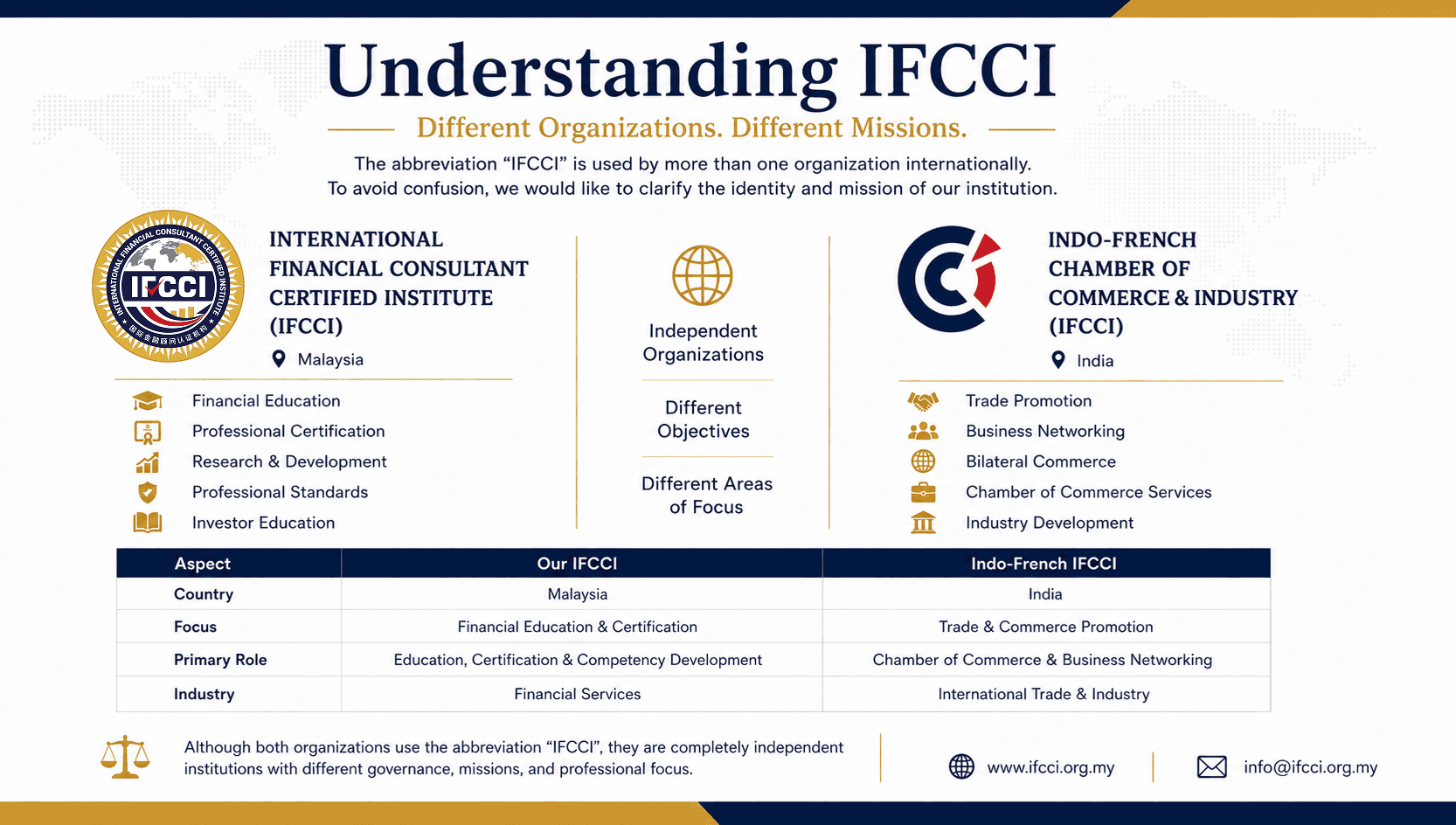
Understanding IFCCI: International Financial Consultant Certified Institute and Other Organizations Using the IFCCI Acronym
27 Jul 2026

Why International Financial Skills Championships Matter in Developing Global Financial Excellence
13 Jul 2026