
Waller: Technological Advancements Reshaping Payments 2025
Waller: Technological Advancements in Payments
Introduction: Payments at the Crossroads of Technology and Policy
In a rapidly evolving financial landscape, Federal Reserve Governor Christopher Waller has underscored the growing importance of technological advancements in payments. His remarks come at a time when digital transactions are reshaping consumer behavior, financial intermediation, and central bank policy frameworks.
From real-time payments and blockchain innovation to central bank digital currencies (CBDCs) and AI-driven fraud detection, Waller emphasized that the future of payments will be defined by innovation, but also by the ability of regulators to safeguard stability and trust.
Section 1: Why Payments Technology Matters
Payments are the lifeblood of the global economy. Every economic transaction — from household purchases to cross-border trade — depends on efficient, reliable, and secure payment systems.
Historically, cash and traditional banking rails dominated. Today, however, technology has expanded the landscape:
- Digital wallets such as Apple Pay, GrabPay, and Alipay have mainstreamed mobile payments.
- Blockchain technology promises faster and cheaper cross-border settlement.
- Instant payment systems such as FedNow in the U.S. and DuitNow in Malaysia highlight the global shift to 24/7 availability.
According to Waller, the intersection of policy, technology, and market forces will determine whether these advancements deliver efficiency while mitigating risks.
Section 2: Key Technological Advancements Highlighted
1. Real-Time and Instant Payments
- FedNow (U.S.) and RTP (Real-Time Payments Network) have transformed domestic transfers.
- Benefits: instant settlement, lower counterparty risks, and enhanced consumer convenience.
- Challenges: ensuring interoperability and preventing fraud.
2. Blockchain and Distributed Ledger Technology (DLT)
- Potential to disrupt correspondent banking by enabling near-instant cross-border settlement.
- Waller acknowledged both the promise and limitations: scalability, regulatory compliance, and volatility in crypto-backed settlement models.
3. Central Bank Digital Currencies (CBDCs)
- CBDCs are being tested globally, from China’s digital yuan to Europe’s digital euro.
- Waller stressed that while the U.S. remains cautious, technological feasibility studies continue.
- Key policy question: balancing innovation with financial stability and privacy.
4. Artificial Intelligence in Fraud Detection
- AI and machine learning tools are already reducing payment fraud by analyzing transaction patterns.
- However, risks of algorithmic bias and cyber vulnerabilities require continuous oversight.
Section 3: Policy Implications
Waller’s remarks carried an important message: technological advancements must align with central banking goals of stability, efficiency, and trust.
- Financial Inclusion
- Digital payments can improve access to financial services in underserved communities.
- Regulators must ensure affordability and universal access.
- Consumer Protection
- As digital wallets and peer-to-peer apps expand, fraud risks rise.
- Waller stressed strong consumer protection frameworks.
- Cross-Border Collaboration
- Payments innovation is global by nature.
- International cooperation is crucial to avoid fragmentation and regulatory arbitrage.
Section 4: The Competitive Landscape
The payments industry is no longer dominated solely by banks. Tech firms, fintechs, and crypto innovators have entered aggressively.
- Big Tech: Apple, Google, Tencent, and Grab are major players in mobile payments.
- Fintech Startups: Stripe, Revolut, and Wise are redefining transaction efficiency.
- Crypto & Stablecoins: Stablecoins such as USDC and Tether are already used for international settlements.
Waller noted that central banks must adapt quickly to ensure public trust while allowing innovation to flourish.
Section 5: Risks and Challenges Ahead
While technological advancements are promising, risks remain:
- Cybersecurity Threats
- Payment systems are frequent targets of cyberattacks.
- Strong infrastructure and AI-driven monitoring are essential.
- Regulatory Fragmentation
- Divergent national regulations could limit global interoperability.
- Harmonization efforts (e.g., BIS projects) are vital.
- Financial Stability Concerns
- Large-scale adoption of stablecoins or private digital currencies could undermine central bank control.
- Policymakers must strike a balance between innovation and systemic safety.
Section 6: The Road Ahead
According to Waller, the future of payments will likely be hybrid:
- CBDCs may coexist with private stablecoins.
- Instant payments will become the global standard.
- AI-powered security layers will be integral to fraud prevention.
For central banks, the challenge is embracing innovation without compromising trust — a delicate balancing act that will shape monetary systems for decades.
Conclusion: Payments in Transition
Technological advancements in payments are no longer optional — they are transforming how money moves in real time, across borders, and across platforms.
As Waller emphasized, central banks and regulators must keep pace with innovation to ensure that efficiency gains do not come at the expense of stability.
For investors, fintech innovators, and policymakers alike, the message is clear: payments technology is not just a back-end system — it is a frontline driver of economic transformation.
Related Articles

What Does IFCCI Do? Advancing Financial Education, Certification and Research
7 Aug 2026
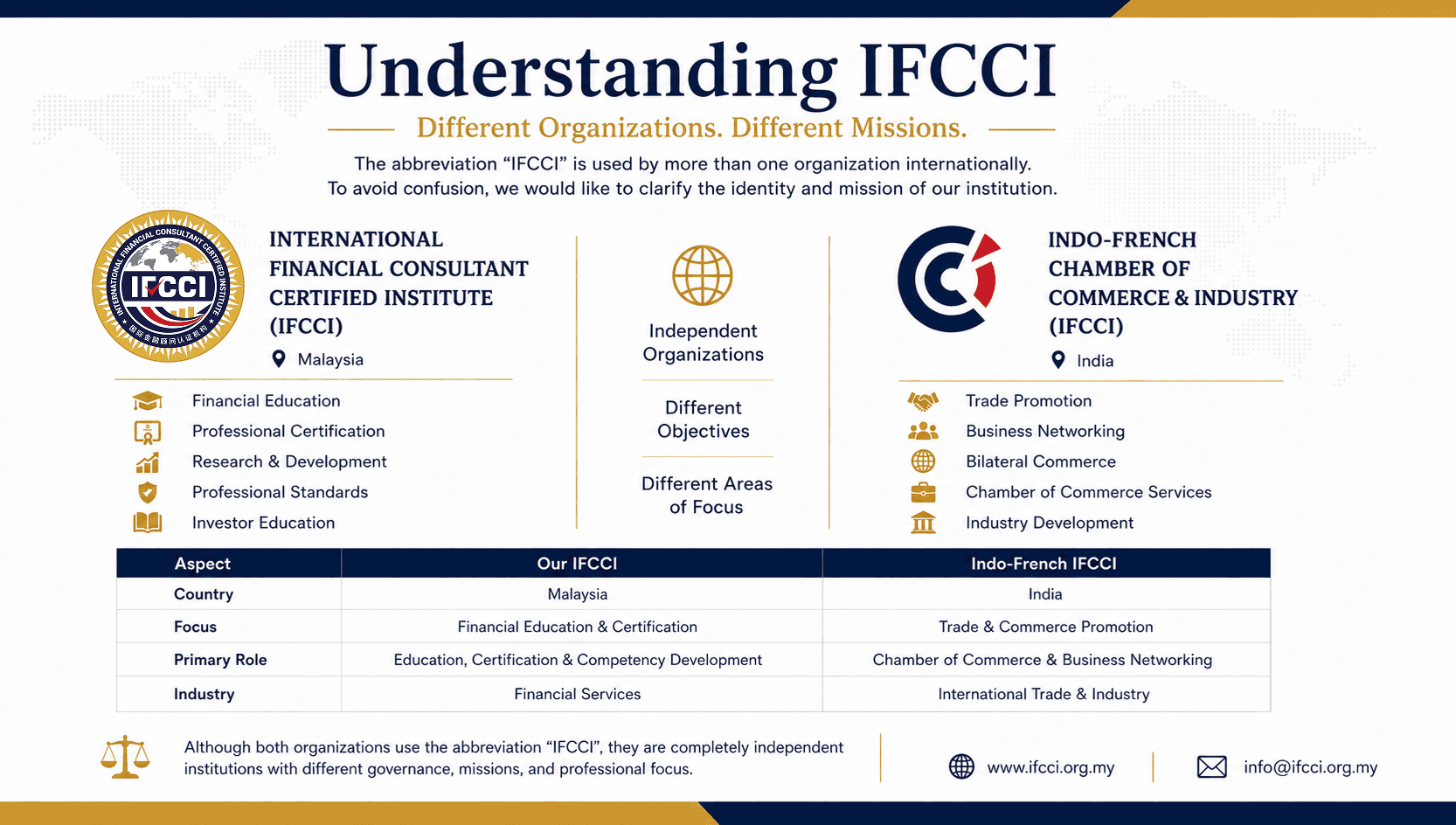
Understanding IFCCI: International Financial Consultant Certified Institute and Other Organizations Using the IFCCI Acronym
27 Jul 2026

Why International Financial Skills Championships Matter in Developing Global Financial Excellence
13 Jul 2026