
US Tariff Uncertainty Deepens Economic
With US Tariff Rates Up in the Air, the Economic Fog Again Thickens
Uncertainty surrounding US tariff rates has reintroduced a layer of economic ambiguity, clouding business planning, trade flows and investment decisions at a time when global growth momentum remains fragile.
With tariff structures subject to legal review, political recalibration and potential executive adjustment, corporate decision-makers are once again facing limited visibility on input costs, supply chain strategies and pricing dynamics.
Policy Ambiguity and Market Confidence
Tariffs function not merely as fiscal tools but as structural signals influencing capital allocation and cross-border trade. When rates remain unsettled, firms delay expansion plans, adjust sourcing strategies and widen risk premiums.
Economists note that policy uncertainty can weigh on manufacturing output and corporate investment more significantly than the tariff levels themselves. The absence of clarity tends to suppress forward guidance, dampen merger activity and restrain hiring plans.
Supply Chain Recalibration Risks
Multinational firms that previously diversified production bases in response to earlier trade tensions now face renewed strategic dilemmas. If tariff rates fluctuate or legal authority shifts, companies may hesitate to commit to long-term relocation or reshoring decisions.
The result is a “wait-and-see” environment, where capital expenditure is deferred and inventory management becomes more defensive.
Inflation and Monetary Policy Implications
Tariff adjustments have potential second-round effects on consumer prices and inflation expectations. Should rates rise materially, input costs could feed into producer prices and retail inflation, complicating the policy calculus for central banks.
Conversely, tariff rollbacks could modestly ease price pressures but may not immediately restore business confidence if broader geopolitical uncertainty persists.
Market Reaction
Financial markets have reflected cautious positioning, with equities and currencies responding more to shifts in policy expectations than to confirmed tariff changes. Volatility tends to increase when trade policy signals lack coherence or durability.
Bond markets, in particular, remain sensitive to the potential inflationary impact of tariff revisions, while export-oriented sectors are monitoring margin exposure.
Outlook
Until clearer guidance emerges on the trajectory of US tariff rates, economic visibility is likely to remain constrained. Businesses and investors alike must navigate a landscape defined less by concrete measures and more by policy probability.
In such an environment, risk management frameworks, liquidity preservation and supply chain flexibility become paramount — as the economic fog thickens once again.
Related Articles

What Does IFCCI Do? Advancing Financial Education, Certification and Research
7 Aug 2026
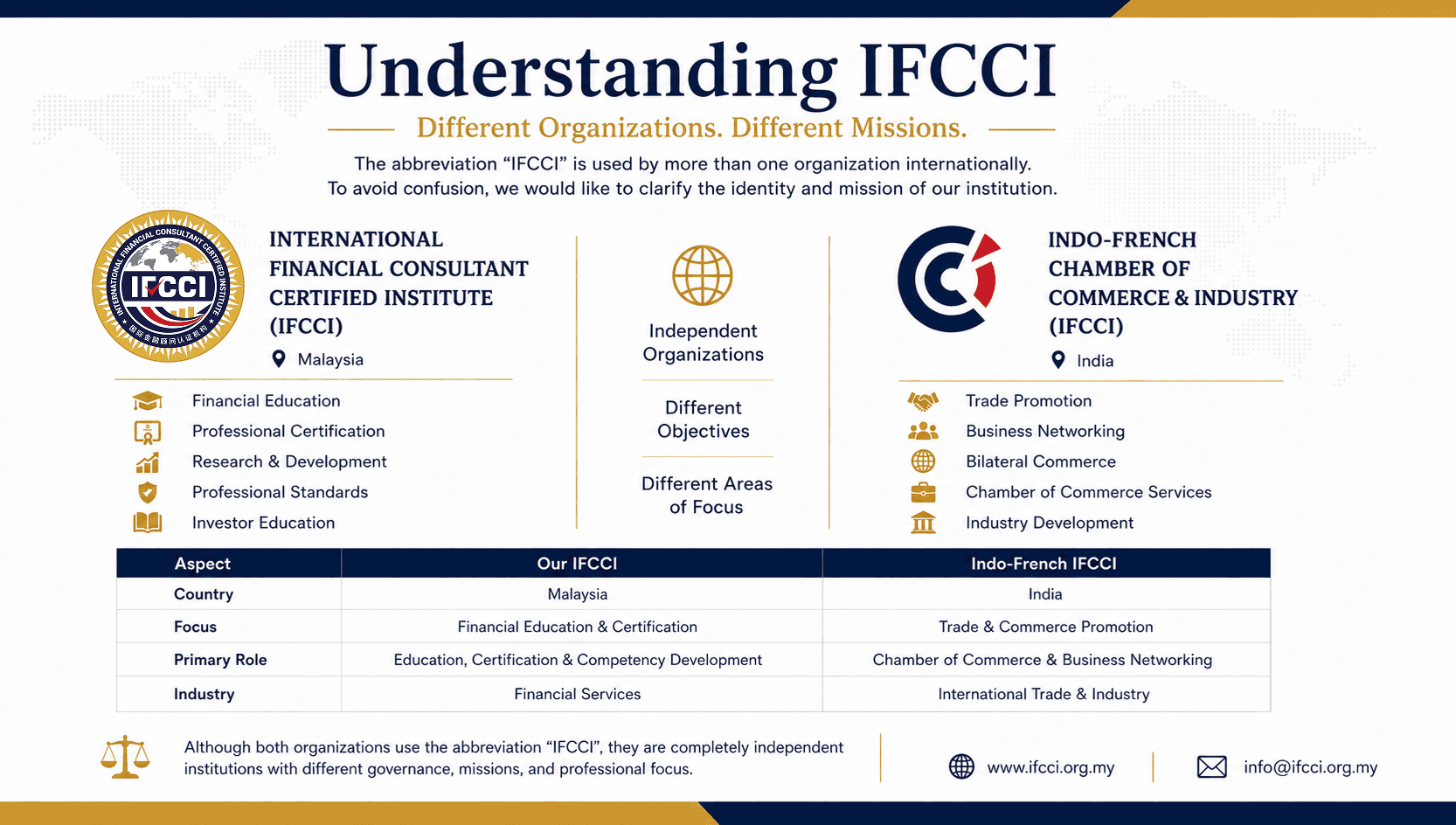
Understanding IFCCI: International Financial Consultant Certified Institute and Other Organizations Using the IFCCI Acronym
27 Jul 2026

Why International Financial Skills Championships Matter in Developing Global Financial Excellence
13 Jul 2026