
US Consumer Sentiment Slips as Inflation Fears Grow
US Consumer Sentiment Falls as Inflation Expectations Climb
Consumer Confidence Weakens in a Shifting Economic Landscape
The U.S. economy continues to send mixed signals as consumer sentiment took a sharp downturn in August 2025. According to the latest University of Michigan Consumer Sentiment Index, confidence among American households slipped for the second consecutive month, largely reflecting rising concerns over inflation expectations and persistent uncertainty about monetary policy.
The headline index dropped to 64.8, down from July’s 68.5, signaling that consumers remain wary of both short-term financial pressures and long-term cost-of-living trends. At the same time, inflation expectations for the year ahead climbed to 3.3%, up from 2.9% in July, reflecting household anxiety about sticky price pressures in housing, healthcare, and services.
Why Consumer Sentiment Matters for the US Economy
Consumer sentiment is more than just a survey number—it acts as a forward-looking barometer of household confidence in the economy. Roughly 70% of U.S. GDP is driven by consumer spending, meaning that sustained weakness in sentiment can directly affect retail sales, housing demand, and overall economic growth.
A decline in confidence often precedes:
- Reduced discretionary spending – Households cut back on non-essential goods and services.
- Increased savings behavior – Families hold more cash, waiting for “better times.”
- Debt repayment prioritization – Credit utilization slows as households shift toward balance sheet repair.
For financial advisors and wealth managers, these shifts have major implications when designing portfolio allocation strategies and preparing clients for heightened volatility.
Inflation Expectations: The Key Variable
One of the most closely watched components of the University of Michigan survey is inflation expectations. Rising expectations often create a self-fulfilling cycle: if consumers expect higher prices, they adjust their behavior by demanding higher wages or advancing purchases—both of which can reinforce inflation.
In August 2025:
- 1-year inflation expectations rose to 3.3%, above the Federal Reserve’s comfort zone.
- 5-year inflation expectations edged higher to 3%, signaling concerns that elevated prices are becoming entrenched.
This divergence creates a challenge for policymakers. While headline CPI inflation has moderated compared to 2022–2023 peaks, core services inflation—particularly in healthcare, housing rents, and education—remains sticky.
Federal Reserve’s Balancing Act
The Federal Reserve remains data-dependent as it weighs whether to hold, hike, or cut interest rates. While the Fed has already slowed the pace of rate increases, persistent inflation expectations may complicate any dovish pivot.
Economists highlight three possible scenarios:
- Soft Landing – The Fed maintains rates, inflation cools gradually, and growth stabilizes.
- Sticky Inflation – Higher-for-longer interest rates remain necessary, weighing on corporate and household borrowing.
- Policy Error Risk – If the Fed tightens too aggressively, consumer spending may contract, risking a mild recession.
For financial advisors, understanding these scenarios is essential to client communication. IFCCI recommends linking portfolio strategies to macro risk indicators such as Fed guidance, CPI reports, and global commodity price movements.
(Authority links: Federal Reserve, CFA Institute research on inflation)
Sector Implications for Investors
The latest sentiment data carries sector-specific consequences:
- Retail & Consumer Discretionary: Lower confidence may weigh on earnings, particularly in apparel, leisure, and travel.
- Housing & Mortgages: Rising inflation expectations combined with high mortgage rates may delay home purchases.
- Precious Metals: Gold and silver could benefit as defensive assets amid inflation anxiety.
- Bonds: Treasury yields may remain volatile as markets recalibrate Fed expectations.
- Equities: Defensive sectors like utilities and healthcare may attract rotation as consumer-facing industries soften.
(Authority links: World Gold Council, SIFMA)
Global Ripple Effects
The U.S. consumer remains a pillar of global demand. Weakening sentiment in the world’s largest economy could trigger spillover effects across Asia, Europe, and emerging markets.
- Asia (Singapore, Malaysia, Greater China): Export-driven economies may feel demand slowdowns in electronics and consumer goods.
- Europe: Already grappling with sluggish growth, the EU could face additional pressure if U.S. demand weakens.
- Emerging Markets: Capital outflows could accelerate if Fed policy stays restrictive, raising financing costs for sovereign debt.
(Authority links: IMF World Economic Outlook, World Bank Global Economic Prospects)
Strategic Guidance for Advisors
In light of declining U.S. sentiment, IFCCI recommends the following tactical allocation strategies:
- Short-Term Investors: Consider trimming exposure to high-beta equities while hedging through defensive assets.
- Long-Term Investors: Maintain diversified allocations, with 5–10% in inflation hedges such as gold or REITs.
- Institutional Portfolios: Stress-test assumptions for consumer demand in earnings models and credit risk assessments.
Implications for Asian & IFCCI-Certified Advisors
For financial advisors in Asia, particularly in Malaysia and Singapore, understanding U.S. consumer sentiment is critical. IFCCI-certified consultants are trained to incorporate global macroeconomic indicators into local advisory practices, ensuring that clients receive globally informed, regionally relevant advice.
For example:
- Malaysian advisors may emphasize currency hedging strategies as U.S. dollar strength persists.
- Singaporean advisors may focus on cross-border investment planning, balancing U.S. exposure with ASEAN opportunities.
(Authority links: FPAM Malaysia, IBF Singapore)
Expert Consensus: Caution, Not Panic
While the dip in consumer sentiment signals near-term caution, most analysts—including those at UBS, CFA Institute, and IFCCI Research—agree that the U.S. economy is not facing imminent recession. Instead, investors should view this as a signal to rebalance portfolios and prepare for volatility rather than retreat entirely from risk assets.
Conclusion
The August downturn in U.S. consumer sentiment underscores the importance of monitoring both household psychology and inflation expectations. For financial professionals, this data provides a timely reminder that economic resilience is closely tied to consumer behavior.
The optimal strategy? Stay balanced, stay diversified, and stay informed.
Through IFCCI’s global certification and financial education framework, advisors can transform uncertainty into opportunity—delivering guidance that bridges macroeconomic insight with client-focused solutions.
Related Articles

What Does IFCCI Do? Advancing Financial Education, Certification and Research
7 Aug 2026
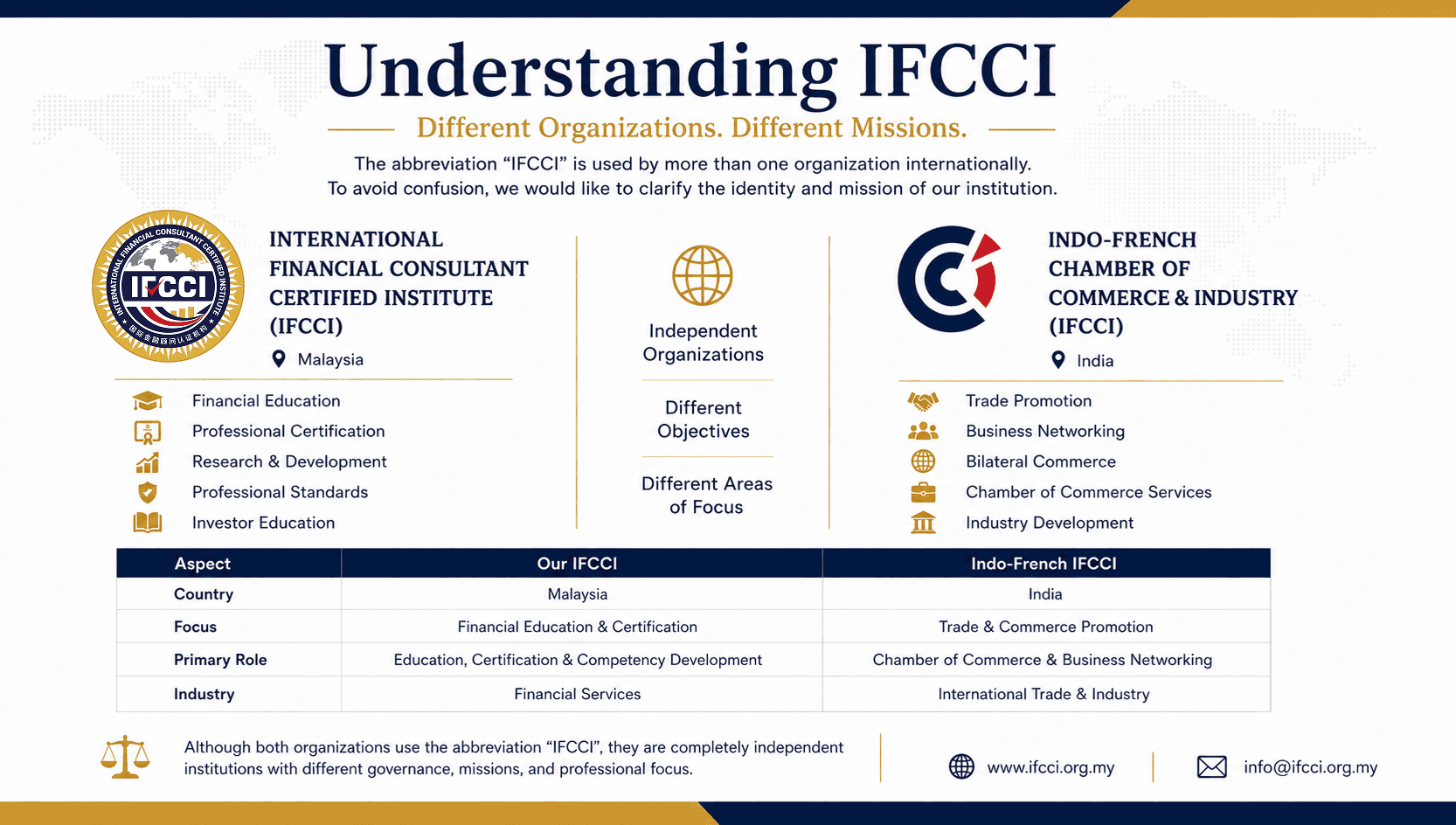
Understanding IFCCI: International Financial Consultant Certified Institute and Other Organizations Using the IFCCI Acronym
27 Jul 2026

Why International Financial Skills Championships Matter in Developing Global Financial Excellence
13 Jul 2026