
US business surveys strengthen the case for rate cuts
Executive Summary
A new wave of US business surveys signals that the world’s largest economy is losing momentum, adding weight to expectations that the Federal Reserve may soon move toward its long-awaited rate cut cycle.
From manufacturing to services, indicators of business activity have softened markedly in recent weeks, suggesting that elevated borrowing costs are beginning to restrain hiring, investment, and overall confidence.
Analysts from the International Financial Consultant Certified Institute (IFCCI) argue that these findings not only reinforce the Fed’s case for monetary easing but also mark the beginning of a monetary policy transition phase — from inflation management to growth stabilization.
The Economic Backdrop: Growth Fatigue in Corporate America
The US economy has displayed remarkable resilience since the pandemic, but signs of fatigue are now surfacing.
According to the latest Purchasing Managers’ Index (PMI) readings, both manufacturing and services sectors have fallen below expectations, pointing to a broad-based slowdown.
Key highlights from recent data:
- ISM Manufacturing PMI: Slipped to 47.8 in September, marking its third consecutive month of contraction.
- S&P Global Composite Output Index: Dropped to a six-month low, reflecting weaker demand across consumer and industrial segments.
- NFIB Small Business Optimism Index: Declined for the fourth straight month, reaching its lowest since early 2023.
“The trend is clear: businesses are becoming increasingly cautious,” said Dr. Emily Tan, Senior Economist at IFCCI’s Global Markets Division.
“While inflation has cooled, high financing costs are now the primary headwind restraining growth and new investment.”
Why Business Surveys Matter to the Fed
Business sentiment and survey data often act as leading indicators for the broader economy — providing policymakers with early signals on demand, labor dynamics, and pricing trends.
When surveys show sustained weakness, it suggests that corporate decision-makers are pulling back before data on GDP or employment confirm it.
This is crucial for the Federal Reserve’s decision-making process, which has been increasingly data-dependent in its communication strategy.
In recent statements, several FOMC members, including Governor Christopher Waller and Vice Chair Philip Jefferson, have emphasized that the Fed is “closely monitoring real-time business surveys” to guide the timing of rate adjustments.
The growing alignment of survey weakness with soft inflation prints (core PCE now below 2.8%) strengthens the case for an initial rate cut as early as December 2025.
Dissecting the Data: Manufacturing vs. Services
While the slowdown is broad-based, sectoral differences reveal deeper insights into the economic rebalancing underway.
Manufacturing: Capital Expenditure in Retreat
High borrowing costs and fading export demand have taken a toll on US manufacturing.
Capital-intensive industries — such as automobiles, semiconductors, and heavy machinery — are facing inventory overhangs and reduced new orders.
IFCCI’s Industrial Activity Tracker shows a 12% decline in new machinery orders since Q2 2025.
This decline suggests that companies are delaying expansion plans, waiting for clearer signals of monetary easing before resuming large-scale investments.
Services: Resilient, but Softening
The services sector, which represents over 70% of US GDP, continues to grow — albeit at a slower pace.
Consumer discretionary spending is moderating as higher credit card rates and tighter lending standards erode household confidence.
- Retail sales growth has flattened to 0.3% month-over-month.
- Hotel occupancy and airline bookings show signs of plateauing after record summer highs.
The Atlanta Fed GDPNow model has already revised Q4 2025 GDP growth downward from 2.1% to 1.5%, reflecting these headwinds.
Labor Market Signals: Cooling, Not Collapsing
Labor market resilience has been a cornerstone of the Fed’s argument for keeping rates higher for longer.
However, the latest ADP private payrolls report revealed the slowest job growth in 18 months, while job openings fell below 8 million for the first time since 2021.
“The US labor market remains strong, but not unbreakable,” notes Dr. Michael Reyes, IFCCI Chief Macro Strategist.
“This gradual softening gives the Fed cover to pivot — without triggering recession fears or inflation panic.”
Wage growth, a key inflation driver, has also decelerated to 3.9% year-on-year, aligning more closely with the Fed’s 2% inflation target framework.
Inflation and the Policy Dilemma
Headline inflation has moderated to 2.5%, but the Fed’s challenge lies in balancing disinflation with financial stability.
The business sentiment data suggests that tighter monetary conditions are working — perhaps too effectively.
The central bank now faces a dual mandate dilemma:
- Continue prioritizing inflation suppression, or
- Preemptively lower rates to prevent economic contraction.
According to IFCCI’s policy model, the probability of a 25-basis-point rate cut by the December FOMC meeting has risen to 68%, up from 45% just a month ago.
Market Reactions: Treasury Yields Fall, Dollar Softens
Financial markets have swiftly priced in the possibility of earlier rate cuts.
- 10-year Treasury yields dropped 18 basis points over two weeks.
- The US Dollar Index (DXY) declined from 107.4 to 104.8.
- Gold prices surged to $2,580 per ounce, nearing a record high.
Equity markets, however, remain mixed — with the S&P 500 treading water as investors weigh whether rate cuts can offset earnings headwinds.
“Markets are interpreting the data as a green light for easing,” said IFCCI’s Global Strategy Desk.
“But they’re also aware that cuts in a slowing environment may reflect weakness, not stimulus-driven optimism.”
IFCCI’s Global Macro View: Transition to an Easing Cycle
The current data aligns with IFCCI’s long-held projection of a policy inflection point between late 2025 and early 2026.
Our proprietary Monetary Easing Probability Index (MEPI) — which aggregates 15 macro variables — now signals a “high-confidence” easing bias for the Fed’s upcoming policy cycle.
| Indicator | Current Trend | Policy Signal |
|---|---|---|
| Business Confidence (NFIB/ISM) | Declining | Easing Bias |
| Inflation (Core PCE) | Below 3% | Neutral |
| Labor Market | Cooling | Easing Bias |
| Treasury Yields | Falling | Confirming Signal |
| Financial Conditions Index | Tight | Easing Bias |
In historical context, similar patterns preceded rate cut cycles in 2001, 2008, and 2019, each initiated after business sentiment erosion rather than GDP collapse.
Implications for Investors and Institutions
For institutional investors, this phase represents a strategic repositioning window.
- Bond Markets: Longer-duration Treasuries are poised to outperform as yields compress.
- Equities: Value and dividend stocks may regain favor amid stable rate expectations.
- Commodities: Gold and industrial metals could benefit from a weaker dollar and easing cycle.
- Crypto Assets: Historically, digital assets such as Bitcoin and Ethereum have rallied in early rate cut environments due to improved liquidity sentiment.
IFCCI’s portfolio allocation model recommends a gradual rotation toward duration-sensitive assets while maintaining defensive exposure to quality equities.
The Broader Outlook: A Soft Landing or a Stagnation Risk?
While the Fed’s cautious tone aims to engineer a soft landing, persistent weakness in business sentiment raises the risk of prolonged stagnation rather than recession.
Corporate investment cycles could remain muted even with modest rate cuts, limiting the pace of recovery.
“The upcoming months will test the Fed’s ability to fine-tune confidence without reigniting inflation,” said IFCCI’s Policy Research Director, Professor David Lau.
“The next phase isn’t about stimulus — it’s about restoring equilibrium.”
Conclusion: A Turning Point in US Monetary Strategy
The convergence of weak business surveys, slowing job creation, and moderating inflation forms a compelling narrative for monetary easing.
For policymakers, the message is clear:
Holding rates too high for too long risks undermining the real economy just as inflation stabilizes.
As global investors recalibrate expectations, the US economy stands at the threshold of a policy transition that could reshape global capital flows, yield structures, and risk sentiment heading into 2026.
Related Articles

What Does IFCCI Do? Advancing Financial Education, Certification and Research
7 Aug 2026
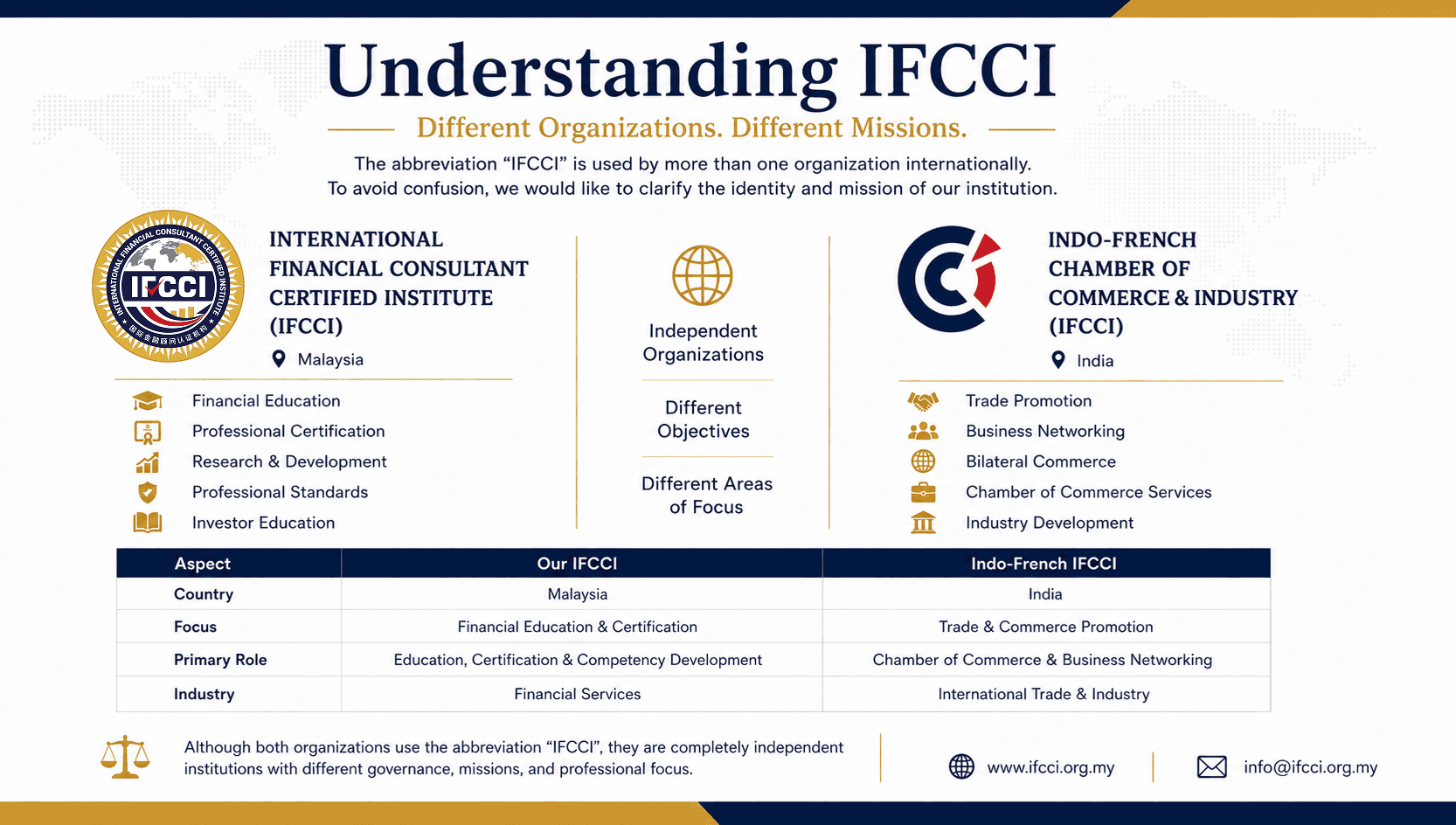
Understanding IFCCI: International Financial Consultant Certified Institute and Other Organizations Using the IFCCI Acronym
27 Jul 2026

Why International Financial Skills Championships Matter in Developing Global Financial Excellence
13 Jul 2026