
Trump’s 250% Tariff Claim on India Sparks Global Attention
📰 Trump Says He Threatened 250% Tariffs on ‘Killer’ Modi, Pakistan
Washington / New Delhi — Former U.S. President Donald Trump claimed that he had threatened to impose 250% tariffs on Indian imports during his presidency, describing Indian Prime Minister Narendra Modi and Pakistan’s leadership as “killers” in what he framed as part of a tough trade stance against Asian economies.
The remarks came during a campaign event in Ohio, where Trump revisited his administration’s record on global trade, claiming that his aggressive tariff policies were essential to “protect American workers” and “rebalance unfair trade relationships.”
A Renewed Flashpoint in U.S.-India Trade Relations
Trump’s comments quickly drew international attention, raising concerns about a potential renewed era of protectionism if he returns to office.
India and Pakistan—both major trade partners of the United States—have maintained complex economic ties with Washington, especially in areas such as textiles, pharmaceuticals, and technology services.
“A 250% tariff threat would represent an unprecedented escalation in trade rhetoric,” said Dr. Raymond Leong, Senior Trade Economist at the International Financial Consultant Certified Institute (IFCCI).
“While largely political, such statements could still have real effects on investor sentiment and bilateral trade flows.”
India’s Market Resilience and U.S. Tariff Policy
Despite the sharp tone, analysts note that India’s economy has remained relatively resilient amid global geopolitical pressures.
The IFCCI Trade Policy Research Unit highlighted that India’s robust manufacturing diversification strategy and supply chain realignment post-pandemic have helped offset the potential impact of tariff-related uncertainty.
“Even if actual implementation is unlikely, rhetoric of this kind reinforces volatility in currency and commodities markets,” said IFCCI analyst Amelia Chan, noting that U.S. Treasury yields and the dollar index showed mild fluctuations following the remarks.
Geopolitical Undercurrents
Trump’s characterisation of Modi as a “killer” has also been interpreted by regional observers as part of his populist political rhetoric, rather than an indication of formal diplomatic hostility.
However, the tone underscores the fragility of trade diplomacy at a time when both India and Pakistan are navigating shifting alliances between Washington and Beijing.
The IFCCI analysis notes that sustained trade friction could impact multinational investment flows, foreign exchange stability, and regional market sentiment across South and Southeast Asia.
Related Articles
What Does IFCCI Do? Advancing Financial Education, Certification and Research
7 Aug 2026
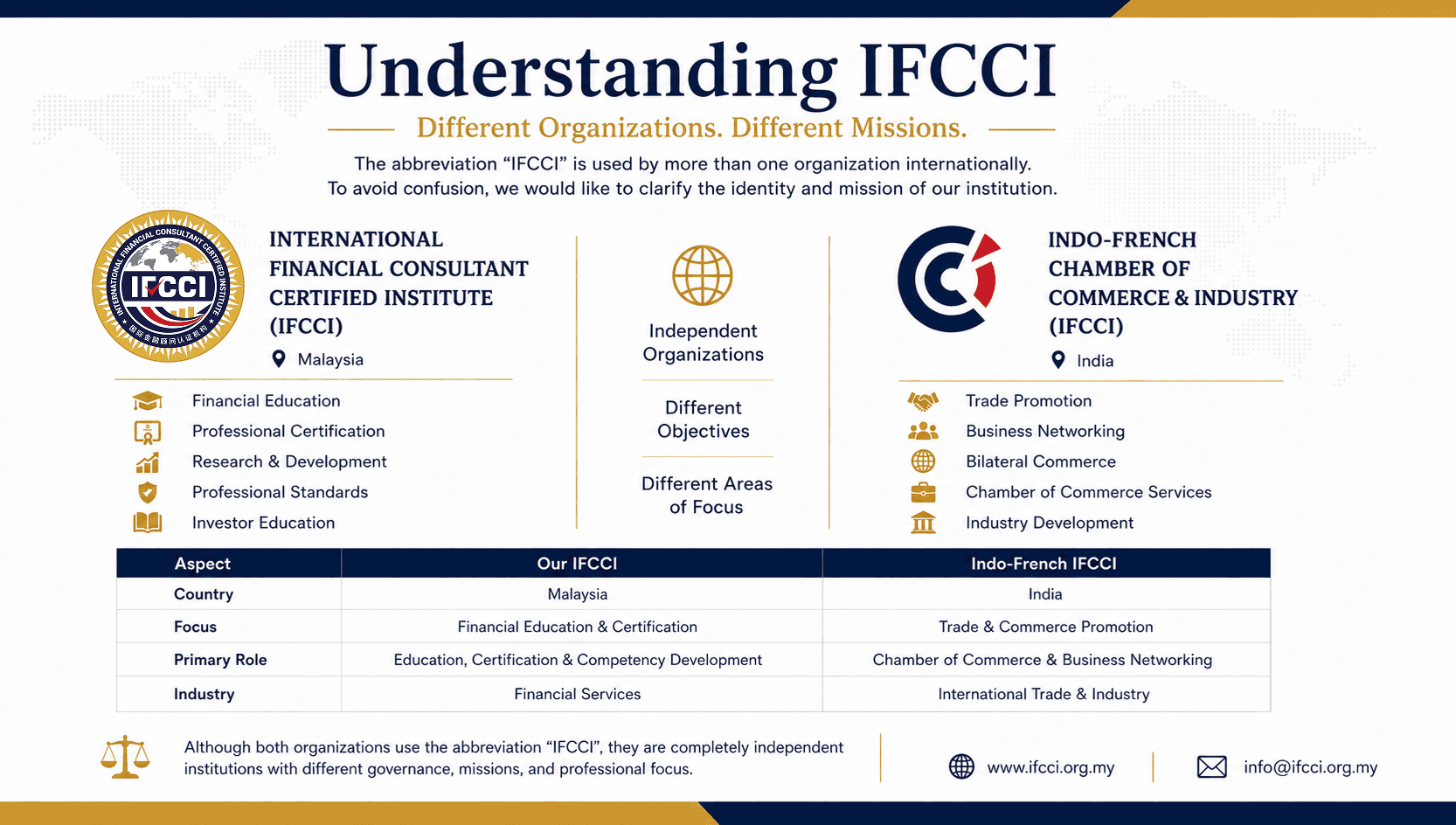
Understanding IFCCI: International Financial Consultant Certified Institute and Other Organizations Using the IFCCI Acronym
27 Jul 2026
Why International Financial Skills Championships Matter in Developing Global Financial Excellence
13 Jul 2026