
Trump’s $1B Crypto Empire Sparks Conflict Concerns
Trump’s Billion-Dollar Crypto Empire Raises Conflict-of-Interest Concerns
Former U.S. President Donald Trump’s growing involvement in digital assets has transformed his family’s fortune, generating more than US$1 billion from NFTs, memecoins, DeFi ventures, and stablecoin projects — but also reigniting concerns about political ethics and conflicts of interest.
According to Krungthep Turakij, the Trump family capitalized on the crypto boom and on policies introduced under Trump’s own administration that favored digital assets. Despite his claims of stepping away from business affairs, analysts argue the Trumps’ deep ties to crypto blur the line between public office and private profit in unprecedented ways.
The Making of Trump’s Crypto Empire
Just seven weeks before the upcoming presidential election, the Trump family formally entered the crypto industry through World Liberty Financial (WLFI) — a digital finance platform co-founded by Trump’s sons and long-time associate Steve Witkoff.
Under WLFI’s structure, investors purchase tokens, with as much as 75% of profits reportedly going to the Trump family. An investigation by the Financial Times (FT) detailed several income sources linked to the family’s crypto portfolio:
- NFT collections: Featuring Trump-themed artwork in various superhero and patriotic designs.
- Memecoins: Tokens such as $TRUMP and MELANIA have collectively produced about US$427 million in speculative profits.
- Stablecoins: The “right-wing dollar,” USD1, pegged to the U.S. dollar, reached US$2.7 billion in sales and yielded US$42 million in profit within months.
- DeFi tokens: Through WLFI, Eric and Donald Trump Jr. launched a proprietary token in September 2025, earning US$550 million, even after a 57% price decline.
Combined, these ventures have reportedly brought in over US$1.01 billion. Eric Trump told the FT that the actual figure “could be even higher.”
Meanwhile, Trump Media & Technology Group (TMTG) — the parent company of Truth Social — has rebounded strongly. After posting a US$401 million loss last year, TMTG turned profitable thanks to crypto holdings and integrations with WLFI and USD1, pushing total revenues beyond US$3 billion for the first time.
From Crypto Skeptic to Advocate
Once a fierce critic who labeled Bitcoin “a scam” in 2021, Trump dramatically reversed his stance during the 2024 campaign after meeting with major crypto lobbyists. He promised to make his administration “crypto-friendly” if re-elected and has since rolled out several initiatives, including:
- Creating a National Bitcoin Reserve.
- Appointing pro-crypto regulators to key agencies like the SEC, leading to paused investigations.
- Instructing the Justice Department to ease scrutiny on crypto firms.
- Allowing retirement investments in digital assets.
- Permitting mainstream banks to engage in crypto transactions.
The Blurred Line Between Politics and Profit
Despite Eric Trump’s earlier claim of a “very large wall” separating the family’s business from government activities, recent moves suggest otherwise. The Trump sons have traveled across Abu Dhabi, Hong Kong, and Singapore, promoting their crypto ventures to global investors.
At a Bitcoin event in Las Vegas, Donald Trump Jr. even remarked that lawmakers involved in crypto regulation were also investing in it — calling it “a good thing for the community.”
Eric Trump, for his part, predicted the U.S. government would eventually amass “massive amounts of Bitcoin,” suggesting its value could reach US$1 billion per coin — a statement viewed by analysts as unrealistic hype.
While current U.S. law places no formal conflict-of-interest restrictions on presidents, ethics experts argue the Trump family’s activities set a troubling precedent. Analysts say no modern leader has intertwined personal business with public influence so deeply, raising the fundamental question of whether political power is being used for public service — or personal gain.
Related Articles

What Does IFCCI Do? Advancing Financial Education, Certification and Research
7 Aug 2026
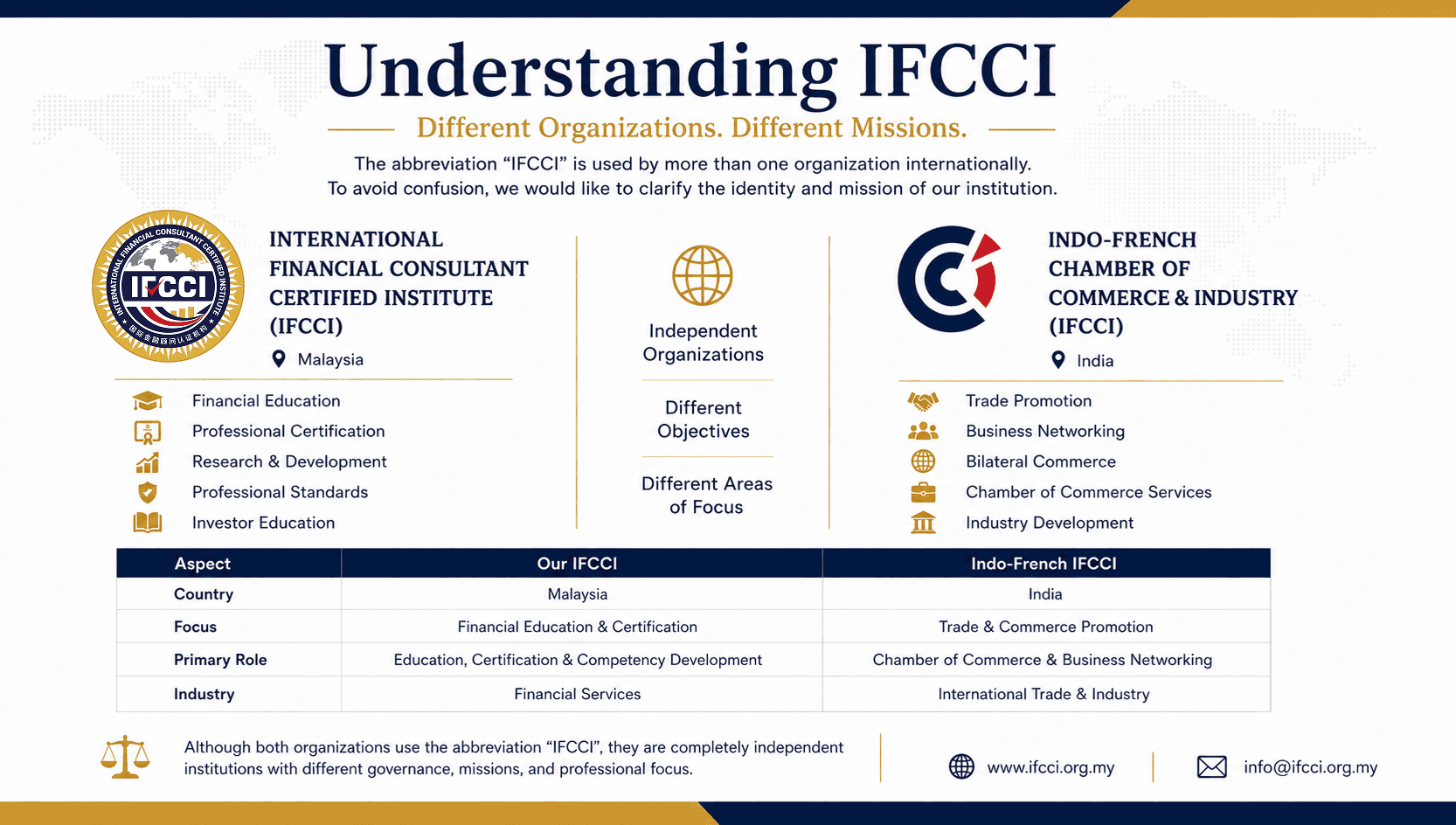
Understanding IFCCI: International Financial Consultant Certified Institute and Other Organizations Using the IFCCI Acronym
27 Jul 2026

Why International Financial Skills Championships Matter in Developing Global Financial Excellence
13 Jul 2026