
Trump Likely to Choose Hassett for Fed Chair Despite Warsh Credentials
Hassett Likely to Be Trump’s Pick for Fed Chief, Though Warsh Is More Qualified, CNBC Survey Finds
Introduction: Politics Meets Monetary Policy
The selection of the next Federal Reserve Chair has always been one of the most consequential decisions for U.S. presidents. With the Federal Reserve steering the economy through interest rate policy, inflation control, and financial stability, the choice of who leads the central bank can influence global markets for years.
According to a recent CNBC survey, former White House economic adviser Kevin Hassett has emerged as the likely pick of former President Donald Trump should he return to the White House. However, the survey also highlighted that Kevin Warsh, a former Fed governor, is viewed as the more qualified candidate by economists and Wall Street professionals.
This juxtaposition — between political loyalty and professional qualification — underscores the delicate balance between economic governance and political influence.
Section 1: Why the Fed Chair Matters
The Federal Reserve Chair wields immense power:
- Influences interest rates, affecting borrowing costs for consumers and businesses.
- Oversees monetary policy, shaping growth, employment, and inflation outcomes.
- Represents the U.S. in global financial diplomacy, interacting with G7, G20, and IMF counterparts.
The role is not just technocratic; it also requires political navigation, communication skills, and the ability to build credibility with both markets and Congress.
Thus, the choice between Hassett and Warsh is not merely about qualifications — it is also about the policy direction and credibility of the Fed.
Section 2: Kevin Hassett – Trump’s Likely Pick
Kevin Hassett, known for his time as Chairman of the Council of Economic Advisers under Trump, has built a reputation as a loyal adviser.
- Background: Economist with a focus on tax policy, labor markets, and corporate finance.
- Policy Stance: Strongly pro-growth, advocates for lower taxes and deregulation.
- Political Appeal: Trusted by Trump, which increases his chances despite limited central banking experience.
Critics argue that Hassett lacks the deep monetary policy expertise traditionally expected from a Fed chair. His background is more aligned with economic policy advising and fiscal economics than with the nuances of monetary policy operations.
Section 3: Kevin Warsh – The More Qualified Candidate
Kevin Warsh, in contrast, brings direct Federal Reserve experience:
- Background: Served as a Fed governor from 2006 to 2011, active during the Global Financial Crisis.
- Crisis Management: Played a role in designing emergency lending facilities and liaising with Wall Street.
- Policy Expertise: Deep understanding of monetary policy, financial markets, and institutional governance.
Economists surveyed by CNBC noted that Warsh would bring credibility and market confidence, particularly given his familiarity with crisis management and Fed operations.
However, Warsh has previously voiced hawkish views, particularly on inflation and Fed independence. That could make him less politically aligned with Trump’s preference for accommodative monetary policy.
Section 4: The Survey Findings
The CNBC survey polled leading economists, strategists, and Wall Street executives:
- Hassett Likely Pick: A majority believe Trump would favor Hassett due to loyalty and alignment with fiscal priorities.
- Warsh Viewed as More Qualified: Respondents overwhelmingly agreed Warsh has stronger credentials for monetary policy.
- Market Concerns: Investors fear that political considerations may outweigh economic qualifications in the final choice.
This highlights the growing tension between central bank independence and political influence.
Section 5: Implications for Markets
The Fed Chair selection matters deeply for global financial markets.
- Interest Rate Policy
- Hassett could lean toward accommodative policies, aligning with Trump’s pro-growth agenda.
- Warsh could adopt a more hawkish stance, prioritizing inflation control.
- Market Volatility
- If Hassett is nominated, markets may initially react with skepticism, fearing weaker Fed independence.
- Warsh’s nomination could be viewed positively by bond markets but might spark equity concerns if policy turns restrictive.
- Global Dollar Impact
- Dollar strength/weakness will depend on perceived Fed credibility.
- A politically influenced Fed could weaken dollar confidence.
Section 6: Central Bank Independence Under Scrutiny
The debate between Hassett and Warsh raises the broader issue of Federal Reserve independence.
- Historically, Fed chairs like Paul Volcker and Alan Greenspan maintained credibility by resisting political pressure.
- Under Trump, however, tensions with then-Chair Jerome Powell revealed the difficulty of insulating the Fed from politics.
- A Hassett nomination could signal greater political influence on monetary policy.
For investors, this is critical: markets rely on the perception that the Fed acts in the long-term interest of economic stability, not short-term political goals.
Section 7: Global Perspective
The Fed chair is not just a U.S. issue — it is a global concern:
- The U.S. dollar remains the world’s reserve currency.
- Emerging markets often face capital flow volatility based on Fed decisions.
- Global central banks watch the Fed closely when setting their own monetary policies.
Thus, the choice between Hassett and Warsh will reverberate across currencies, bond yields, and risk assets worldwide.
Section 8: Looking Ahead
The path forward will depend on political developments and Trump’s ultimate decision-making calculus:
- If loyalty dominates, Hassett is likely to be the nominee.
- If market credibility and expertise matter, Warsh could emerge as a surprise choice.
Either way, the survey highlights the high-stakes nature of the Fed chair selection in shaping not just U.S. economic policy, but also global market stability.
Conclusion
The battle between Hassett’s political loyalty and Warsh’s professional qualifications encapsulates a critical tension in modern central banking.
For Trump, the decision will reflect whether politics or policy expertise carries more weight. For markets, it will determine the credibility of the world’s most important central bank.
As one economist in the survey put it: “The Fed chair is not just America’s central banker — it’s the world’s central banker.”
Related Articles

What Does IFCCI Do? Advancing Financial Education, Certification and Research
7 Aug 2026
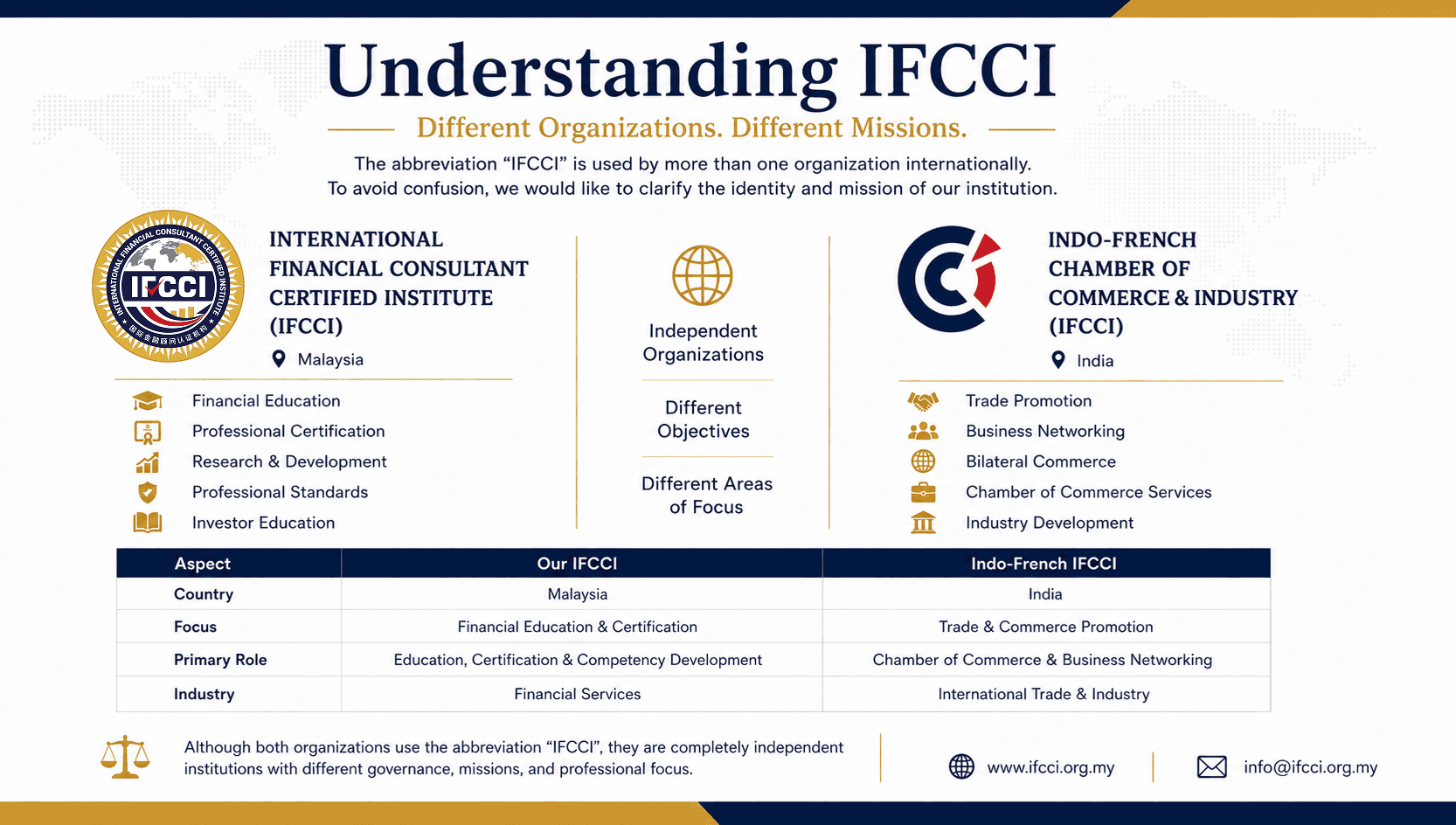
Understanding IFCCI: International Financial Consultant Certified Institute and Other Organizations Using the IFCCI Acronym
27 Jul 2026

Why International Financial Skills Championships Matter in Developing Global Financial Excellence
13 Jul 2026