
The World’s Powerful Reserve Currencies Global Monetary
Overview
Reserve currencies form the backbone of the global monetary system, shaping trade flows, capital allocation, debt markets, and geopolitical influence. While dozens of currencies circulate internationally, only a select few achieve true reserve currency status—held in significant quantities by central banks, used extensively in cross-border trade, and trusted as stores of value during economic stress.
This IFCCI analysis ranks the world’s most powerful reserve currencies based on usage, liquidity depth, financial infrastructure, policy credibility, and global acceptance, offering a comprehensive view of how monetary power is distributed globally.
What Defines a Powerful Reserve Currency
A reserve currency is not defined by size of economy alone. To qualify as globally powerful, a currency must demonstrate:
- Deep and liquid financial markets
- Macroeconomic and institutional credibility
- Convertibility and capital mobility
- Legal certainty and rule-of-law protections
- Widespread use in trade invoicing and debt issuance
These criteria explain why reserve currency leadership changes slowly—and why dominance, once established, tends to persist.
United States Dollar (USD)
Status: Dominant Global Reserve Currency
The US dollar remains the undisputed anchor of the global financial system. It is the primary currency for international trade, global debt issuance, commodity pricing, and foreign exchange transactions.
Key strengths:
- Largest share of global FX reserves
- Deepest sovereign bond market
- Central role in global payment systems
- Safe-haven status during crises
Despite rising concerns over fiscal deficits and geopolitical fragmentation, no alternative currently matches the dollar’s scale, liquidity, or institutional backing.
Euro (EUR)
Status: Systemic Secondary Reserve Currency
The euro stands as the world’s second most important reserve currency, benefiting from the economic scale of the euro area and its integration into global trade networks.
Key attributes:
- Strong presence in FX reserves and trade invoicing
- Sophisticated banking and bond markets
- Central role in regional supply chains
However, fragmented fiscal authority and uneven economic performance across member states limit the euro’s ability to challenge dollar dominance.
Japanese Yen (JPY)
Status: Safe-Haven Reserve Currency
The yen plays a unique role as a financial stability anchor, particularly during periods of global risk aversion.
Core strengths:
- Long-standing credibility and policy continuity
- Deep domestic savings base
- Prominent role in carry trades
While Japan’s prolonged low-rate environment has constrained the yen’s global expansion, its safe-haven status remains intact.
British Pound Sterling (GBP)
Status: Legacy Reserve Currency
Sterling retains reserve currency relevance largely due to London’s role as a global financial hub.
Supporting factors:
- Sophisticated capital markets
- Strong legal and regulatory framework
- High international usage in FX markets
However, the UK’s smaller economic scale and post-Brexit uncertainty cap sterling’s global reach.
Chinese Renminbi (CNY)
Status: Emerging Strategic Reserve Currency
The renminbi’s ascent reflects China’s growing economic influence, though it remains constrained by capital controls and limited convertibility.
Notable characteristics:
- Rising use in bilateral trade settlement
- Increasing inclusion in central bank reserves
- Strong state-backed financial infrastructure
Despite rapid progress, the renminbi has yet to achieve the trust and openness required for full reserve currency parity.
Swiss Franc (CHF)
Status: Stability-Oriented Reserve Asset
The Swiss franc occupies a niche role as a highly trusted store of value, rather than a transactional reserve currency.
Strengths include:
- Exceptional financial stability
- Strong institutional credibility
- Crisis-resilient demand
Its limited supply and small economic base restrict broader reserve usage.
Canadian Dollar (CAD)
Status: Commodity-Linked Reserve Currency
The Canadian dollar benefits from:
- Strong governance and policy transparency
- Integration with US financial markets
- Resource-backed economic structure
While modest in scale, CAD remains a credible diversification currency for reserve managers.
Australian Dollar (AUD)
Status: Yield-Oriented Reserve Currency
AUD’s appeal stems from:
- Open capital markets
- Exposure to Asia-Pacific growth
- Historically higher yields
However, sensitivity to global commodity cycles introduces volatility.
Structural Trends Reshaping Reserve Currency Power
Several long-term forces are influencing reserve currency dynamics:
- Geopolitical fragmentation, encouraging diversification
- Sanctions risk, altering reserve management strategies
- Digital settlement systems, reducing friction in non-dollar trade
- Regionalisation of supply chains, boosting local currency usage
Despite these shifts, reserve currency change remains evolutionary, not revolutionary.
IFCCI Assessment: Dominance Endures, but Diversification Accelerates
The IFCCI Research Division concludes that while the US dollar’s dominance remains firmly entrenched, reserve managers are increasingly diversifying at the margin.
IFCCI’s key insights:
- No single currency is positioned to replace the USD
- The euro and renminbi will expand incrementally, not disruptively
- Safe-haven currencies retain strategic relevance
- Reserve systems are becoming more multipolar, but not fragmented
The global monetary system is evolving toward diversification without displacement.
Conclusion
Reserve currency power reflects trust accumulated over decades, not short-term economic cycles. While new challengers continue to emerge, the hierarchy of reserve currencies remains remarkably stable.
The future is likely to feature a dominant dollar-supported system, complemented by a broader set of regional and strategic reserve currencies—reshaping global finance without overturning its foundations.
Related Articles

What Does IFCCI Do? Advancing Financial Education, Certification and Research
7 Aug 2026
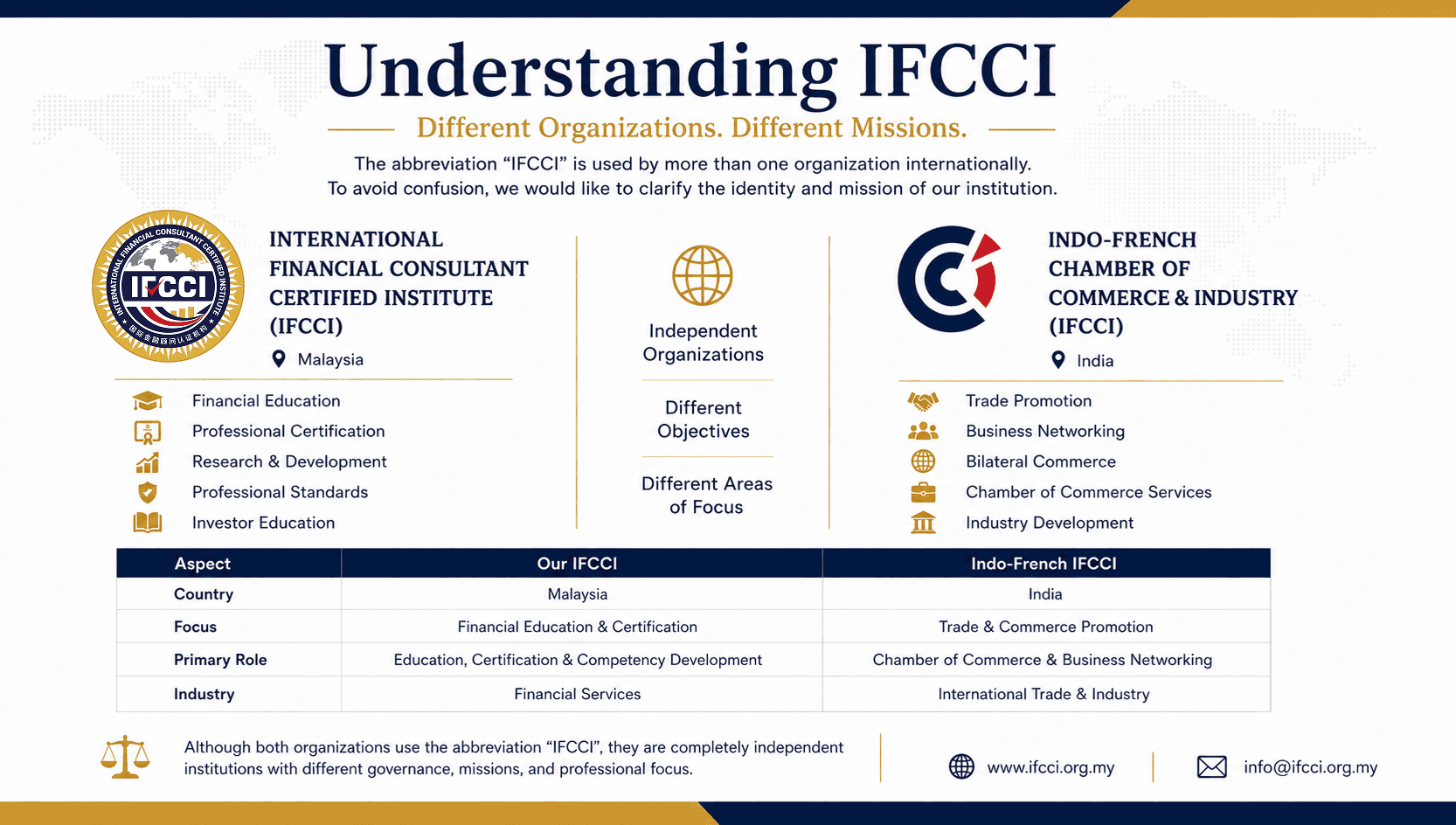
Understanding IFCCI: International Financial Consultant Certified Institute and Other Organizations Using the IFCCI Acronym
27 Jul 2026

Why International Financial Skills Championships Matter in Developing Global Financial Excellence
13 Jul 2026