
The Five Macro Themes Mattered Global Markets
Executive Overview
The past year marked a decisive transition phase for the global economy. While the immediate shocks of previous crises faded, underlying structural forces came sharply into focus. Markets, policymakers, and institutions were forced to confront a new reality defined less by emergency responses and more by persistent constraints, policy trade-offs, and geopolitical recalibration.
This IFCCI year-in-review identifies the five macroeconomic themes that mattered most, not merely because they dominated headlines, but because they reshaped expectations, asset pricing, and strategic decision-making across global markets.
The End of the “Free Money” Era Became Structural
Perhaps the most consequential macro shift was the widespread recognition that ultra-loose monetary conditions were not returning anytime soon.
Why It Mattered
- Policy rates remained elevated across advanced economies
- Central banks reinforced “higher for longer” messaging
- Liquidity conditions tightened structurally, not cyclically
This recalibration altered valuations across equities, bonds, real estate, and private markets. Investors increasingly priced capital scarcity as a baseline condition, rather than a temporary phase.
IFCCI Insight
The market’s adjustment was less about rate levels and more about certainty—accepting that cheap leverage would no longer be a default growth engine.
Inflation Fell, but Price Stability Remained Fragile
Disinflation progressed, but inflation’s retreat proved uneven and incomplete.
Key Observations
- Goods inflation eased significantly
- Services inflation remained sticky
- Wage growth outpaced historical norms in many economies
While headline inflation declined, core inflation persistence kept policymakers cautious and constrained premature easing.
Why This Theme Dominated
Inflation’s behaviour dictated:
- Monetary policy trajectories
- Real income dynamics
- Consumer sentiment and political discourse
IFCCI Insight
The inflation debate shifted from “how fast it falls” to “how stable it stays.”
Geopolitics Replaced Economics as a Market Variable
Geopolitical risk moved from the background into the core macro framework.
Key Developments
- Trade fragmentation accelerated
- Sanctions reshaped capital and energy flows
- Strategic industries became policy-protected assets
Markets increasingly priced political alignment and supply security, not just cost efficiency.
Macro Implications
- Higher structural volatility
- Redundant supply chains
- Rising fiscal intervention
IFCCI Insight
Globalisation did not reverse—but it became conditional, selective, and politically filtered.
Fiscal Policy Reasserted Itself—With Consequences
Governments played a far larger role in macro outcomes than in the decade preceding the pandemic.
What Changed
- Persistent fiscal deficits became normalised
- Industrial policy replaced neutral market allocation
- Sovereign debt sustainability returned to focus
Fiscal policy increasingly acted as a macro stabiliser and growth substitute, especially where monetary policy was constrained.
Why Markets Paid Attention
Bond investors began demanding higher term premiums, while credit markets differentiated more sharply between sovereign balance sheets.
IFCCI Insight
Fiscal dominance did not arrive suddenly—but its influence became impossible to ignore.
Growth Divergence Became the Defining Global Pattern
Rather than moving in sync, economies diverged sharply in performance and resilience.
Key Divergences
- The US outperformed peers
- Europe faced structural headwinds
- Emerging markets split between reformers and laggards
Capital flows increasingly followed relative growth credibility, not geographic proximity.
Why It Mattered
- Currency volatility intensified
- Equity leadership narrowed
- Global investment strategies became more selective
IFCCI Insight
The era of broad-based global growth gave way to precision allocation.
What Did Not Matter as Much as Expected
Several anticipated risks failed to materialise at scale:
- No systemic banking crisis
- No global recession
- No collapse in consumer demand
This underscored the economy’s adaptive capacity, even under restrictive conditions.
IFCCI Strategic Takeaways
From a macro-strategic perspective, the year reinforced several enduring lessons:
- Structural forces matter more than cyclical noise
- Policy credibility shapes markets more than forecasts
- Diversification is no longer optional—it is strategic
- Long-term capital must price political risk explicitly
Conclusion
The year was not defined by a single shock, but by clarity—clarity that the global economy has entered a more constrained, more fragmented, and more policy-driven era.
Understanding these five macro themes is essential not only for interpreting the past year, but for navigating what lies ahead. The future belongs not to those who chase narratives, but to those who understand structure.
Related Articles

What Does IFCCI Do? Advancing Financial Education, Certification and Research
7 Aug 2026
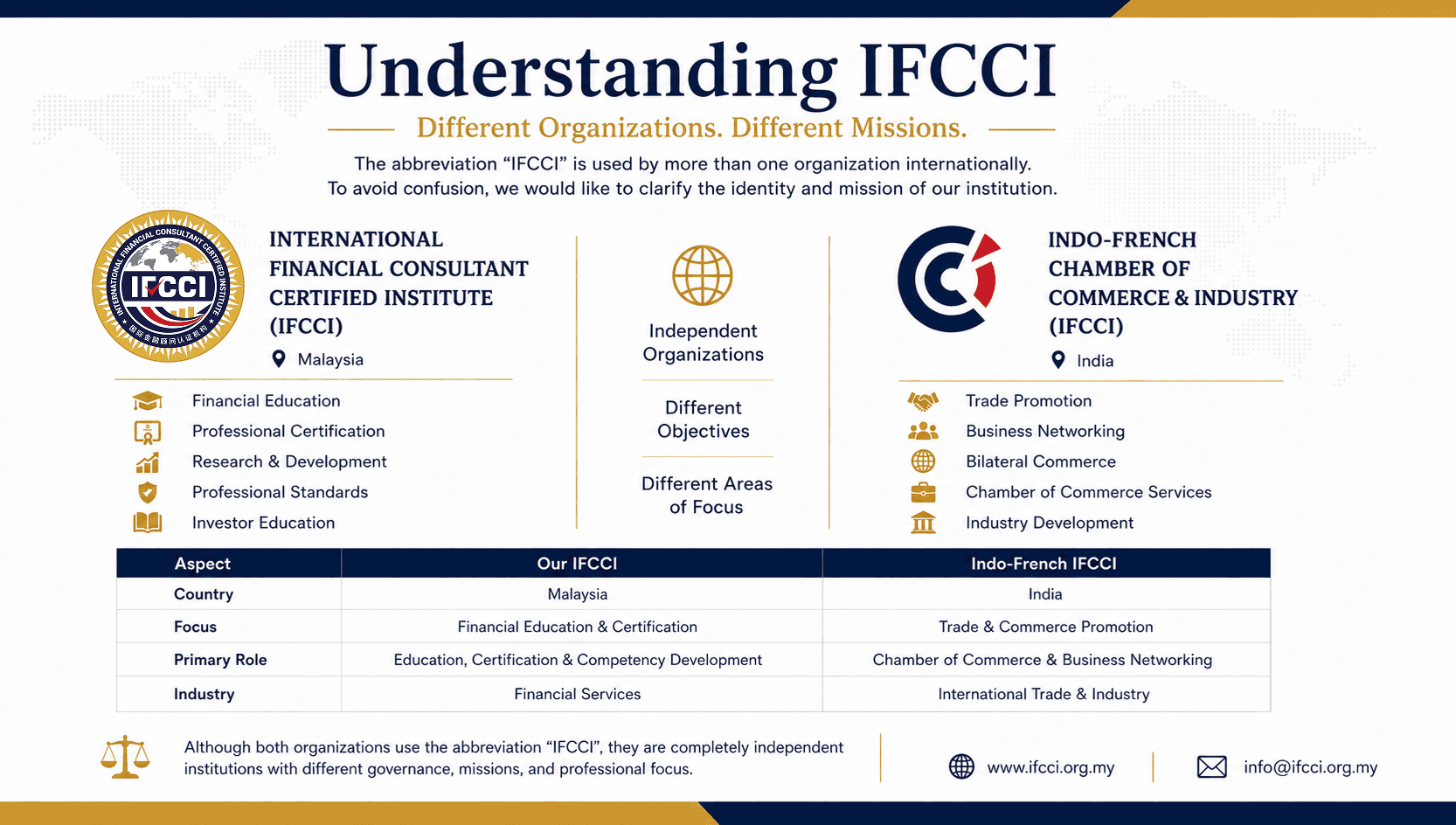
Understanding IFCCI: International Financial Consultant Certified Institute and Other Organizations Using the IFCCI Acronym
27 Jul 2026
Why International Financial Skills Championships Matter in Developing Global Financial Excellence
13 Jul 2026