
Q1 Outlook for Traders: Five Big Questions
Executive Summary
As markets enter the first quarter of 2026, traders face a complex environment shaped by policy uncertainty, diverging growth trajectories, and increasingly fragile market psychology. Unlike periods dominated by a single macro narrative, Q1 opens with multiple unresolved questions, each capable of driving abrupt repricing across asset classes.
This outlook identifies five core questions that are likely to define market behaviour in Q1, alongside three “grey swan” scenarios—events that are plausible, underappreciated, and potentially disruptive, though not yet priced in.
The Macro Backdrop: High Sensitivity, Low Conviction
Markets are entering 2026 with:
- Moderating but uneven global growth
- Inflation that is lower but not conclusively defeated
- Central banks increasingly data-dependent
- Elevated geopolitical and fiscal noise
Positioning data across equities, rates, and crypto suggests high sensitivity to surprises rather than strong directional conviction.
Five Big Questions Facing Traders in Q1
1. Will Central Banks Validate Market Expectations?
Markets have largely priced in a benign policy trajectory, assuming:
- Gradual easing or prolonged pauses
- No renewed inflation shock
- Financial conditions remaining accommodative
The key question is whether central banks—particularly the Federal Reserve and ECB—endorse these assumptions or push back through guidance, rhetoric, or balance sheet actions.
A misalignment between expectations and communication remains a primary volatility catalyst.
2. Is Liquidity Truly Improving—or Merely Shifting?
Headline liquidity indicators suggest improvement, but closer inspection reveals fragmentation:
- Public markets show ample liquidity
- Private credit and shadow banking remain opaque
- Repo and funding markets remain vulnerable to stress
For traders, this raises the risk of liquidity illusion, where apparent depth disappears during stress events.
3. Can Equity Valuations Withstand Slower Earnings Growth?
Equity markets enter Q1 with:
- Elevated multiples in several regions
- Narrow leadership concentration
- Optimistic forward earnings assumptions
The unresolved question is whether earnings can re-accelerate fast enough to justify valuations, or whether markets face multiple compression risk in the absence of strong growth.
4. Will Crypto Remain a Risk-On Proxy—or Decouple?
Digital assets are increasingly intertwined with macro liquidity and risk sentiment, yet internal crypto dynamics—ETF flows, regulation, and on-chain leverage—are becoming more influential.
Q1 will test whether:
- Crypto continues to amplify broader risk-on moves
- Or begins selective decoupling based on fundamentals
This distinction matters for cross-asset traders using crypto as a macro hedge or expression tool.
5. Is Volatility Mispriced Across Asset Classes?
Implied volatility remains historically subdued in several markets despite:
- Policy uncertainty
- Election-year dynamics in key economies
- Geopolitical tensions
The central question is whether volatility sellers are being overcompensated for complacency, leaving markets vulnerable to sharp repricing.
Three Grey Swans Traders May Be Underestimating
Grey swans are not tail risks—they are plausible disruptions that markets have not fully priced.
Grey Swan 1: A Sudden Policy Communication Breakdown
A poorly calibrated central bank message—rather than an actual policy move—could trigger:
- Rate market disorder
- Equity factor rotation
- Currency volatility spikes
History shows that communication errors, not fundamentals, often spark the sharpest short-term moves.
Grey Swan 2: A Liquidity Event in a Non-Bank Financial Institution
Stress emerging from:
- Private credit vehicles
- Leveraged funds
- Structured products
could force rapid deleveraging across markets. These events often appear localised at first, before spreading through funding channels.
Grey Swan 3: A Geopolitical Shock With Market Spillover
Rather than full-scale conflict, markets are more exposed to:
- Sanctions escalation
- Trade restrictions
- Energy or shipping disruptions
Such events can reprice commodities, currencies, and inflation expectations simultaneously.
Implications for Trading Strategy
In this environment, successful Q1 trading is likely to prioritise:
- Flexibility over conviction
- Risk management over directional bets
- Relative value over outright exposure
Traders may benefit from:
- Smaller position sizing
- Clear invalidation levels
- Cross-asset hedging
IFCCI Strategic View
The IFCCI Research Division assesses that Q1 2026 is characterised by asymmetric risk, where downside shocks may materialise faster than upside catalysts.
Key IFCCI observations:
- Markets are pricing stability, not disruption
- Volatility appears structurally underpriced
- Grey swans warrant active scenario planning
Traders who focus on process, discipline, and optionality are better positioned than those relying on single-narrative forecasts.
Conclusion
Q1 2026 opens with no shortage of opportunity—but also little margin for complacency. The defining feature of the quarter is unlikely to be a single macro theme, but rather how markets react to surprises across policy, liquidity, and geopolitics.
For traders, the challenge is not predicting outcomes, but staying adaptive in a landscape where uncertainty itself is the dominant driver.
Related Articles

What Does IFCCI Do? Advancing Financial Education, Certification and Research
7 Aug 2026
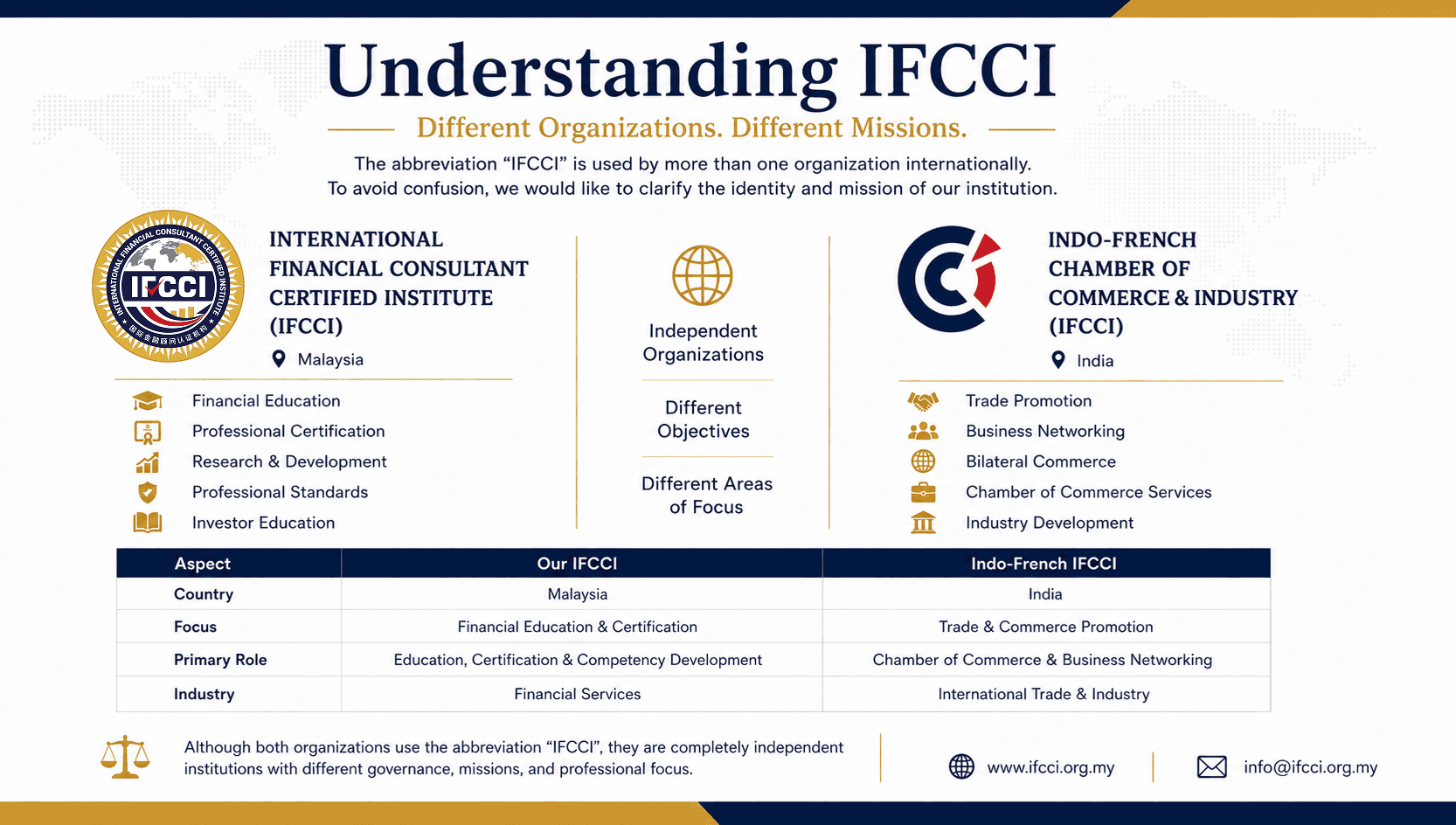
Understanding IFCCI: International Financial Consultant Certified Institute and Other Organizations Using the IFCCI Acronym
27 Jul 2026

Why International Financial Skills Championships Matter in Developing Global Financial Excellence
13 Jul 2026