
PBoC Holds Key Rate at 3% in Line with Expectations
🧱 Article Structure
H1: The Interest Rate Decision by China’s PBoC Aligns with Expectations at Three Per Cent
H2: China’s Monetary Policy Stays the Course
The People’s Bank of China (PBoC) maintained its one-year Loan Prime Rate (LPR) at 3.00%, meeting market expectations and reinforcing the central bank’s stance on measured monetary easing.
Analysts from IFCCI’s Global Market Research Division note that the decision reflects a delicate balance between supporting domestic demand and maintaining currency stability amid a complex global environment.
“The PBoC’s steady hand indicates policy prudence — they’re managing both inflation containment and RMB stability,” said Dr. Li Wen, Chief Economist at IFCCI.
H2: Balancing Growth, Inflation, and Global Flows
The PBoC’s rate decision arrives at a time when global central banks — particularly the U.S. Federal Reserve and the European Central Bank — are signaling rate cuts in 2025.
China’s steady policy suggests a preference to avoid excessive capital outflows while supporting gradual credit recovery in the domestic economy.
Three main takeaways highlight the current stance:
- Inflation Control: CPI remains below 1%, giving room for targeted stimulus.
- Exchange Rate Stability: The RMB has stabilized near 7.1 per USD, supported by measured FX operations.
- Growth Moderation: GDP growth remains within the 4.5–5% range — moderate but steady.
“China’s monetary direction is not about surprise; it’s about consistency,” added Dr. Li. “Stability is the new stimulus.”
H2: Global Market Reactions: Calm but Cautious
Asian equities opened mixed following the PBoC announcement.
- The Hang Seng Index gained 0.6%, led by banking and real estate counters.
- The Shanghai Composite rose modestly by 0.4%.
- Meanwhile, the offshore yuan (CNH) traded within a narrow range, signaling investor comfort with the policy outlook.
For the broader region, including ASEAN markets like Malaysia and Singapore, a stable China policy is viewed as a short-term anchor against global volatility.
IFCCI’s macro analysts expect regional bond yields to remain steady, supporting capital inflows into emerging Asia through Q4 2025.
H2: Implications for Financial Advisors and Investors
For financial advisors and certified professionals, understanding China’s monetary policy is no longer optional — it’s a necessity for global asset allocation.
Key strategic insights from IFCCI’s analysis:
- Currency Outlook: RMB stability limits volatility for regional trade currencies such as MYR and SGD.
- Equity Exposure: Selective opportunities in consumer and infrastructure sectors as PBoC maintains accommodative credit.
- Commodities: Steady China demand may sustain oil and metal prices within a tight range.
“Financial consultants must link macro events to portfolio actions — not just react to headlines,” emphasized Marcus Leong, IFCCI Certified Financial Analyst (CFA).
H2: IFCCI’s Perspective — Education Through Analysis
At IFCCI, macroeconomic awareness is an integral part of the Certified Financial Consultant (CFC) and Global Market Analyst Diploma (GMAD) programs.
These programs equip advisors to interpret central bank policy, bond yields, and macro indicators to guide clients through volatile cycles.
“Every rate decision is a teaching moment,” said Dr. Li.
“Understanding why the PBoC moves — or doesn’t move — is what separates informed advisors from reactive traders.”
Related Articles

What Does IFCCI Do? Advancing Financial Education, Certification and Research
7 Aug 2026
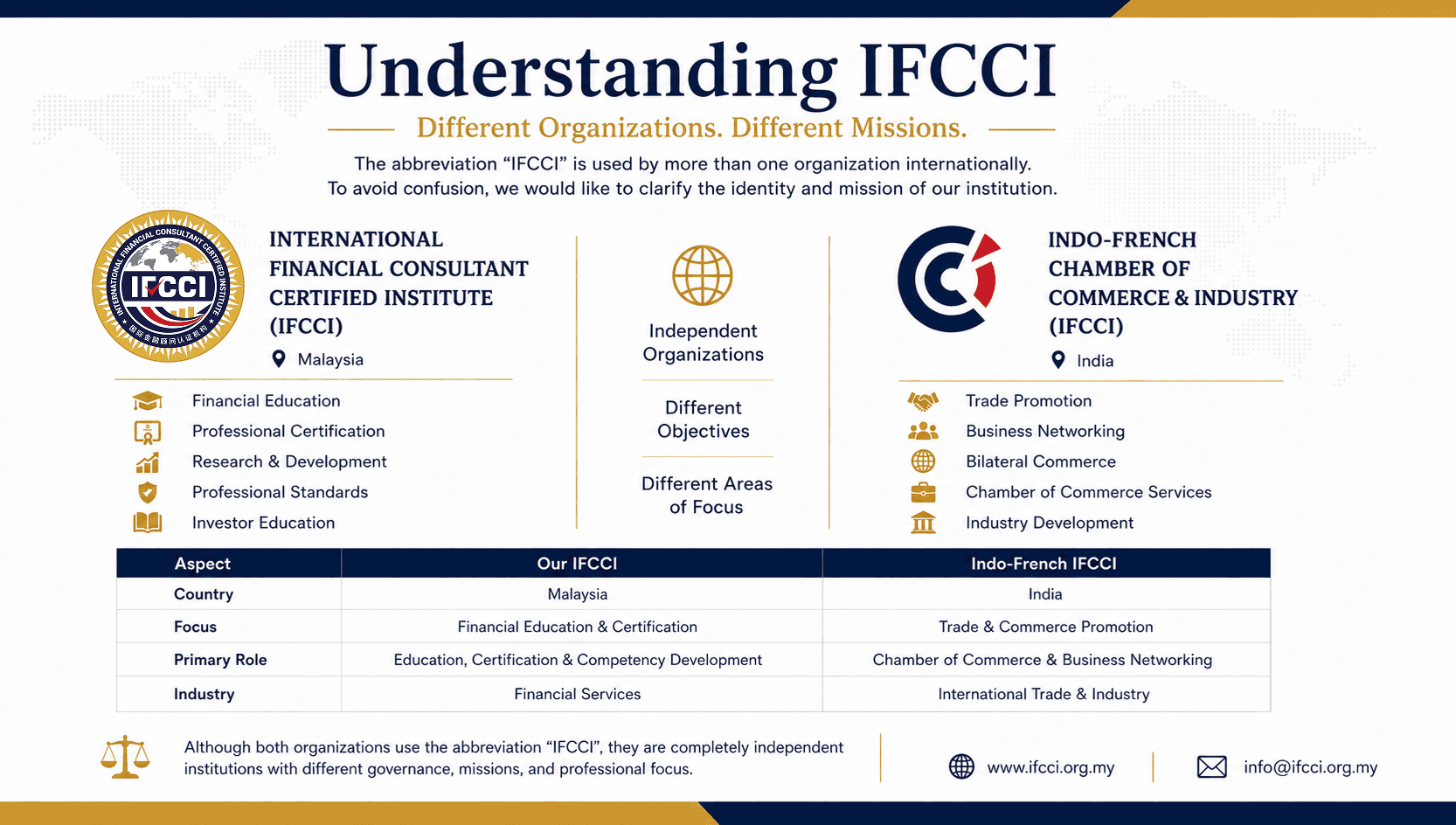
Understanding IFCCI: International Financial Consultant Certified Institute and Other Organizations Using the IFCCI Acronym
27 Jul 2026
Why International Financial Skills Championships Matter in Developing Global Financial Excellence
13 Jul 2026