
Panama Canal Ruling Strengthens Trump’s Hand in U.S.–China
Panama Canal Decision Raises Strategic Stakes
A recent ruling involving the Panama Canal has injected fresh momentum into the United States–China strategic rivalry, reinforcing Washington’s leverage over one of the world’s most critical maritime chokepoints and delivering a political boost to former US President Donald Trump’s hardline geopolitical narrative.
The decision underscores how infrastructure governance and legal frameworks are increasingly becoming tools in great-power competition, alongside trade, technology, and military influence.
Why the Panama Canal Matters
The Panama Canal remains one of the most strategically important arteries in global trade, facilitating a significant share of maritime traffic between the Atlantic and Pacific Oceans.
Its importance extends beyond commerce:
- It influences global supply-chain efficiency
- It affects energy, agricultural, and manufactured goods flows
- It carries geopolitical weight due to its proximity to US strategic interests
Any ruling that reshapes operational, regulatory, or ownership dynamics inevitably draws international attention.
Implications for U.S.–China Competition
China’s expanding footprint across global infrastructure—from ports to logistics networks—has long been a point of concern for US policymakers. Developments related to the Panama Canal are therefore viewed through the lens of strategic containment and influence balancing.
The ruling is widely interpreted as:
- Reinforcing US-aligned governance norms
- Limiting strategic ambiguity over control and oversight
- Sending a signal about the boundaries of foreign influence in critical infrastructure
For Washington, this aligns with broader efforts to secure supply chains and protect strategic transit routes.
Political Impact for Trump
The development strengthens Trump’s long-standing position that the United States must take a tougher stance in defending strategic assets and trade routes against perceived encroachment.
Supporters view the ruling as:
- Validation of a confrontational approach to China
- Evidence that strategic pressure can yield results
- Reinforcement of sovereignty and national interest arguments
In a domestic political context, it adds credibility to messaging centred on economic security and global leadership.
Market and Trade Implications
From a market perspective, the ruling has several potential implications:
- Greater regulatory clarity for shipping operators
- Reduced uncertainty around canal governance
- Heightened geopolitical risk premiums tied to global trade chokepoints
While immediate trade disruptions are unlikely, investors and logistics firms will closely monitor how governance decisions translate into operational policies.
Latin America’s Strategic Balancing Act
The situation also highlights the delicate position of Latin American states caught between competing global powers. Infrastructure decisions increasingly carry geopolitical weight, requiring governments to balance:
- Economic development goals
- Sovereignty considerations
- External diplomatic pressures
The Panama Canal’s status ensures that these decisions resonate far beyond the region.
IFCCI Assessment: Infrastructure as a Geopolitical Lever
The IFCCI Research Division assesses that the Panama Canal ruling exemplifies a broader trend: legal and regulatory mechanisms are becoming central instruments of geopolitical competition.
Key observations:
- Strategic infrastructure governance is now a frontline issue
- US–China rivalry is extending into trade routes and logistics
- Political narratives increasingly frame legal outcomes as strategic victories
This dynamic is likely to intensify as global trade remains fragmented.
Conclusion
The Panama Canal ruling has elevated the stakes in the US–China power struggle, strengthening US strategic positioning while providing a political boost to Trump’s hardline geopolitical stance.
As competition between major powers increasingly plays out through infrastructure, regulation, and legal authority, such developments are set to remain influential—not only for politics, but for global trade stability and market sentiment.
Related Articles

What Does IFCCI Do? Advancing Financial Education, Certification and Research
7 Aug 2026
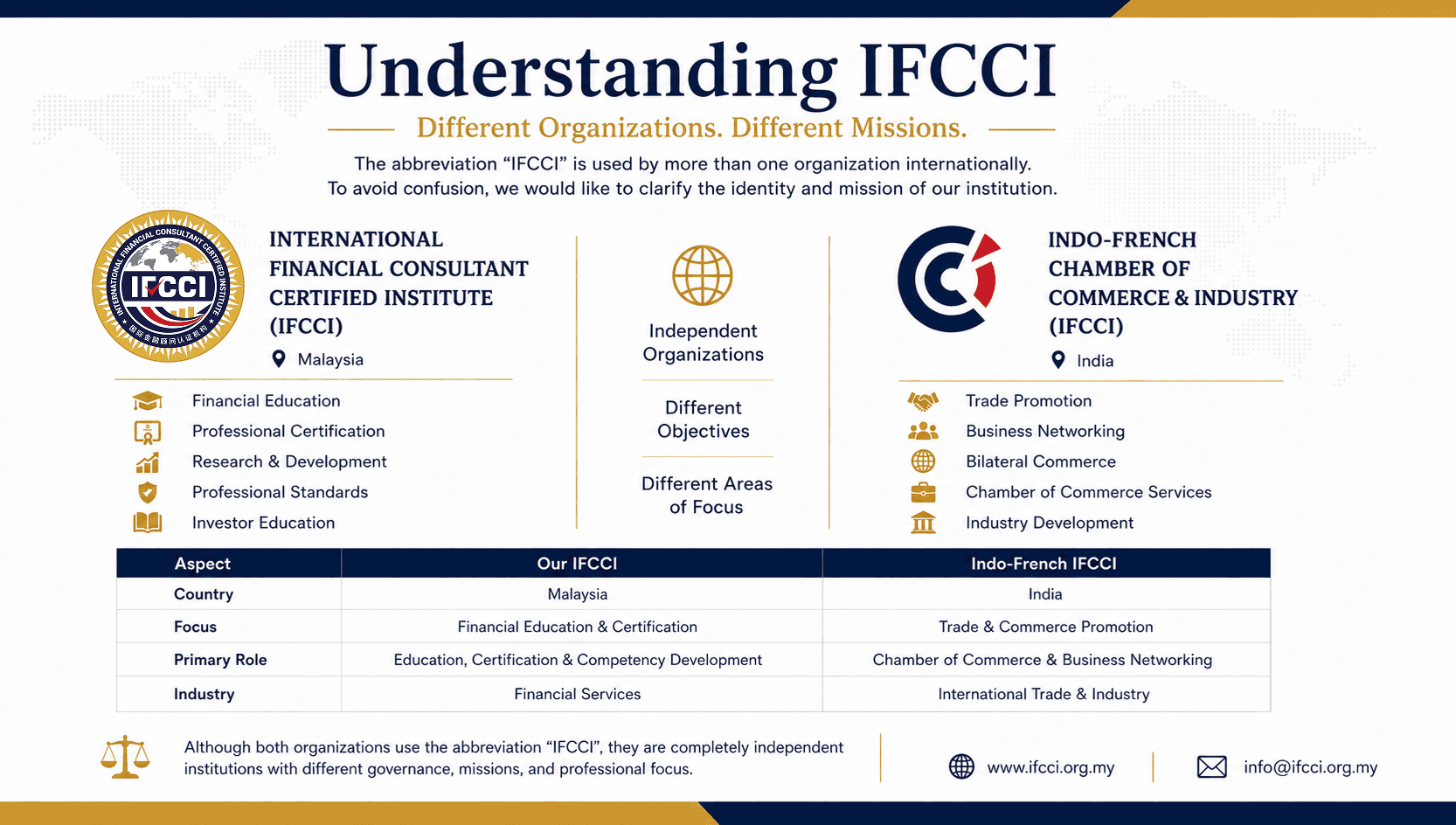
Understanding IFCCI: International Financial Consultant Certified Institute and Other Organizations Using the IFCCI Acronym
27 Jul 2026

Why International Financial Skills Championships Matter in Developing Global Financial Excellence
13 Jul 2026