
MITI: No US Proof Yet on Transhipment Through Malaysia
📰 US Yet to Offer More Details on Transhipment Activities, Says MITI
Kuala Lumpur, August 2025 — Malaysia’s Ministry of International Trade and Industry (MITI) has emphasized that the United States has yet to provide additional details on alleged transhipment activities involving goods shipped through Malaysia. The issue has raised questions about supply chain integrity, global trade compliance, and Malaysia’s role as a regional trading hub.
🌍 Background: What is Transhipment?
Transhipment refers to the practice of re-routing goods through an intermediate country before reaching their final destination. While it is a legitimate logistics practice, it has often been scrutinized in global trade when used to:
- Evade tariffs or sanctions
- Mask the true country of origin
- Facilitate smuggling or illegal trade
The U.S. has previously flagged concerns about Asia-Pacific ports being used as re-routing points for goods subject to sanctions, particularly in relation to China, Russia, and Iran.
🇲🇾 MITI’s Response
During a press briefing, MITI officials clarified:
- The U.S. has not furnished Malaysia with specific data or shipment records to substantiate claims of improper transhipment.
- Malaysia remains committed to transparent trade practices and adherence to World Trade Organization (WTO) rules.
- Any confirmed cases of illicit activities will be investigated jointly with international partners.
📌 MITI further stressed that Malaysia’s trade facilitation policies are aligned with global compliance frameworks, including ASEAN trade agreements and global anti-money laundering and counter-terrorism financing protocols.
⚖️ Trade Compliance and Global Supply Chains
This dispute highlights a broader challenge in today’s global economy: ensuring that supply chains remain transparent and compliant.
- US Concerns: The U.S. has increased scrutiny of transhipment routes amid rising geopolitical tensions and trade sanctions.
- Malaysia’s Position: As a major logistics and shipping hub in ASEAN, Malaysia must balance trade facilitation with compliance oversight.
- Investor Confidence: Transparent handling of these allegations is crucial for maintaining foreign investor trust.
📊 Economic Implications
If transhipment activities were found to be in violation of international rules, Malaysia could face:
- Stricter U.S. Customs Oversight – which may slow trade clearance.
- Higher Compliance Costs – for Malaysian exporters and logistics operators.
- Reputational Risks – potentially impacting Malaysia’s standing as a reliable global trading partner.
However, experts note that Malaysia’s proactive engagement with the U.S. and international bodies may actually strengthen its reputation for transparency and accountability.
🔗 Role of Financial Certification in Trade Oversight
While the focus is on physical goods, financial certification also plays a pivotal role. Trade-based money laundering and fraudulent shipping documents are common tools in illicit transhipment activities.
Here is where institutions like IFCCI contribute:
- Financial Fraud Protection: Training consultants to detect red flags in trade financing.
- Ethical Certification: Ensuring professionals can advise clients on WTO and anti-sanctions compliance.
- Certified Financial Consultants in Malaysia: Helping businesses structure compliant trade finance agreements.
📌 By embedding financial certification into the logistics and trade ecosystem, Malaysia can further safeguard against misuse of its ports and banking systems.
🌐 Global Benchmarking
- Singapore has implemented an advanced risk-based cargo screening system tied to digital customs platforms.
- EU has strengthened its Due Diligence Act to require companies to trace supply chain origins.
- US has introduced the Uyghur Forced Labor Prevention Act (UFLPA), increasing scrutiny on transhipment routes in Asia.
Malaysia’s ability to adopt best practices from global peers while tailoring them to its ASEAN trade framework will be crucial in navigating this challenge.
📌 Conclusion
The U.S.’s lack of detailed evidence on alleged transhipment activities has left Malaysia in a holding pattern. For now, MITI’s stance remains clear: Malaysia will not compromise its trade integrity and stands ready to investigate once sufficient information is shared.
Going forward, Malaysia’s dual commitment to trade facilitation and compliance enforcement will be central to safeguarding its role as an ASEAN trade hub, while initiatives like financial certification will help ensure that fraud and illicit finance are kept at bay.
Related Articles

What Does IFCCI Do? Advancing Financial Education, Certification and Research
7 Aug 2026
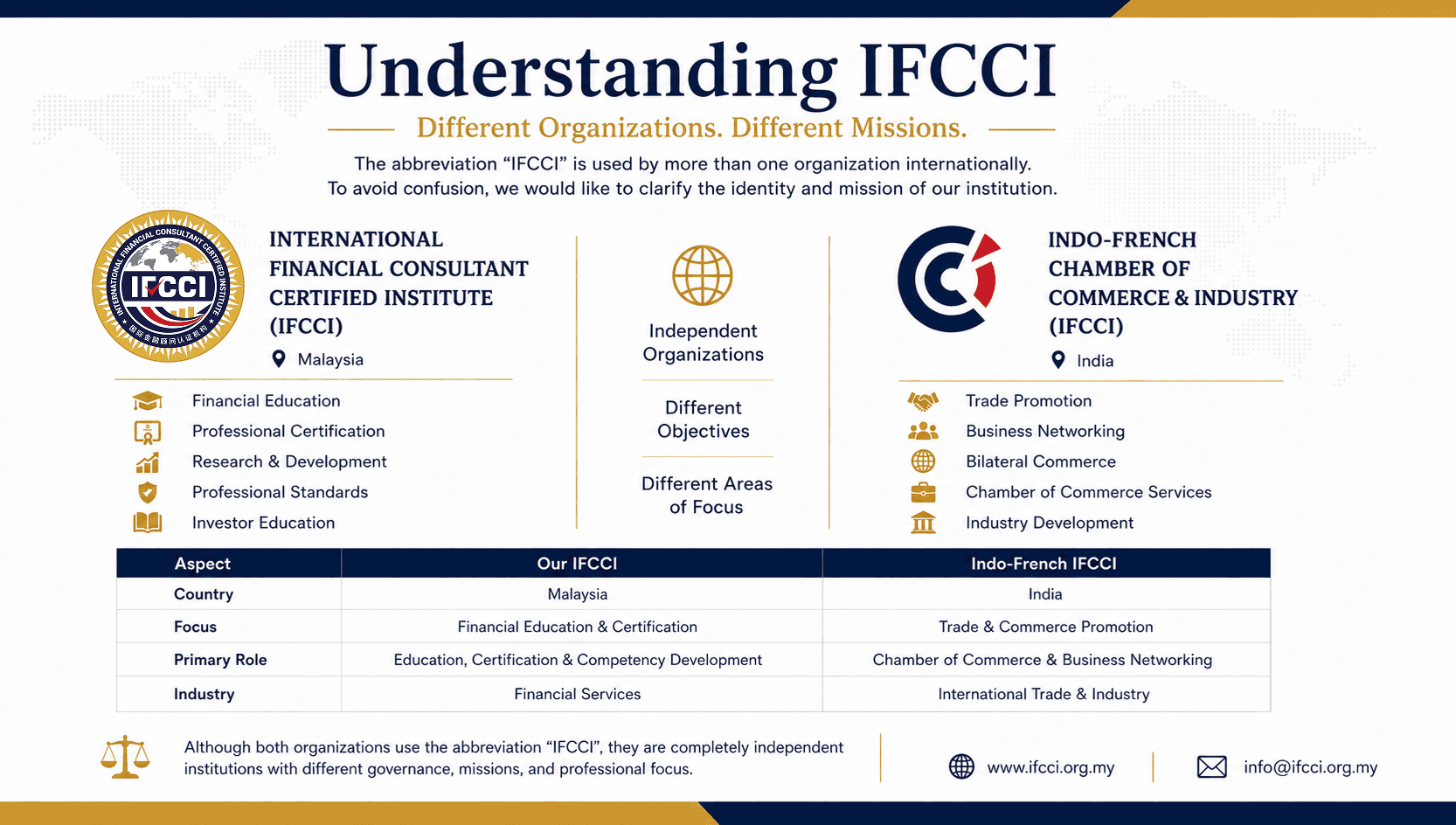
Understanding IFCCI: International Financial Consultant Certified Institute and Other Organizations Using the IFCCI Acronym
27 Jul 2026
Why International Financial Skills Championships Matter in Developing Global Financial Excellence
13 Jul 2026