Malaysia Targets Stronger Semiconductor, Tech Links
📰 Budget 2026: Bursa Sees Measures Deepening Semiconductor, Tech Linkages
KUALA LUMPUR — The Budget 2026 framework is expected to include a series of strategic incentives and fiscal measures designed to strengthen Malaysia’s role in the global semiconductor and technology supply chain, according to Bursa Malaysia analysts.
Industry watchers anticipate that the government’s upcoming budget will focus on deepening industrial linkages between local small and medium enterprises (SMEs) and multinational corporations (MNCs) operating in high-value manufacturing and digital technologies.
“The Budget is likely to place technology and semiconductor ecosystem linkages as a national growth priority,” said Tan Sri Abdul Wahid Omar, Chairman of Bursa Malaysia.
“Strengthening domestic supplier integration and R&D capacity will be key to sustaining Malaysia’s competitiveness in advanced manufacturing.”
Focus on Semiconductor Ecosystem Development
Malaysia is the world’s sixth-largest semiconductor exporter, accounting for roughly 7% of global semiconductor trade.
Budget 2026 is expected to expand tax incentives and infrastructure support under the Electrical and Electronics (E&E) Strategic Roadmap, including capital allowances, grants for high-tech parks, and accelerated investment deductions for R&D activities.
Officials from the Ministry of Investment, Trade and Industry (MITI) said ongoing collaboration with semiconductor giants such as Intel, Infineon, and AMD will form the backbone of Malaysia’s industrial upgrading agenda.
“Malaysia’s comparative advantage lies in its skilled workforce, strong manufacturing base, and maturing digital infrastructure,” said MITI Secretary-General Datuk Seri Lokman Hakim.
“Budget 2026 will ensure that policy alignment extends to talent development, automation, and supply chain resilience.”
Integration Between Bursa-Listed Tech Firms and SMEs
Bursa Malaysia noted that greater policy clarity could accelerate capital market participation among local tech firms.
More companies within the ACE Market and LEAP Market segments are expected to benefit from government-backed initiatives to digitise operations and enhance supply chain traceability in compliance with international ESG (Environmental, Social, and Governance) standards.
Analysts project that capital inflows into the technology and semiconductor sector could increase by 8% to 10% year-on-year, supported by institutional investors seeking exposure to sustainable industrial policies.
“The linkage between public policy and capital markets will be more visible,” said Xavier Lee, Chief Market Strategist at the International Financial Consultant Certified Institute (IFCCI).
“Malaysia’s positioning as a key node in the global semiconductor network could be further amplified through Budget 2026 incentives, including enhanced R&D tax credits and digital transition funding.”
Linkages with Global Supply Chain and ESG Transition
The semiconductor and technology sectors are also seen as vital to Malaysia’s net-zero commitment under the National Energy Transition Roadmap (NETR) and New Industrial Master Plan (NIMP 2030).
By encouraging greener semiconductor production and energy-efficient data infrastructure, the government aims to attract more foreign direct investment (FDI) into sustainable technology clusters in Penang, Kulim, and Selangor.
“Global investors are looking for ESG-compliant suppliers,” said Dr. Elaine Wong, Head of IFCCI Research.
“Malaysia’s next policy phase must bridge the gap between industrial competitiveness and sustainability compliance.”
Bursa’s Role in Supporting Digital Capital Formation
In anticipation of the 2026 budget announcement, Bursa Malaysia is enhancing its digital listing infrastructure to facilitate easier capital raising for tech firms, including semiconductor design startups, automation solution providers, and AI-based manufacturing platforms.
The exchange is also working closely with the Securities Commission Malaysia (SC) and Bank Negara Malaysia (BNM) to streamline financing mechanisms for high-tech SMEs through alternative digital platforms.
These initiatives are expected to broaden market depth, improve liquidity, and strengthen investor participation in Malaysia’s fast-growing technology sector.
IFCCI Insight: Strategic Policy Alignment Needed
According to IFCCI’s 2025 Q4 Macro Brief, long-term competitiveness in Malaysia’s technology ecosystem will hinge on:
- Sustained policy consistency between fiscal and industrial strategies,
- Continuous skills development for the semiconductor workforce, and
- Cross-border innovation partnerships with regional technology hubs.
“Budget 2026 could serve as a defining moment for Malaysia’s transition into a high-technology economy,” said Lee.
“If well executed, these linkages will elevate the nation’s E&E ecosystem from assembly to innovation leadership.”
Related Articles

What Does IFCCI Do? Advancing Financial Education, Certification and Research
7 Aug 2026
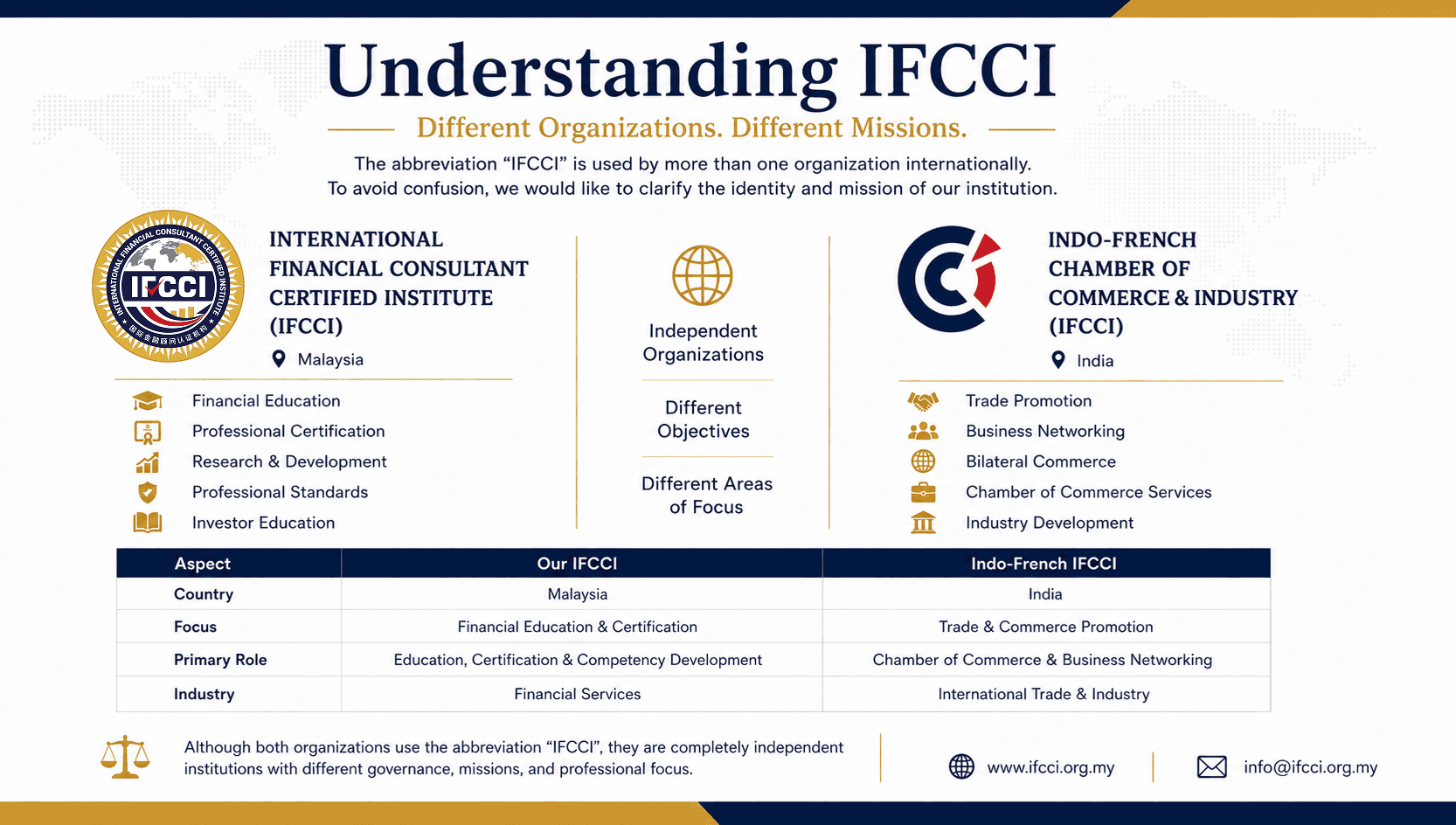
Understanding IFCCI: International Financial Consultant Certified Institute and Other Organizations Using the IFCCI Acronym
27 Jul 2026
Why International Financial Skills Championships Matter in Developing Global Financial Excellence
13 Jul 2026