
Japan Targets $330B+ Investment in AI and Semiconductor
Japan Signals a Strategic Pivot Toward Advanced Technologies
Japan’s Finance Minister Katayama stated that the government aims to invest more than $330 billion in artificial intelligence and semiconductor-related industries, marking one of the most ambitious technology investment commitments in the country’s modern economic history.
The announcement underscores Tokyo’s intent to reposition Japan at the core of next-generation global supply chains, as competition intensifies across AI infrastructure, advanced chip manufacturing, and critical digital technologies.
A Long-Term Industrial Strategy, Not a Short-Term Stimulus
According to policy guidance accompanying the statement, the investment plan is structured as a multi-year industrial strategy, rather than a one-off fiscal stimulus.
Key objectives include:
- Strengthening domestic semiconductor manufacturing capacity
- Accelerating AI research, deployment, and commercialization
- Reducing strategic dependence on overseas chip supply chains
- Enhancing national economic security and technological sovereignty
The funding is expected to be mobilized through a combination of public spending, policy-backed financing, tax incentives, and private-sector participation.
Semiconductors at the Core of Economic Security
Semiconductors have emerged as a central pillar of Japan’s economic and national security planning. Global disruptions in recent years exposed vulnerabilities in highly concentrated supply chains, reinforcing the need for domestic production resilience.
Japan’s approach focuses on:
- Advanced logic chips for AI and high-performance computing
- Power semiconductors critical to electric vehicles and industrial automation
- Materials, equipment, and precision manufacturing where Japan retains global leadership
Rather than competing solely on cutting-edge nodes, Japan aims to leverage its strengths across the entire semiconductor value chain.
AI Investment Targets Productivity and Demographic Challenges
Artificial intelligence is being positioned as a solution to Japan’s long-standing structural challenges, including labor shortages, productivity stagnation, and an aging population.
Policy priorities include:
- AI integration in manufacturing and logistics
- Healthcare and elderly care automation
- Financial services optimization and risk management
- Public-sector digital transformation
The government views AI not only as a growth engine but also as a tool to sustain economic vitality amid demographic headwinds.
Public–Private Collaboration as a Central Pillar
Officials emphasized that the $330 billion figure reflects combined public and private investment, with the government acting as a catalyst rather than a sole financier.
Expected mechanisms include:
- Subsidies and matching grants for strategic projects
- Government-backed loans for capital-intensive fabs
- Regulatory streamlining to accelerate deployment
- Partnerships with domestic firms and international allies
This collaborative model aims to crowd in private capital while aligning investments with national priorities.
Geopolitical Context Shapes Japan’s Strategy
Japan’s investment push comes amid intensifying global competition over AI leadership and semiconductor dominance. Trade tensions, export controls, and geopolitical fragmentation have elevated technology policy to a strategic domain.
Tokyo’s strategy seeks to:
- Maintain alignment with allied economies
- Secure access to critical technologies
- Preserve Japan’s role as a trusted technology partner
By committing substantial capital, Japan signals long-term policy stability to both domestic and foreign investors.
Fiscal Considerations and Market Implications
While ambitious in scale, policymakers stressed that the investment plan will be implemented with fiscal discipline. Funding is expected to be phased and prioritized to avoid destabilizing public finances.
From a market perspective:
- Technology and industrial sectors may see sustained policy support
- Capital expenditure cycles could lengthen across chips and AI
- Japan’s medium-term growth outlook may benefit from higher productivity investment
However, execution risk remains a key variable, particularly given the scale and complexity of advanced manufacturing projects.
IFCCI Assessment: A Structural Bet on Future Growth
The IFCCI Research Division assesses Japan’s $330 billion AI and semiconductor initiative as a structural growth strategy, rather than a cyclical response.
Key implications:
- Reinforces Japan’s shift toward strategic industrial policy
- Enhances long-term competitiveness amid global fragmentation
- Positions AI and chips as foundational to economic resilience
Success will depend on coordination, talent development, and sustained political commitment, but the strategic intent is clear and credible.
Conclusion
Japan’s plan to invest more than $330 billion in AI and semiconductor industries represents a decisive move to secure its economic future in an increasingly technology-driven global economy.
By aligning fiscal resources, industrial policy, and private-sector participation, Tokyo aims to transform structural challenges into opportunities—placing advanced technology at the heart of its next growth phase.
Related Articles

What Does IFCCI Do? Advancing Financial Education, Certification and Research
7 Aug 2026
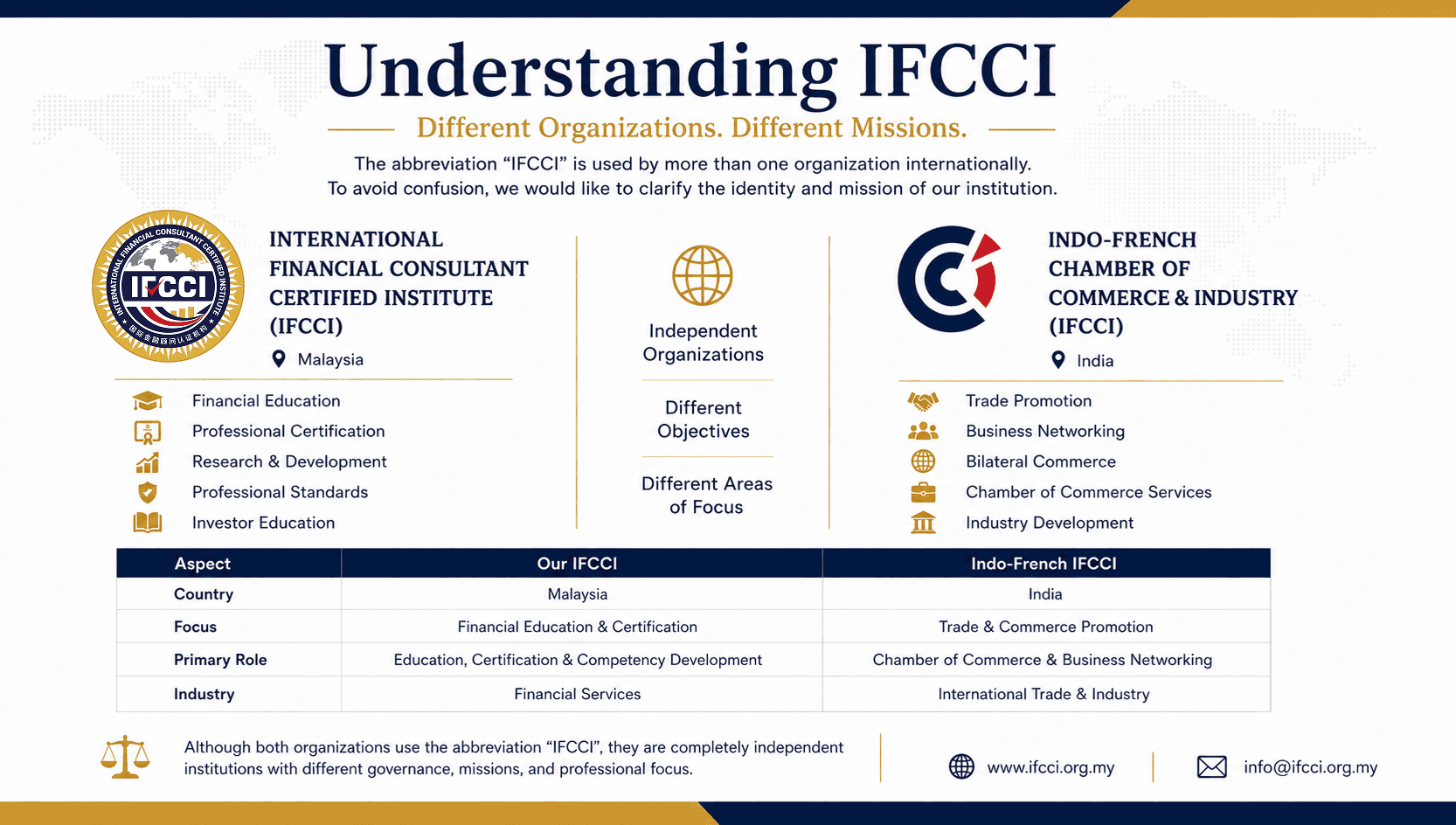
Understanding IFCCI: International Financial Consultant Certified Institute and Other Organizations Using the IFCCI Acronym
27 Jul 2026

Why International Financial Skills Championships Matter in Developing Global Financial Excellence
13 Jul 2026