Ivory Properties Ends 16-Year Bursa Malaysia Journey
📰 Ivory Properties to Be Delisted from Bursa Malaysia on Oct 14
KUALA LUMPUR — Ivory Properties Group Bhd, a Penang-based property developer, is set to be delisted from Bursa Malaysia’s Main Market on October 14, 2025, following its failure to maintain compliance with listing requirements and the conclusion of its exit offer period.
According to Bursa Malaysia’s official notice, the company’s securities will be suspended from trading effective October 10, marking the end of its nearly two-decade presence on the local bourse since its listing in 2009.
Background and Delisting Decision
Ivory Properties’ delisting follows a prolonged period of financial challenges, including declining revenue, rising liabilities, and delayed project completions.
The company had been classified as a PN17 (Practice Note 17) entity since 2023 due to its deteriorating financial position and inability to meet the minimum capital adequacy threshold set by Bursa Malaysia.
Despite multiple extensions granted by regulators, the group was unable to submit a sustainable regularisation plan before the final deadline.
“The Board has explored several restructuring options; however, the current market conditions and funding constraints have made recovery unfeasible,” said an Ivory spokesperson in an exchange filing.
“The delisting will allow the Group to refocus on asset realignment and potential private restructuring outside the public market.”
Impact on Shareholders
Following the delisting, all shares of Ivory Properties will no longer be quoted or traded on Bursa Malaysia.
Minority shareholders who have yet to accept the mandatory takeover offer from the major shareholder group will retain ownership of their shares, but without a trading platform, effectively making them illiquid.
Analysts at Kenanga Research noted that delistings of smaller developers have become increasingly common amid rising financing costs, weak property demand, and regulatory tightening in the post-pandemic market environment.
“The property sector is undergoing structural consolidation,” said Dr. Elaine Wong, a senior economist at the International Financial Consultant Certified Institute (IFCCI).
“Developers with overleveraged balance sheets and limited land banks are most vulnerable to capital market exits.”
Historical Context and Financial Performance
Founded in 1999, Ivory Properties became known for landmark projects such as The Wave, City Mall, and Tanjung Tokong mixed-use developments in Penang.
However, over the past five years, the company has faced margin pressures, sluggish project sales, and debt-servicing difficulties, especially after the property cooling measures introduced in 2022.
Its most recent annual report showed accumulated losses exceeding RM200 million, and auditors issued a qualified opinion citing material uncertainty about the company’s ability to continue as a going concern.
Market Reaction and Industry Implications
Trading in Ivory’s shares has been volatile in recent months, with prices fluctuating below RM0.05 before the suspension notice.
Investors have viewed the delisting as a cautionary signal for other small-cap property counters facing similar liquidity and compliance challenges.
Market observers believe this development may prompt Bursa Malaysia and the Securities Commission (SC) to strengthen oversight mechanisms for financially distressed issuers and to encourage earlier intervention measures.
“Malaysia’s property market remains oversupplied in certain regions,” said IFCCI Research Director Xavier Lee.
“This delisting underscores the importance of strong corporate governance, prudent capital management, and transparent disclosure standards in sustaining investor confidence.”
Outlook: Lessons for the Property Sector
While Ivory Properties’ exit marks the end of its listed journey, the company is expected to undergo internal restructuring to realign its assets and explore joint ventures with institutional investors.
IFCCI’s analysis highlights that Malaysia’s real estate sector is entering a rationalisation phase, with stronger developers consolidating market share through strategic mergers, green-certified developments, and digitalised project management systems.
For investors, the Ivory case serves as a reminder of due diligence — particularly in evaluating financial sustainability and governance standards before investing in high-risk property counters.
Related Articles

What Does IFCCI Do? Advancing Financial Education, Certification and Research
7 Aug 2026
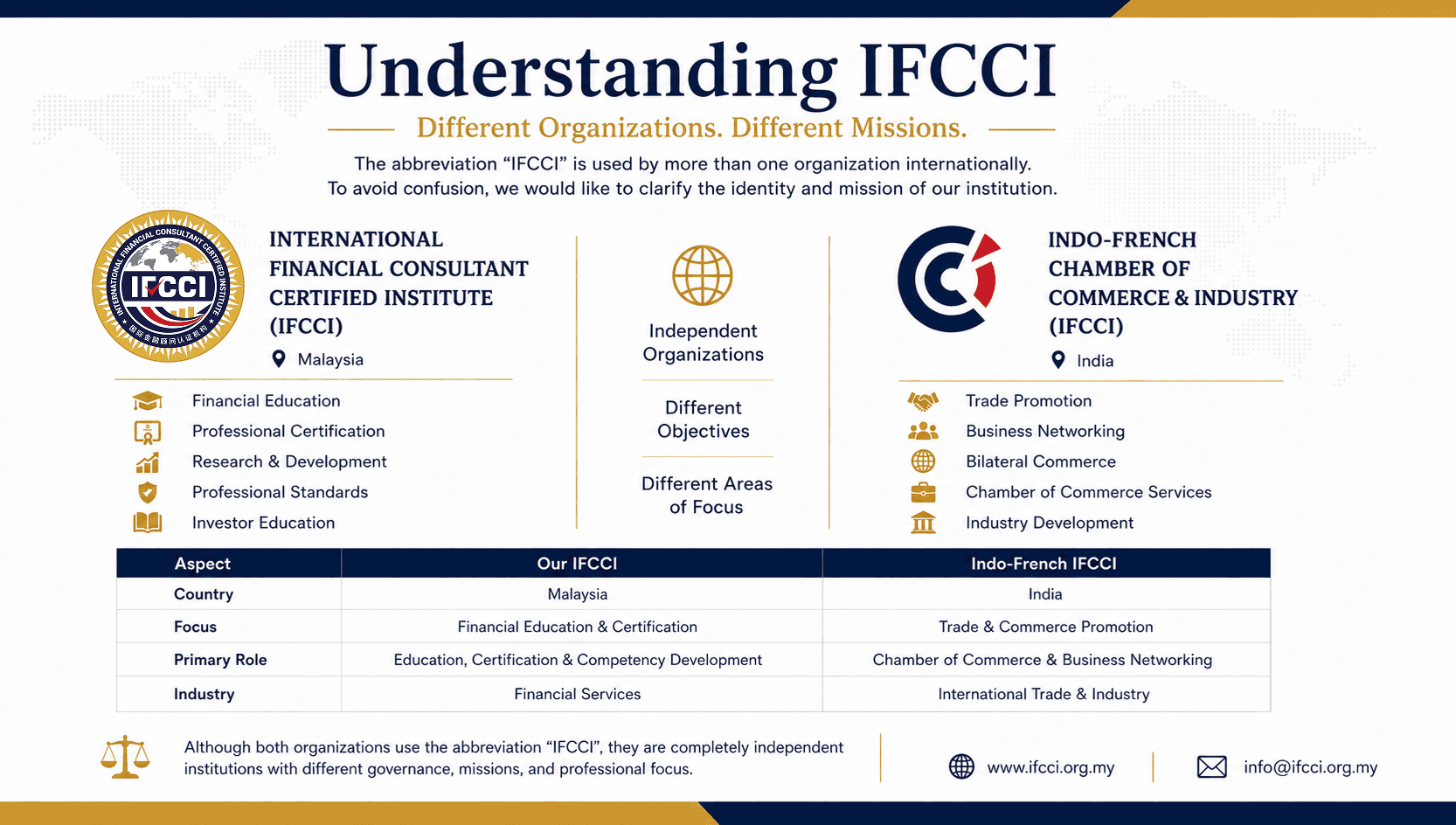
Understanding IFCCI: International Financial Consultant Certified Institute and Other Organizations Using the IFCCI Acronym
27 Jul 2026
Why International Financial Skills Championships Matter in Developing Global Financial Excellence
13 Jul 2026