
IMF Raises China’s 2026 Economic Growth Forecast to 4.5%
The International Monetary Fund (IMF) has upgraded its forecast for China’s economic growth in 2026, revising its projection to 4.5% from the earlier estimate of 4.2%. The revision reflects the Fund’s assessment that China’s policy environment, stabilising domestic demand, and improving external conditions have collectively strengthened the country’s medium-term growth outlook.
The upward revision marks one of the IMF’s most notable positive adjustments for China in recent cycles, signalling that the global institution sees greater resilience in the Chinese economy despite ongoing structural headwinds.
Policy Support and Stabilisation Measures Cited
According to the IMF’s latest review, the raised forecast is primarily anchored in:
- Targeted fiscal measures, including infrastructure acceleration and support for strategic sectors such as advanced manufacturing, renewable energy, and digital industries.
- Improving consumer sentiment, supported by easing in the property market decline and modest increases in household spending.
- Stabilisation in external demand, as global supply chains normalise and Asia’s regional growth regains momentum.
- Continued monetary support, with the People’s Bank of China maintaining a carefully calibrated easing stance to support liquidity while managing financial stability risks.
The IMF noted that these factors collectively enhance visibility for China’s medium-term growth trajectory and reduce downside risks compared with earlier assessments.
Property Sector Remains a Key Uncertainty
Despite the improved forecast, the IMF maintained its view that China continues to face significant structural challenges. The property sector’s adjustment cycle, demographic pressures, and slower productivity gains remain areas requiring careful policy management.
The Fund emphasised that while recent measures—such as expanded credit facilities, targeted housing demand incentives, and stepped-up local government debt restructuring—have helped stabilise sentiment, sustained improvement will require time.
Global Implications
The IMF’s upward revision carries notable implications for global economic conditions in 2026. As the world’s second-largest economy, China’s expansion contributes materially to global trade volumes, commodity demand, and intra-Asian supply chain activity.
A stronger Chinese outlook may:
- Improve trade momentum across emerging Asia.
- Provide a buffer for global manufacturing orders in an environment where advanced economies continue to slow.
- Support energy and metals demand, lifting price stability across key global markets.
IFCCI Assessment: Moderate Optimism Appropriate
The IFCCI Research Division assesses the IMF’s revision as broadly consistent with improving cyclical indicators across China’s industrial, service, and export sectors.
Key forward-looking signals include:
- A rebound in high-tech manufacturing outputs such as semiconductors and new-energy equipment.
- Resilient consumer services expenditure, especially in travel, logistics, and domestic leisure segments.
- Increasing private investment in high-value industries driven by policy incentives and capital market support.
However, the IFCCI continues to track underlying risks, including local government fiscal pressures, long-term demographic drag, and global geopolitical uncertainties that could influence external demand.
Given these mixed factors, IFCCI regards a 4.5% growth projection as optimistic but feasible, contingent on continuous, coordinated policy execution throughout 2025 and 2026.
Outlook for 2026
The IMF stated that China’s growth momentum is likely to solidify by mid-2026 as structural reforms begin to yield more visible productivity gains. It anticipates particularly strong contributions from:
- Electric vehicle and clean-energy technology exports
- Domestic consumption stabilisation
- High-tech manufacturing capacity expansion
The Fund also suggested that China’s ongoing focus on innovation-driven growth could cushion the impact of lower traditional industrial activity.
Related Articles

What Does IFCCI Do? Advancing Financial Education, Certification and Research
7 Aug 2026
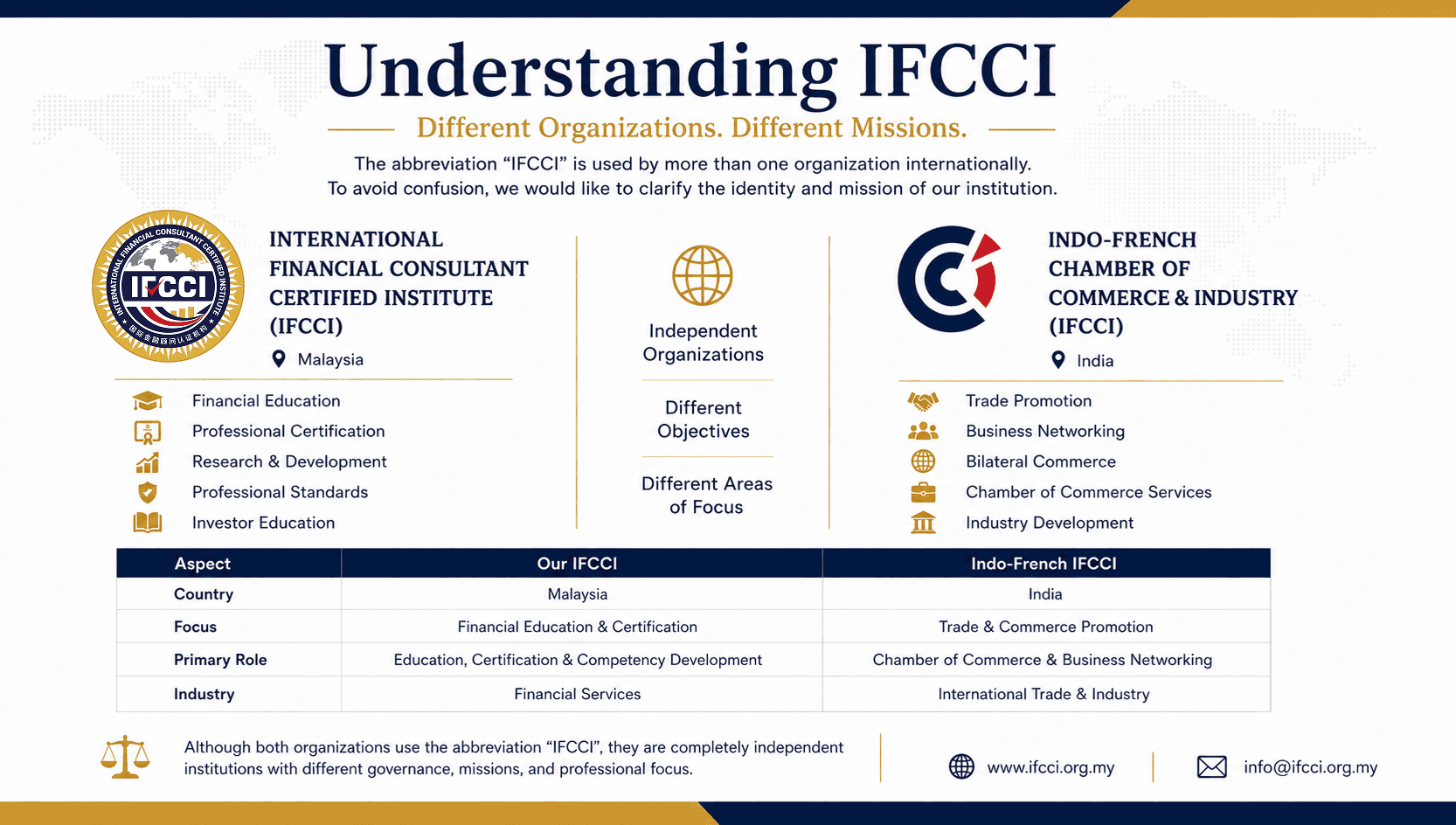
Understanding IFCCI: International Financial Consultant Certified Institute and Other Organizations Using the IFCCI Acronym
27 Jul 2026
Why International Financial Skills Championships Matter in Developing Global Financial Excellence
13 Jul 2026