What Is Forex Trading?
The foreign exchange market—often called forex or FX—is a global marketplace where banks, institutions, and individual traders speculate on the exchange rates between two currencies. It is the largest financial market in the world.

How Forex Trading Works
Forex trading involves predicting whether the value of one currency will rise or fall relative to another.
When you trade forex, you are always buying one currency and selling another at the same time.
Currency values are influenced by a range of factors, including:
- Economic conditions
- Political and geopolitical events
- Trade and capital flows

If you have experience in other financial markets (such as stocks), the mechanics will feel familiar. Even beginners can learn the process quickly.
How Traders Make Money
The goal in forex trading is to exchange one currency for another with the expectation that the price will move in your favor.
If the currency you bought increases in value relative to the one you sold, you make a profit.
Example
| Trader’s Action | EUR | USD |
|---|---|---|
| You buy 10,000 EUR at an EUR/USD rate of 1.1800 | +10,000 | –11,800 |
| Two weeks later, you sell the 10,000 EUR at 1.2500 | –10,000 | +12,500 |
| Profit | 0 | +700 |
- 10,000 EUR × 1.1800 = 11,800 USD
- 10,000 EUR × 1.2500 = 12,500 USD
- Profit = 700 USD
Understanding Exchange Rates
An exchange rate simply tells you how much one currency is worth in terms of another.
For example, the USD/CHF rate shows how many U.S. dollars are needed to buy one Swiss franc (or vice versa).
How to Read a Forex Quote
Currency pairs are always quoted together, such as GBP/USD or USD/JPY, because every transaction involves two currencies.
Base vs. Quote Currency
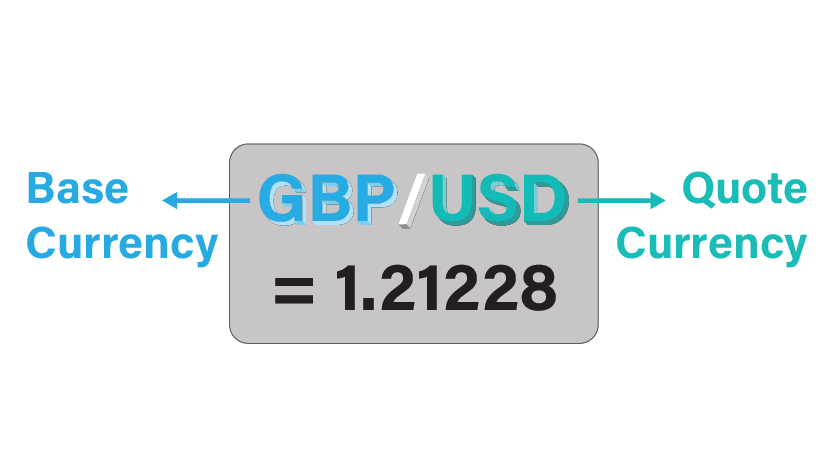
- The base currency is the first currency in the pair (GBP in GBP/USD).
- The quote (counter) currency is the second currency (USD in GBP/USD).
- The base currency always represents one unit.
When buying: The exchange rate tells you how much of the quote currency is needed to purchase one unit of the base currency.
When selling: The exchange rate shows how much of the quote currency you will receive for one unit of the base currency.
Example: If GBP/USD = 1.21228
- Buying 1 GBP costs 1.21228 USD
- Selling 1 GBP gives you 1.21228 USD
You may also see the pair written as GBPUSD, GBP-USD, or similar formats—they all mean the same thing.
Long and Short Positions
Before placing a trade, you decide whether to buy or sell.
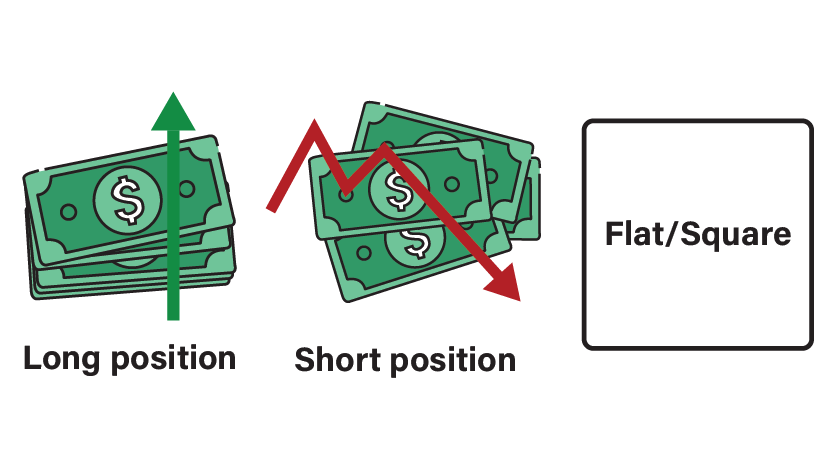
Going Long (Buy)
- You buy the base currency and sell the quote currency.
- You profit if the base currency increases in value.
- “Long = Buy.”

Going Short (Sell)
- You sell the base currency and buy the quote currency.
- You profit if the base currency decreases in value.
- “Short = Sell.”
Flat or Square
If you have no open positions, you are “flat” or “square.”
Closing a position is called “squaring up.”
Bid, Ask, and Spread
Every forex quote displays two prices: the bid and the ask.
Bid Price
- The price at which your broker buys the base currency from you.
- It’s the best price at which you can sell to the market.
Ask (Offer) Price
- The price at which your broker sells the base currency to you.
- It’s the best price at which you can buy from the market.
Spread
- The difference between the bid and ask prices.
- Example:
- Bid: 1.34568
- Ask: 1.34588
- Spread = 0.00020
If you click Sell, you execute at the bid price (1.34568).
If you click Buy, you execute at the ask price (1.34588).
Related Articles

What Does IFCCI Do? Advancing Financial Education, Certification and Research
7 Aug 2026
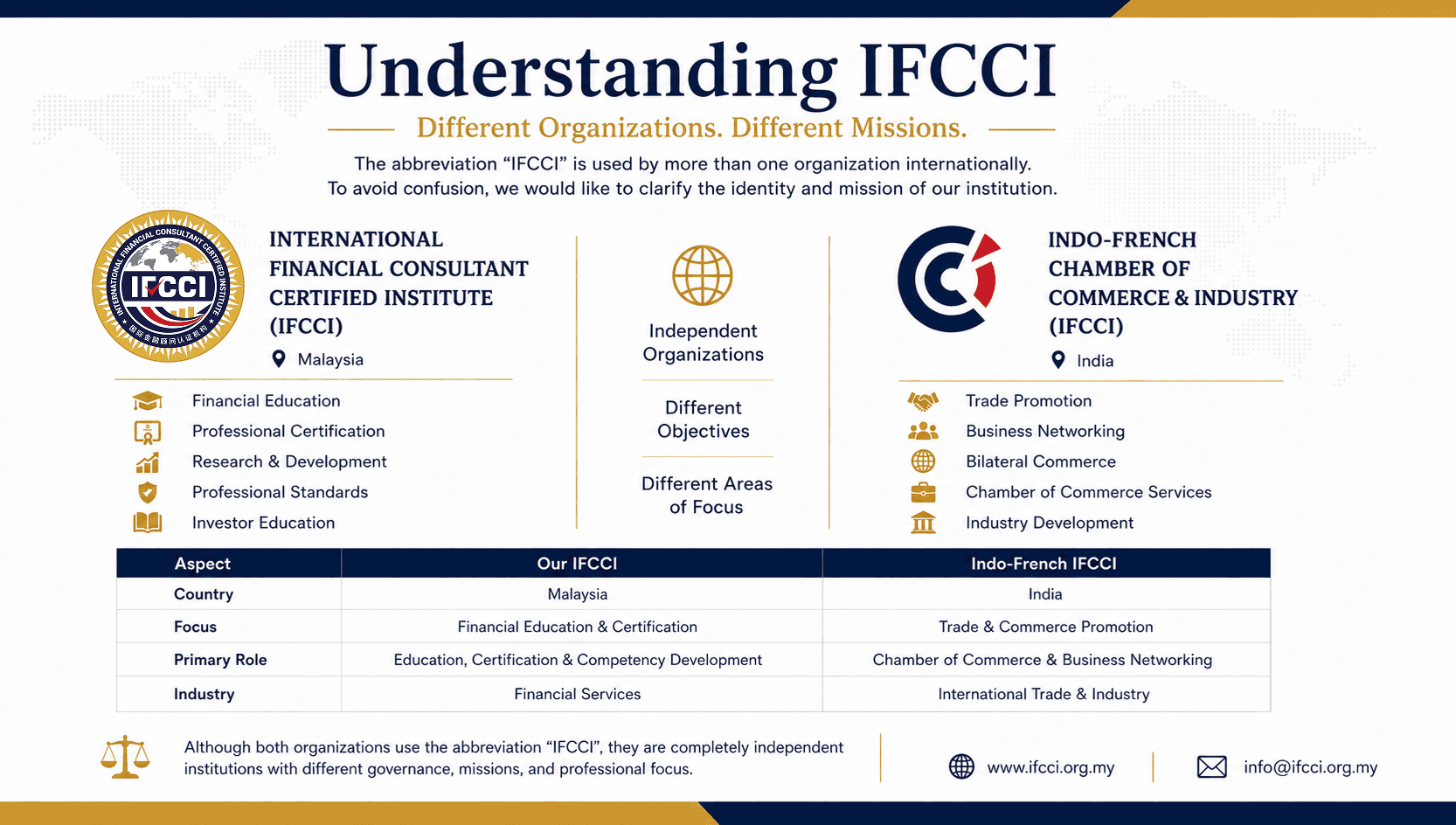
Understanding IFCCI: International Financial Consultant Certified Institute and Other Organizations Using the IFCCI Acronym
27 Jul 2026

Why International Financial Skills Championships Matter in Developing Global Financial Excellence
13 Jul 2026