
How Competitions Build Industry Standards: Case Studies From Sports And Science

Introduction: Why Industry Standards Matter
In every mature industry—whether in finance, healthcare, sports, or science—industry standards play a pivotal role. They create trust, ensure consistency, reduce fraud, and enable fair competition. But few ask the deeper question: Where do these standards come from?
The surprising answer: from competition. Whether it’s Olympic sports or peer-reviewed science, competition between individuals, institutions, or ideas has repeatedly forced industries to align on rules, benchmarks, and verification methods.
This article explores two contrasting but complementary sectors—sports and scientific research—to illustrate how competition has shaped their standards, and what financial education and certification bodies like IFCCI can learn from them.
Part 1: The Sports Industry – From Chaos to Global Rules
🏆 1.1 The Olympic Model: Fair Play Through Global Governance
Before the modern Olympic Games were revived in 1896, sports had no standardized rules across countries. One nation’s version of “wrestling” might be utterly foreign to another. The Olympics brought the first wave of global standardization, aligning formats, weight classes, timing, and eligibility criteria.
Over time, the International Olympic Committee (IOC) worked with individual sport federations to enforce universal standards. For example:
Track and Field: Standard lane widths, timing systems, and qualification rules.
Swimming: Pool measurements, stroke definitions, and anti-doping policies.
Enter the World Anti-Doping Agency (WADA). Established in 1999, WADA developed a universal testing protocol, a global banned substances list, and a lab accreditation system used in over 30 countries.
👉 Lesson: When global competitions expose inconsistencies, they force industries to converge on shared, enforceable standards.
⚽ 1.2 FIFA & VAR: Tech-Driven Transparency in Global Sports
The global football (soccer) industry has long faced controversy over inconsistent refereeing. Different leagues enforced different interpretations, and referee errors shaped the outcomes of multimillion-dollar games.
To address this, FIFA introduced the Video Assistant Referee (VAR) system. After rigorous testing and pilot programs in smaller leagues, VAR became a global standard across FIFA tournaments, driving:
Transparency in judgment
Real-time accountability
Rule refinement through feedback loops
👉 Lesson: Technological competition between leagues (like Premier League vs. La Liga) catalyzed better governance and innovation, eventually becoming industry-wide norms.
Part 2: Scientific Research – Competition and Peer Review
🧪 2.1 Nature vs Science: Prestige as a Quality Filter
The scientific publishing world thrives on prestige-based competition. Journals like Nature and Science compete for the world’s top research papers. This rivalry drives them to set stringent editorial standards, including:
Peer Review: Independent verification by field experts.
Data Transparency: Requiring authors to publish their raw data and methodologies.
Ethics Declarations: Mandatory disclosures of conflicts of interest.
This leads to a positive feedback loop:
Better standards → Higher trust → More citations → Greater prestige → Further standard reinforcement
Over time, practices initiated by top-tier journals have trickled down to smaller publications, effectively creating a global research standard.
🔬 2.2 The Replication Crisis: A Wake-Up Call
In the 2010s, multiple studies revealed that over 50% of published psychology and medicine research couldn’t be replicated. This “Replication Crisis” shook public trust and scientific integrity.
But it also triggered an industry-wide transformation. Competing research labs, journals, and funders began adopting reforms:
Pre-registration of trials
Independent replication teams
Open-source publishing models
👉 Lesson: Even in science, crisis-driven competition leads to standardization through accountability.
Part 3: What Financial Certification Can Learn From These Models
💼 3.1 Why Financial Certification Bodies Need Competitive Pressure
Too often, professional certification bodies operate in insulated silos, with little incentive to update curricula or engage in transparent benchmarking. The absence of competition leads to stagnation, outdated content, and low employer trust.
But organizations like CFA Institute, FPAM, and IFCCI have adopted a different mindset—embracing:
External benchmarking
Cross-institutional audits
Periodic curriculum overhauls
Employer feedback loops
👉 The result? Certifications that evolve with industry needs, not bureaucratic inertia.
🧑🏫 3.2 How IFCCI Applies Competitive Models in Certification Standards
At IFCCI, certification is not a “rubber stamp.” It’s a structured, research-informed, and continuously evolving standard, built on:
Real-world case study competitions during training
R&D-informed curriculum updates based on market trends
Cross-industry benchmarking with organizations like CFA Institute, IBF Singapore, and MAS
“Master Coach” assessments and peer-reviewed lesson plans
For instance, the IFCCI Diploma in CFD Trading includes:
Practical simulations across multiple platforms (e.g., MT5, cTrader)
Peer-reviewed portfolio submissions
Benchmark testing aligned with FCA UK standards
👉 Lesson: Certification, like sports or science, must be stress-tested in competition to gain credibility.
✅ Conclusion: Competition Is Not Chaos—It’s the Birthplace of Order
From the Olympic Games to peer-reviewed journals, from FIFA to Nature, competition has consistently served as the catalyst for clear, trusted, and replicable standards.
Certification bodies in finance must move beyond legacy approaches and embrace competitive benchmarking, peer validation, and transparent R&D. That’s how institutions like IFCCI are redefining what it means to be a certified financial consultant in a global economy.
Want to Learn More ?
Visit ifcci.org.my to learn more about our certification framework, complaint platform, and how we are raising standards across Malaysia’s financial landscape.

Or follow us on our official social channels for updates and insights into financial certification, regulation, and ethics.
This post is published by IFCCI’s Education & Certification Department
— Because a safer, more credible financial industry begins with proper understanding.
- July 8, 2025
- 11:07 am
Related Articles

What Does IFCCI Do? Advancing Financial Education, Certification and Research
7 Aug 2026
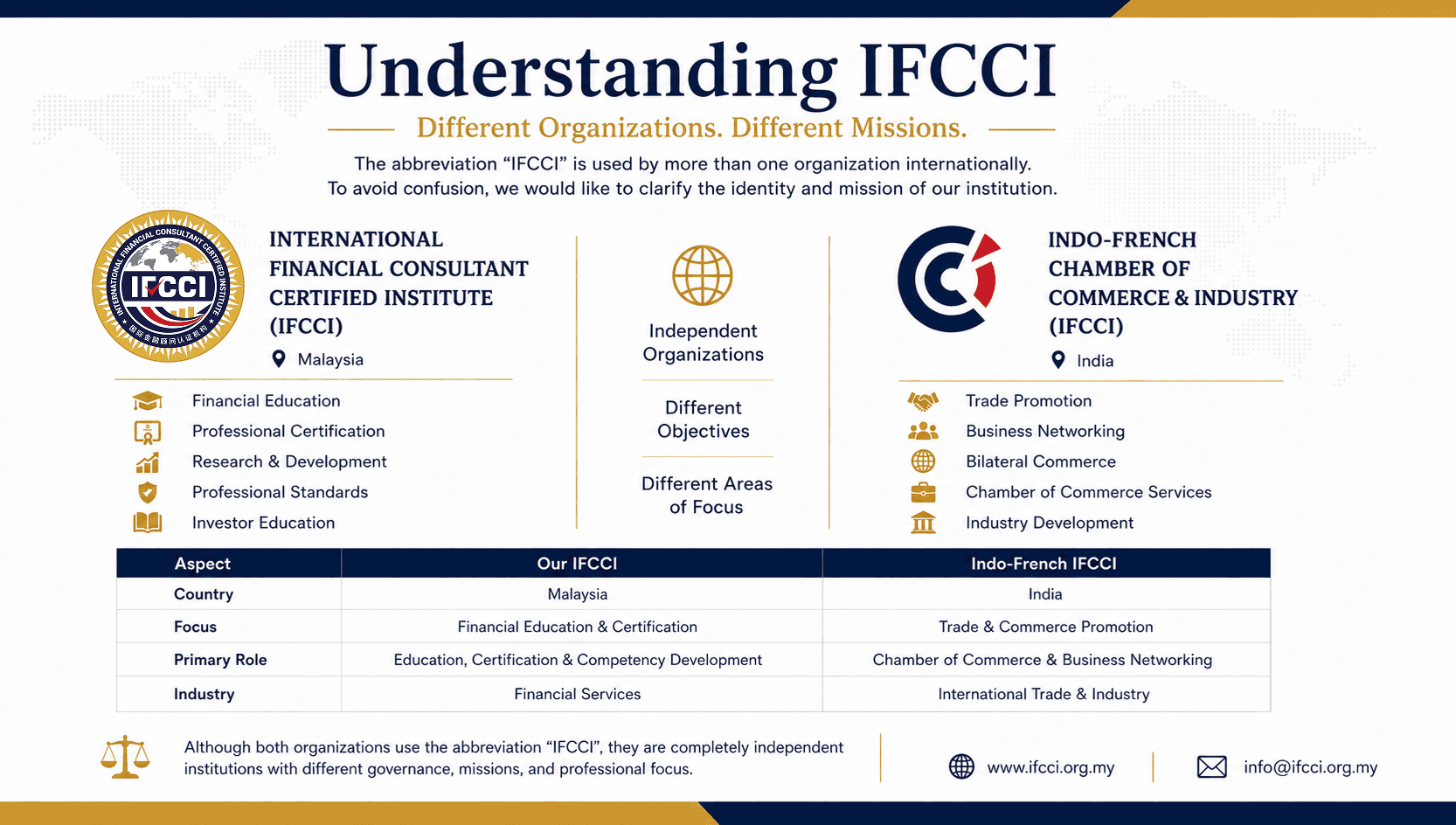
Understanding IFCCI: International Financial Consultant Certified Institute and Other Organizations Using the IFCCI Acronym
27 Jul 2026
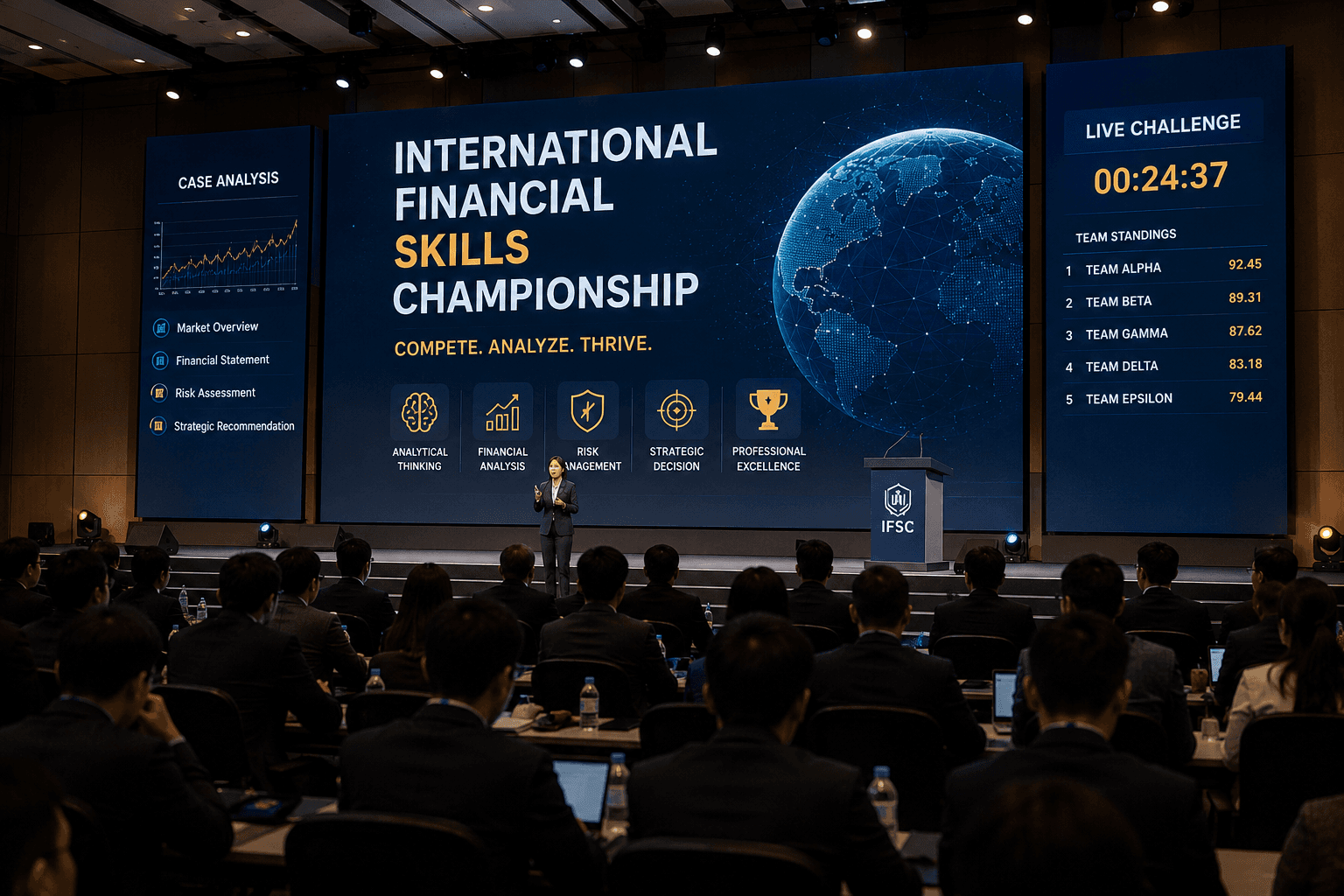
Why International Financial Skills Championships Matter in Developing Global Financial Excellence
13 Jul 2026