
Historical Lessons for the Next Interest Rate Move
As the U.S. Federal Reserve approaches its final meetings of 2025, investors, economists, and policymakers are turning once again to history as a guide. With inflation easing but core prices still elevated, and growth moderating yet resilient, the central question for markets remains:
How far — and how fast — will the Fed move on interest rates from here?
The Federal Reserve’s decisions over the next few months will define not only the trajectory of the U.S. business cycle, but also the global liquidity environment, influencing currencies, bond yields, and capital flows across both developed and emerging markets.
But as Fed Chair Jerome Powell and his colleagues weigh the risks of cutting rates too early or too late, it is worth revisiting the historical precedents — from Paul Volcker’s inflation war in the 1980s to Alan Greenspan’s “measured pace” approach in the early 2000s — that continue to shape how the Fed navigates economic inflection points.
Echoes of the 1995 Soft Landing
In many ways, 2025 resembles the mid-1990s: inflation had surged due to cyclical pressures, the Fed tightened aggressively, and the market feared a hard landing that never came.
In 1995, then-Chair Alan Greenspan orchestrated a rare “soft landing,” cutting the Fed Funds Rate modestly after a tightening cycle without triggering a recession. The economy slowed, inflation cooled, and markets rebounded — a policy balance still admired today.
Analysts at IFCCI note that current market conditions show similar potential, with unemployment stable around 4%, inflation trending near 2.5%, and wage growth softening but still positive.
“The parallels between 1995 and 2025 are striking,” said Dr. Elaine Wu, Chief Macro Strategist at IFCCI.
“The Fed faces a classic calibration challenge — whether to preempt a slowdown or risk reigniting inflation. Historical discipline suggests a gradual, data-aligned easing path.”
However, unlike the 1990s, today’s fiscal dynamics and global shocks — from persistent fiscal deficits to energy market volatility — complicate any simple historical analogy.
The Volcker Legacy: Inflation’s Ghost Still Haunts Policy
No discussion of Fed history is complete without Paul Volcker, the legendary chair who broke the back of 1970s stagflation by pushing rates above 20%.
While 2025’s inflation problem is nowhere near those extremes, the psychological imprint of the Volcker era still shapes the Fed’s caution. Many senior policymakers — including Chair Powell — have repeatedly referenced the importance of “not declaring victory too soon.”
The Fed’s 2021–2023 policy error, where inflation surged past 9% amid delayed tightening, remains a recent reminder of the cost of complacency. This memory has made the current FOMC more risk-averse, even as inflation moderates.
“The Fed’s communication strategy is anchored in credibility recovery,” argues David Chan, Senior Economist at the IFCCI Monetary Policy Unit.
“Rate normalization now is not just about data — it’s about restoring institutional confidence.”
The Fed’s adherence to its “higher for longer” language, even as core inflation cools, underscores how the legacy of past mistakes still defines the tone of present decisions.
Data Dependence — or Data Dilemma?
For the past decade, the Federal Reserve has emphasized data dependence as its guiding principle.
But as macroeconomic volatility increases and structural shifts — such as AI-driven productivity, demographic changes, and supply-chain diversification — alter the data landscape, “data dependence” may itself be under review.
Economic historian Paul McCulley of Georgetown University recently noted that the Fed risks “over-relying on backward-looking indicators in a forward-looking world.”
Indeed, the lag effects of monetary policy — typically 12 to 18 months — mean that current rate levels may already be restraining growth, even if the real economy has yet to fully reflect it.
This temporal mismatch has historically caused both over-tightening (2000) and over-easing (2020) cycles. The lesson, analysts say, is that contextual judgment must complement empirical models.
Market Signals: The Yield Curve Speaks
The U.S. Treasury yield curve, inverted for nearly two years, has been flashing warning signs of potential slowdown. Historically, such inversions have preceded every U.S. recession since the 1970s, though timing has varied widely.
However, post-pandemic fiscal dynamics have distorted the predictive power of traditional models. With the U.S. running sustained deficits and issuing long-term bonds aggressively, term premiums have risen independently of cyclical risk.
Still, markets appear to be pricing in at least two rate cuts by mid-2026, assuming inflation continues its downward path.
The CME FedWatch Tool currently indicates a 65% probability of a rate cut in Q2 2026, though expectations remain highly sensitive to monthly CPI and labor data.
“The Fed’s next move will likely be guided not by one data print, but by cumulative consistency,” said IFCCI’s Dr. Wu.
“The FOMC will want confirmation across multiple indicators — consumption, wages, and housing — before pivoting decisively.”
Global Spillovers: The Dollar and Beyond
Fed history also teaches that U.S. monetary shifts never stay domestic.
The strength of the U.S. dollar, the world’s reserve currency, means that every Fed rate adjustment has ripple effects on emerging markets, global liquidity, and cross-border capital flows.
The Asian financial crises of 1997, the taper tantrum of 2013, and the post-COVID dollar surge of 2022 all illustrated how sudden changes in U.S. policy can destabilize foreign economies.
As of Q4 2025, the U.S. Dollar Index (DXY) remains near multi-year highs, driven by interest rate differentials.
Any signal of easing from the Fed could lead to a weaker dollar, firmer commodity prices, and capital inflows into emerging markets — including Southeast Asia, where Malaysia, Thailand, and Indonesia have been key beneficiaries of previous easing cycles.
Learning From Past Cycles — 2008 and 2019
Two more recent cycles also offer cautionary tales:
- 2008: The Fed’s slow reaction to credit stress led to systemic contagion, forcing emergency cuts to zero and unprecedented quantitative easing.
- 2019: Over-communication of tightening caused a liquidity squeeze in repo markets, compelling the Fed to pivot mid-cycle.
These episodes remind policymakers that timing errors can be as damaging as directional errors.
The IFCCI’s macro policy review suggests that the current FOMC may opt for a “signal-first, act-later” strategy — telegraphing dovish intentions in speeches and minutes before executing an actual policy cut. This would preserve flexibility while soothing markets.
The 2025 Policy Outlook: Patience with Purpose
As of October 2025, the Fed Funds Rate stands at 5.25%, its highest level in over two decades.
Futures markets imply that this may mark the cycle peak, but history suggests the Fed will seek validation from at least three consecutive disinflationary prints before cutting.
The next move, therefore, may come not before mid-2026 — unless a sharp deterioration in employment or credit conditions forces an earlier pivot.
Ultimately, the lesson from Fed history is clear:
The institution moves gradually, reluctantly, and with reputational caution when exiting a tightening cycle.
Conclusion: A Historical Compass in a New Monetary Era
The Federal Reserve’s next rate decision may seem purely data-driven, but it is equally narrative-driven — shaped by lessons of the past five decades.
Each Chair — from Volcker’s resolve, to Greenspan’s pragmatism, to Bernanke’s experimentalism, and Powell’s credibility restoration — has contributed to an evolving doctrine that blends discipline with adaptability.
As global investors watch closely, one truth remains unchanged:
History never repeats itself exactly — but in the halls of the Federal Reserve, it always rhymes.
Related Articles

What Does IFCCI Do? Advancing Financial Education, Certification and Research
7 Aug 2026
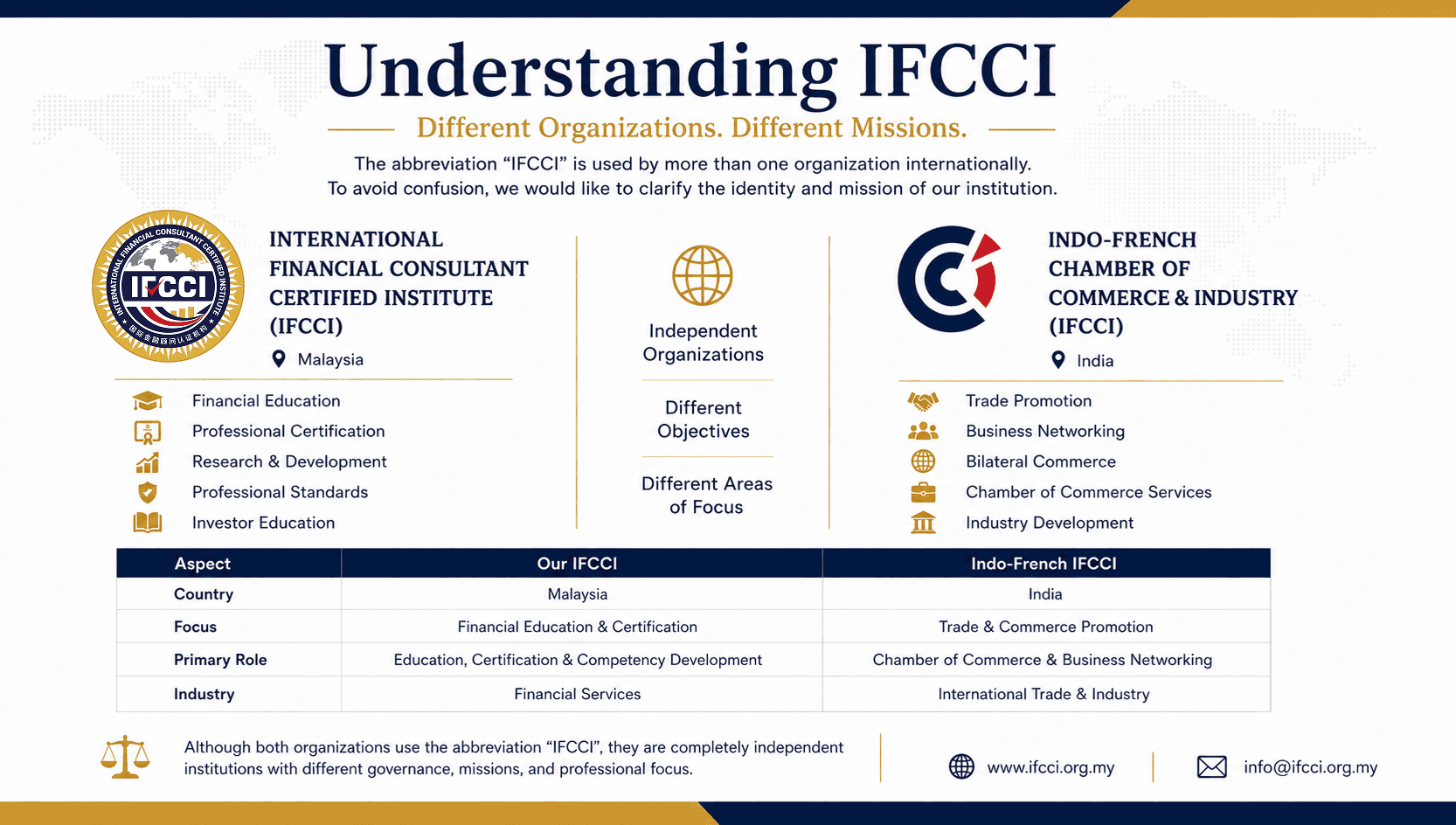
Understanding IFCCI: International Financial Consultant Certified Institute and Other Organizations Using the IFCCI Acronym
27 Jul 2026

Why International Financial Skills Championships Matter in Developing Global Financial Excellence
13 Jul 2026