
Global Economy Is Forecast Post ‘Sturdy’ Growth 2.8% in 2026
Executive Summary
The global economy is forecast to expand by a “sturdy” 2.8% in 2026, reflecting a delicate balance between structural headwinds and enduring sources of resilience. While growth remains below pre-pandemic averages, it continues to outperform pessimistic expectations shaped by geopolitical fragmentation, restrictive financial conditions, and demographic constraints.
This outlook suggests a global economy that is neither overheating nor stagnating, but instead adjusting to a post-shock equilibrium marked by moderation, recalibration, and selective strength.
A Lower-Speed, More Stable Growth Regime
The projected 2.8% growth rate reflects a structural shift away from the high-velocity expansions seen in earlier decades. Instead, the global economy is entering a lower-speed but more stable regime.
Key characteristics of this phase include:
- More disciplined fiscal and monetary frameworks
- Reduced reliance on credit-fuelled growth
- Gradual rebalancing from stimulus-driven demand
- Greater emphasis on supply-side resilience
This transition has dampened headline growth but improved macroeconomic durability.
Advanced Economies: Stability Without Momentum
Advanced economies are expected to contribute modestly to global growth in 2026, with expansion driven primarily by services, household consumption, and public-sector investment.
Key trends include:
- Easing inflation pressures restoring real income growth
- Labour markets remaining tight but gradually cooling
- Investment activity constrained by higher capital costs
- Fiscal policy shifting from stimulus to consolidation
While recession risks have receded, growth remains capped by structural factors such as ageing populations and productivity plateaus.
Emerging Markets Remain the Growth Engine
Emerging and developing economies are forecast to outperform advanced peers, accounting for the majority of global growth.
Supportive factors include:
- Stronger domestic demand dynamics
- Ongoing urbanisation and infrastructure investment
- Supply-chain realignment benefiting select regions
- Gradual financial deepening and market access
However, performance remains uneven, with outcomes highly sensitive to capital flows, commodity prices, and currency stability.
Inflation: No Longer the Primary Constraint
A key contributor to the improved 2026 outlook is the easing of inflationary pressures across major economies.
Inflation dynamics now reflect:
- Normalisation of supply chains
- Softer commodity price pressures
- Tighter monetary transmission
- Moderating wage growth in some regions
While inflation remains above long-term targets in certain economies, it is no longer the dominant constraint on growth expectations.
Monetary Policy: From Restriction to Calibration
Central banks are expected to continue shifting from restrictive postures toward calibrated normalisation in 2026.
This does not imply aggressive easing, but rather:
- Gradual adjustments aligned with data trends
- Emphasis on financial stability alongside inflation control
- Clearer communication to anchor expectations
- Reduced tolerance for policy overshoot
This environment supports growth stability while limiting the risk of renewed inflationary shocks.
Geopolitical Fragmentation Still a Drag
Despite the relatively constructive growth forecast, geopolitical fragmentation remains a persistent headwind.
Key challenges include:
- Trade realignment and higher transaction costs
- Strategic reshoring reducing efficiency gains
- Increased defence and security-related spending
- Policy uncertainty affecting long-term investment
These factors weigh on productivity and global integration, preventing a return to higher growth trajectories.
Debt and Fiscal Constraints Limit Upside
Global debt levels continue to constrain policy flexibility.
Governments face:
- Higher interest burdens
- Reduced capacity for countercyclical stimulus
- Pressure to prioritise fiscal sustainability
- Trade-offs between growth and consolidation
As a result, fiscal policy is expected to play a more neutral role in supporting growth in 2026.
Labour Markets and Productivity: A Mixed Picture
Labour market conditions remain relatively tight in many economies, supporting consumption but limiting productivity gains.
Key dynamics include:
- Labour shortages in specialised sectors
- Slower workforce expansion due to demographics
- Incremental productivity improvements from technology
- Uneven adoption of automation and AI
Productivity growth remains the critical missing ingredient for a sustained acceleration in global output.
Financial Conditions: Tighter but More Predictable
While financial conditions remain tighter than pre-pandemic norms, predictability has improved.
Markets are adjusting to:
- Higher equilibrium interest rates
- Reduced central bank balance sheets
- More disciplined credit standards
- Lower tolerance for excess leverage
This environment favours stability over speed, reducing systemic risk while limiting speculative expansion.
IFCCI Assessment: Resilience Without Euphoria
The IFCCI Research Division assesses that the projected 2.8% global growth rate reflects a resilient but constrained global economy.
Key IFCCI conclusions:
- Growth is broad-based but unspectacular
- Downside risks have moderated, not disappeared
- Policy frameworks are more credible than in prior cycles
- Structural reforms remain essential for long-term upside
The outlook supports cautious optimism rather than exuberance.
Outlook: A Test of Structural Adaptation
The global economy’s performance in 2026 will hinge less on cyclical stimulus and more on structural adaptation—productivity, policy credibility, and institutional resilience.
Economies that successfully balance stability with reform are likely to outperform, while those reliant on legacy growth models may struggle to keep pace.
Conclusion
A forecast of 2.8% global growth in 2026 underscores a world economy that has absorbed multiple shocks yet continues to function with measured resilience. While growth remains modest by historical standards, it is sufficiently robust to sustain employment, stabilise incomes, and support gradual normalisation.
In an era defined by constraint rather than excess, sturdiness—not speed—has become the defining virtue of global economic expansion.
Related Articles

What Does IFCCI Do? Advancing Financial Education, Certification and Research
7 Aug 2026
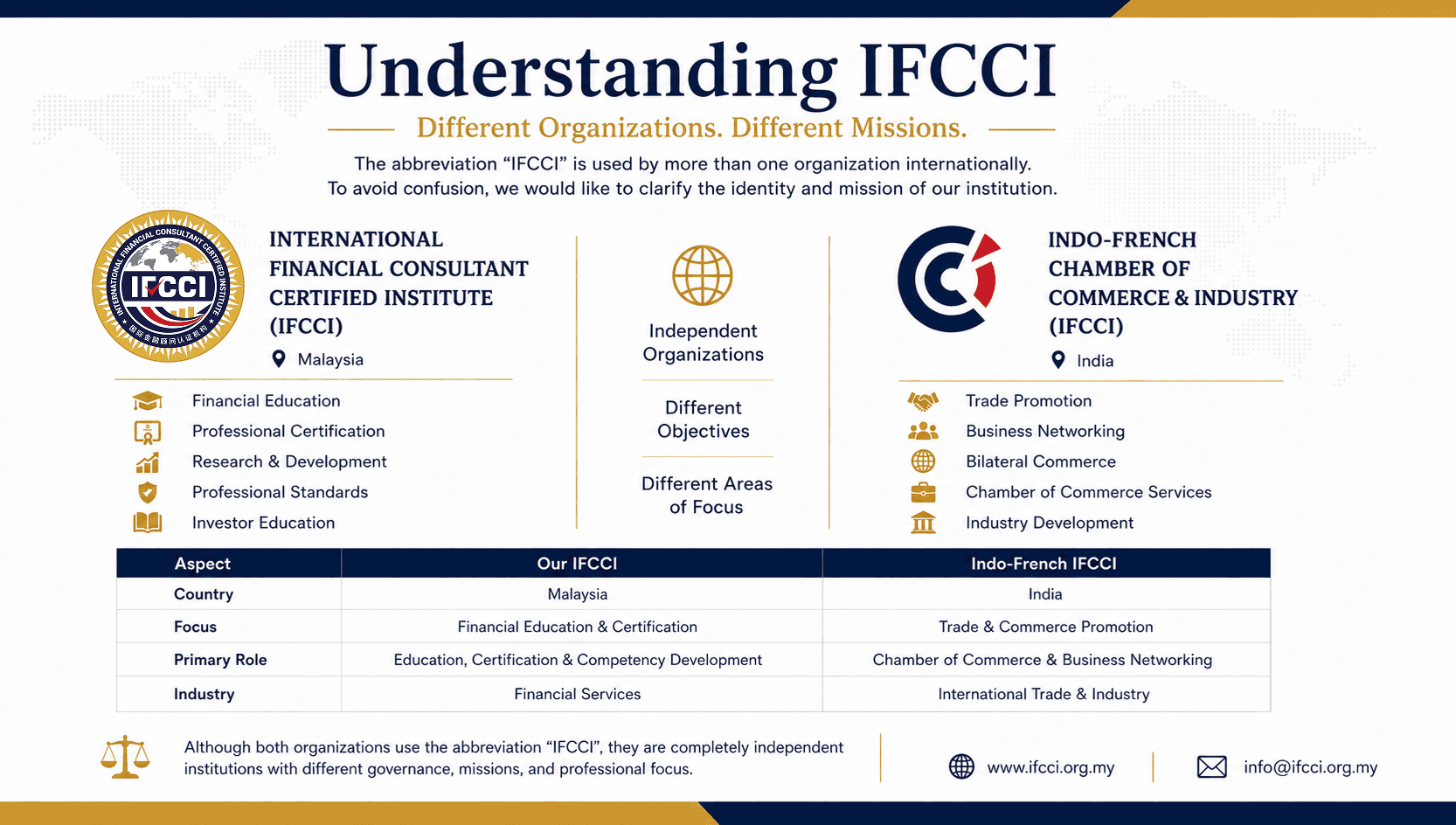
Understanding IFCCI: International Financial Consultant Certified Institute and Other Organizations Using the IFCCI Acronym
27 Jul 2026

Why International Financial Skills Championships Matter in Developing Global Financial Excellence
13 Jul 2026