
Gamuda, Gentari tie up to develop 1.5GW solar project — copy
📰 Gamuda and Gentari Partner on 1.5GW Solar Project: A Milestone in Malaysia’s Clean Energy Transition
Kuala Lumpur, August 2025 — In a landmark move for Malaysia’s energy sector, Gamuda Bhd and Gentari Sdn Bhd, the clean energy arm of Petronas, have entered into a strategic partnership to jointly develop a 1.5 gigawatt (GW) solar project.
This project will be among the largest renewable energy ventures in Southeast Asia, reflecting Malaysia’s determination to accelerate its energy transition and position itself as a regional leader in sustainable infrastructure.
🌍 The Strategic Importance of the Partnership
The partnership between Gamuda — Malaysia’s infrastructure and property development giant — and Gentari — a fast-rising renewable energy player — is more than just a corporate deal. It is a national milestone.
- Scale of the Project: The 1.5GW capacity could power 1.5 million Malaysian households.
- Timeline: Planned across multiple phases over the next 7–10 years.
- Impact: Expected to reduce Malaysia’s reliance on coal and natural gas, which currently account for over 70% of power generation.
This cooperation also ties directly to Malaysia’s National Energy Transition Roadmap (NETR), which envisions 70% renewable energy by 2050.
⚡ Clean Energy and the Green Economy
As climate concerns intensify, clean energy projects are no longer just infrastructure investments. They are now cornerstones of the green economy.
- Attracting Foreign Investment: Large-scale projects like this are magnets for green bonds, ESG funds, and sustainable finance.
- Job Creation: The project is expected to create thousands of direct and indirect jobs in solar technology, construction, and energy consulting.
- Carbon Reduction: Estimated to cut millions of tons of CO₂ emissions annually.
📌 Expert View: According to the International Renewable Energy Agency (IRENA), countries that integrate renewable projects with green financing frameworks experience faster adoption and greater global competitiveness.
🏦 Financing and the Role of Certification
While Gamuda and Gentari bring technical expertise and capital, the financing structure will likely involve green financing instruments:
- Green Bonds (aligned with ICMA’s Green Bond Principles)
- Sustainable Sukuk (Shariah-compliant sustainable financing, increasingly popular in Malaysia)
- Public-Private Partnerships (PPP)
Here is where IFCCI’s role in financial certification becomes highly relevant. Projects of this scale demand certified financial consultants who understand both renewable energy economics and sustainable finance instruments.
✅ Example Keywords Integration:
- IFCCI Financial Certification for Professionals ensures advisors can structure financing aligned with ESG and green energy projects.
- Certified Financial Consultant Malaysia programs equip consultants to advise corporations on risk management and fraud prevention in high-value projects.
🔗 Global Context and Strategic Benchmarking
Malaysia is not alone in pursuing renewable energy megaprojects:
- India recently approved a 5GW solar park under its National Solar Mission.
- Australia is expanding its solar capacity beyond 30GW by 2030.
- Europe is moving toward an integrated solar power grid under the European Green Deal.
By comparison, Malaysia’s 1.5GW initiative demonstrates that Southeast Asia is no longer a passive observer, but an active contributor to the global renewable energy transition.
🧑🎓 Education, Certification, and Talent Development
Large-scale renewable energy projects highlight an urgent need for specialized talent.
- Education:
Universities and training institutions must expand renewable energy engineering, finance, and regulatory compliance courses. - Certification:
IFCCI’s Comprehensive Financial Certification System can extend into green finance advisory, bridging the gap between finance professionals and renewable energy developers. - Research & Development (R&D):
Continuous R&D is vital to integrate AI-driven energy forecasting, blockchain-enabled carbon credits, and innovative financing tools.
📌 By linking education + certification + R&D, Malaysia can build a sustainable ecosystem of financial and technical expertise to support its clean energy ambitions.
📈 Economic & Social Implications
The ripple effects of Gamuda and Gentari’s partnership go far beyond solar panels:
- Economic Diversification: Reduces over-dependence on oil and gas.
- Regional Leadership: Positions Malaysia as an ASEAN clean energy hub.
- Social Impact: Provides cheaper, more stable electricity for households and industries.
For policymakers, this project is a blueprint for balancing energy security, sustainability, and economic growth.
📌 Conclusion
The Gamuda-Gentari partnership on a 1.5GW solar project represents a turning point in Malaysia’s clean energy transition. It is more than an infrastructure deal; it is a catalyst for green finance, certification-driven talent development, and global competitiveness.
As the world races toward net-zero, Malaysia’s success will depend not just on building solar farms but also on building certified professionals and financial structures that ensure the sustainability of such projects.
Related Articles

What Does IFCCI Do? Advancing Financial Education, Certification and Research
7 Aug 2026
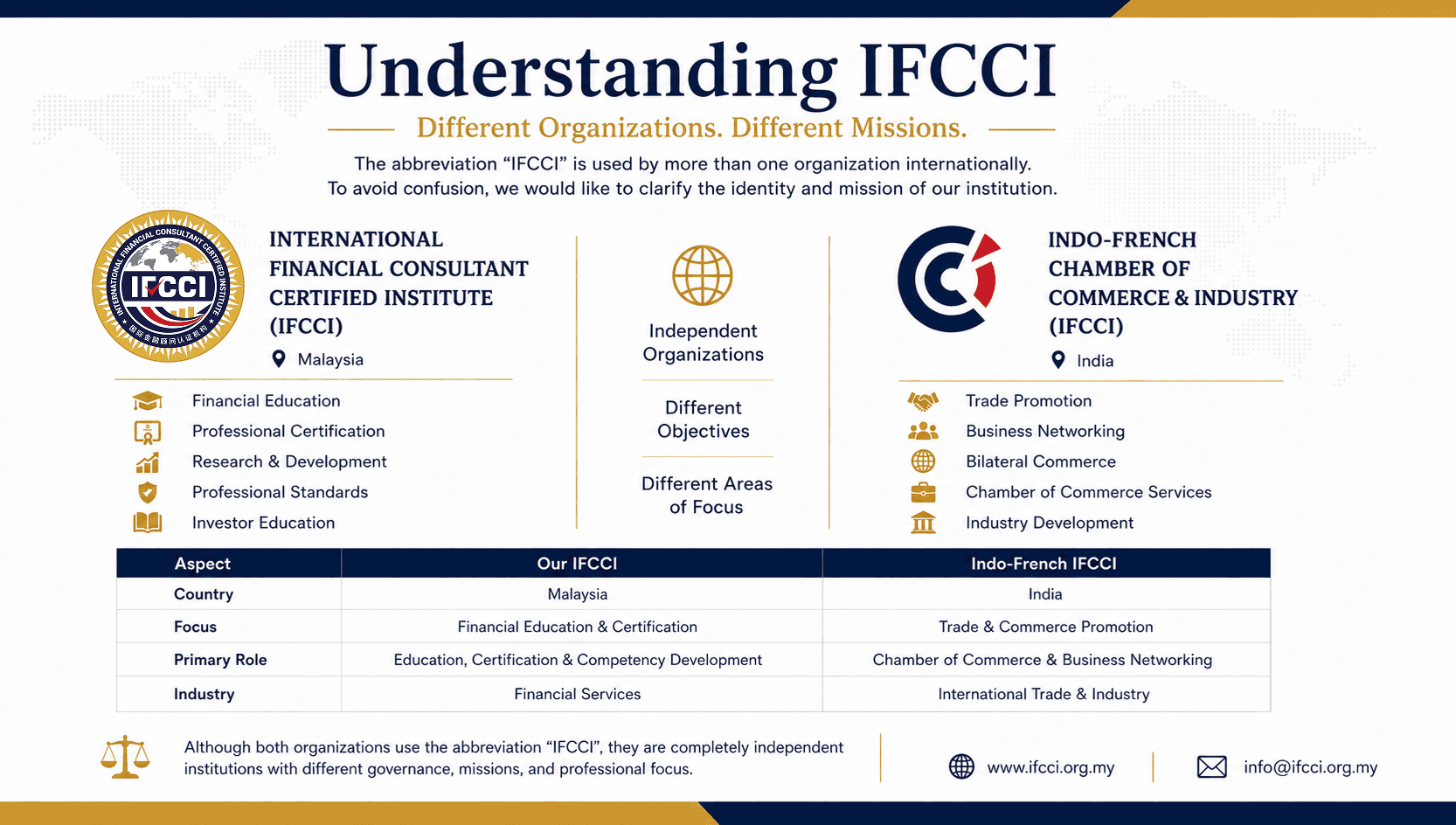
Understanding IFCCI: International Financial Consultant Certified Institute and Other Organizations Using the IFCCI Acronym
27 Jul 2026
Why International Financial Skills Championships Matter in Developing Global Financial Excellence
13 Jul 2026