
Fixed Income Markets Steady After Months of Rate Volatility
Calm Returns to Rates After a Turbulent Quarter
After months of persistent rate swings and policy surprises, global bond markets finally experienced a measure of calm this week. Yields stabilised across most major economies, offering investors a reprieve from the volatility that has defined much of 2025’s second half.
The ICE BofA MOVE Index, a widely followed gauge of U.S. Treasury market volatility, retreated to its lowest level since April, signalling an easing of the tension that has dominated fixed income trading. The relative stability reflects both diminishing policy uncertainty and the market’s growing comfort with the trajectory of inflation and interest rates.
Yields Hold Steady Across Major Economies
U.S. Treasury yields hovered within a narrow range, with the 10-year benchmark holding near 4.05%, while two-year yields stayed around 4.35%, reflecting expectations that the Federal Reserve may maintain its current stance until early 2026.
In Europe, the German Bund 10-year yield steadied at 2.45%, while the UK Gilt market remained anchored as the Bank of England signalled no immediate change to its policy outlook. Across Asia, yields also showed limited movement — with the Bank of Japan (BOJ) keeping its yield curve control framework intact and the Reserve Bank of Australia (RBA) adopting a patient tone amid moderating inflation data.
Inflation Trends Support Stability
Recent inflation prints have reinforced the notion that global disinflation remains intact. In the U.S., core PCE inflation slowed to 2.6% year-on-year, while the Euro Area’s headline CPI eased to 2.4%, both largely in line with expectations.
This data has tempered fears of renewed price acceleration, allowing traders to reassess risk exposures without fearing immediate policy shocks. Analysts at the CFA Institute and BIS noted that declining volatility typically reflects better anchoring of expectations — a welcome development after several quarters of uncertainty.
Institutional Demand Returns to Sovereign Debt
As rate expectations stabilise, institutional investors have cautiously returned to the bond market. The IFCCI Fixed Income Sentiment Tracker rose to a six-month high, driven by pension funds and insurers extending duration to lock in attractive real yields.
Demand was especially strong for longer-dated Treasuries, with the latest 20-year auction clearing smoothly despite elevated supply. In Europe, corporate issuance also picked up, with investment-grade spreads tightening by nearly 10 basis points month-on-month — a sign of renewed confidence in credit markets.
Central Banks Stay Patient Amid Mixed Growth Signals
Central banks appear increasingly inclined to stay patient. The Federal Reserve reiterated that while rate cuts are plausible in 2026, policy must remain restrictive “for some time” to ensure inflation fully converges to target. The ECB echoed this sentiment, stressing caution amid resilient wage growth.
Meanwhile, Asian policymakers, including the Monetary Authority of Singapore (MAS) and Bank Negara Malaysia (BNM), maintained their neutral stances, citing balanced inflation and growth dynamics.
The consensus across regions: a pause before the pivot — an acknowledgment that the next phase of monetary easing will depend heavily on the sustainability of disinflation trends.
Volatility May Return — But for Now, Calm Is Welcome
Market strategists caution that the current calm may not last. Upcoming macro data — including U.S. employment figures, China’s credit growth, and the Eurozone’s Q4 GDP revisions — could easily rekindle volatility.
Still, after months of dislocations and conflicting policy messages, a quieter rates environment provides breathing space for both issuers and investors. Corporate treasurers can refinance more efficiently, and asset allocators can reassess positioning without the constant noise of yield shocks.
As one IFCCI analyst put it:
“The absence of chaos is not the same as certainty — but in fixed income, stability is a form of relief.”
Outlook: Opportunity in Stillness
Looking ahead, IFCCI expects this stabilisation phase to extend into early December, assuming no major surprises from upcoming inflation and employment reports.
The next key test will be how markets respond to the Federal Reserve’s December meeting, where updated projections could clarify the timing of future rate adjustments. For now, the narrative has shifted from panic to patience — and for the bond market, that is progress.
Related Articles

What Does IFCCI Do? Advancing Financial Education, Certification and Research
7 Aug 2026
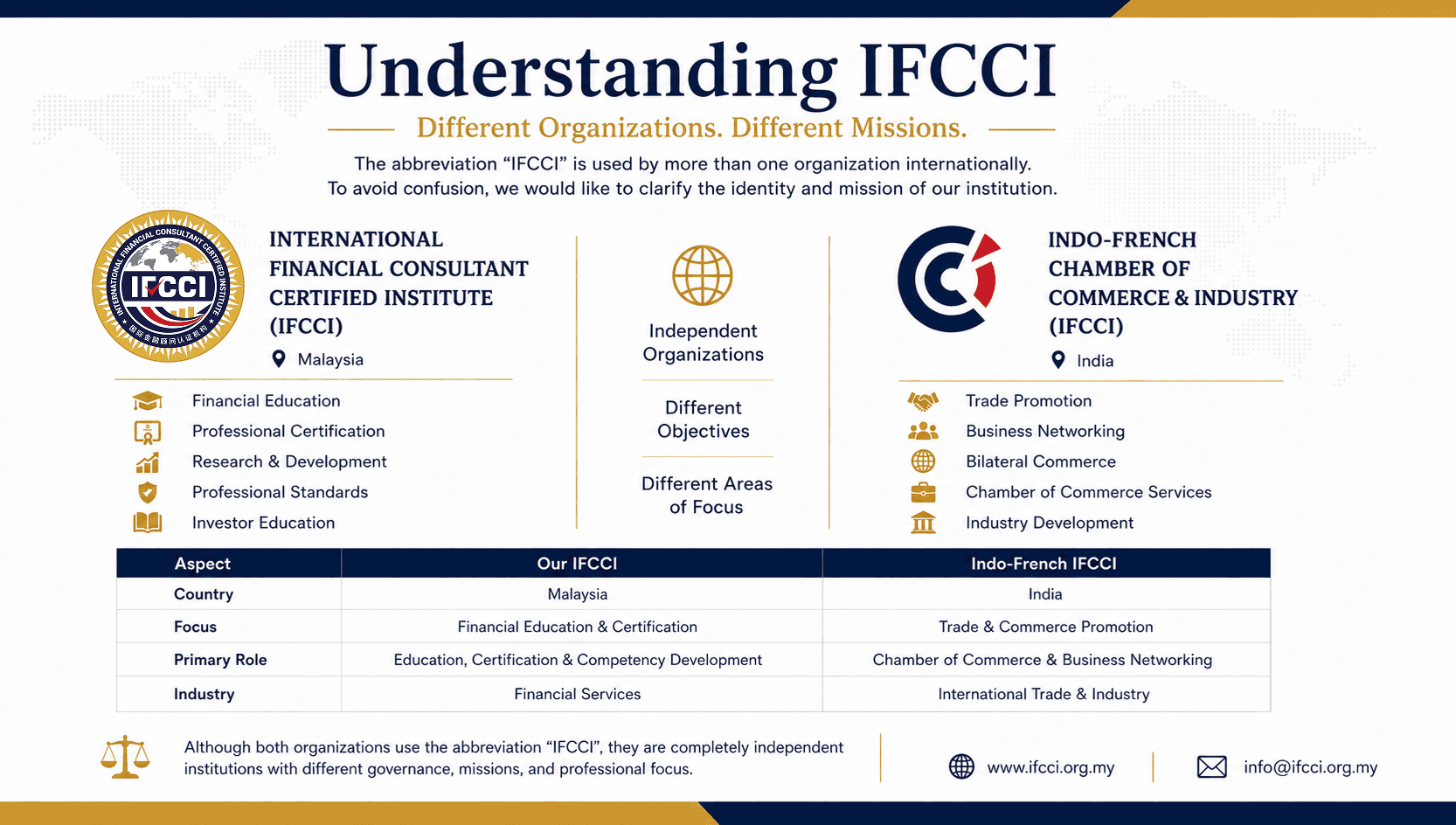
Understanding IFCCI: International Financial Consultant Certified Institute and Other Organizations Using the IFCCI Acronym
27 Jul 2026

Why International Financial Skills Championships Matter in Developing Global Financial Excellence
13 Jul 2026