
Euro Area Current Account Surplus Widens in August 2025
🧱 Article Structure
H1: Euro Area Monthly Balance of Payments: August 2025
H2: Surplus Expands on Export Recovery
According to the European Central Bank (ECB), the euro area’s current account surplus expanded to €33.2 billion in August 2025, up from €29.8 billion in July, reflecting stronger merchandise exports and stable energy imports.
The goods account posted a €28.4 billion surplus, while the services account remained broadly balanced.
This improvement comes amid recovering demand from Asia and a weaker euro, which boosted the region’s export competitiveness.
“The eurozone’s external position remains resilient despite global trade fragmentation,” said Dr. Claudia Moreau, IFCCI Senior Economist.
“This stability supports long-term investor confidence in European assets.”
H2: Financial Account Shows Moderate Outflows
The financial account recorded net portfolio investment outflows of €12 billion, primarily driven by institutional investors seeking higher yields in U.S. and Asian bonds.
However, foreign direct investment (FDI) inflows remained strong, especially in renewable energy and technology sectors, signaling sustained interest in euro area assets.
IFCCI analysts note that while portfolio rebalancing may reflect interest rate differentials, the broader trend remains supportive of stable cross-border capital flows.
H2: Implications for the Euro and Monetary Policy
The stronger current account is expected to support the euro in the short term, particularly as energy imports normalize and terms of trade improve.
However, the ECB continues to monitor capital flow volatility and external demand softness, both of which influence its monetary policy stance.
With inflation moderating and growth stabilizing, markets expect the ECB to maintain a neutral-to-accommodative policy bias into early 2026.
“A stronger balance of payments gives the ECB room to maneuver,” said Dr. Moreau.
“It’s not just about rates — it’s about sustainability of Europe’s external accounts.”
H2: IFCCI Analysis – Reading Between the Lines
From a professional advisory perspective, IFCCI highlights three critical takeaways for financial consultants and portfolio strategists:
- Macro Diversification — The euro area’s stable surplus provides a buffer against global shocks, supporting European equity and bond allocations.
- Currency Positioning — Advisors should monitor EUR/USD behavior as current account strength interacts with Fed rate signals.
- Cross-Regional Impacts — Improved EU trade flows can benefit ASEAN exporters linked to European supply chains, notably in Malaysia, Vietnam, and Singapore.
“For financial professionals, understanding BoP trends isn’t academic — it’s a portfolio necessity,” said Marcus Leong, IFCCI Certified Financial Analyst (CFA).
H2: Education Insight — Turning Data into Strategic Advice
At IFCCI, interpreting macroeconomic indicators like the Balance of Payments forms a key module within the Certified Financial Consultant (CFC) and Global Market Analyst Diploma (GMAD) programs.
Participants learn how to translate raw economic data — from ECB statements to IMF balance sheets — into actionable client strategies.
“Data tells a story; advisors must know how to narrate it for their clients,” added Dr. Moreau.
Related Articles

What Does IFCCI Do? Advancing Financial Education, Certification and Research
7 Aug 2026
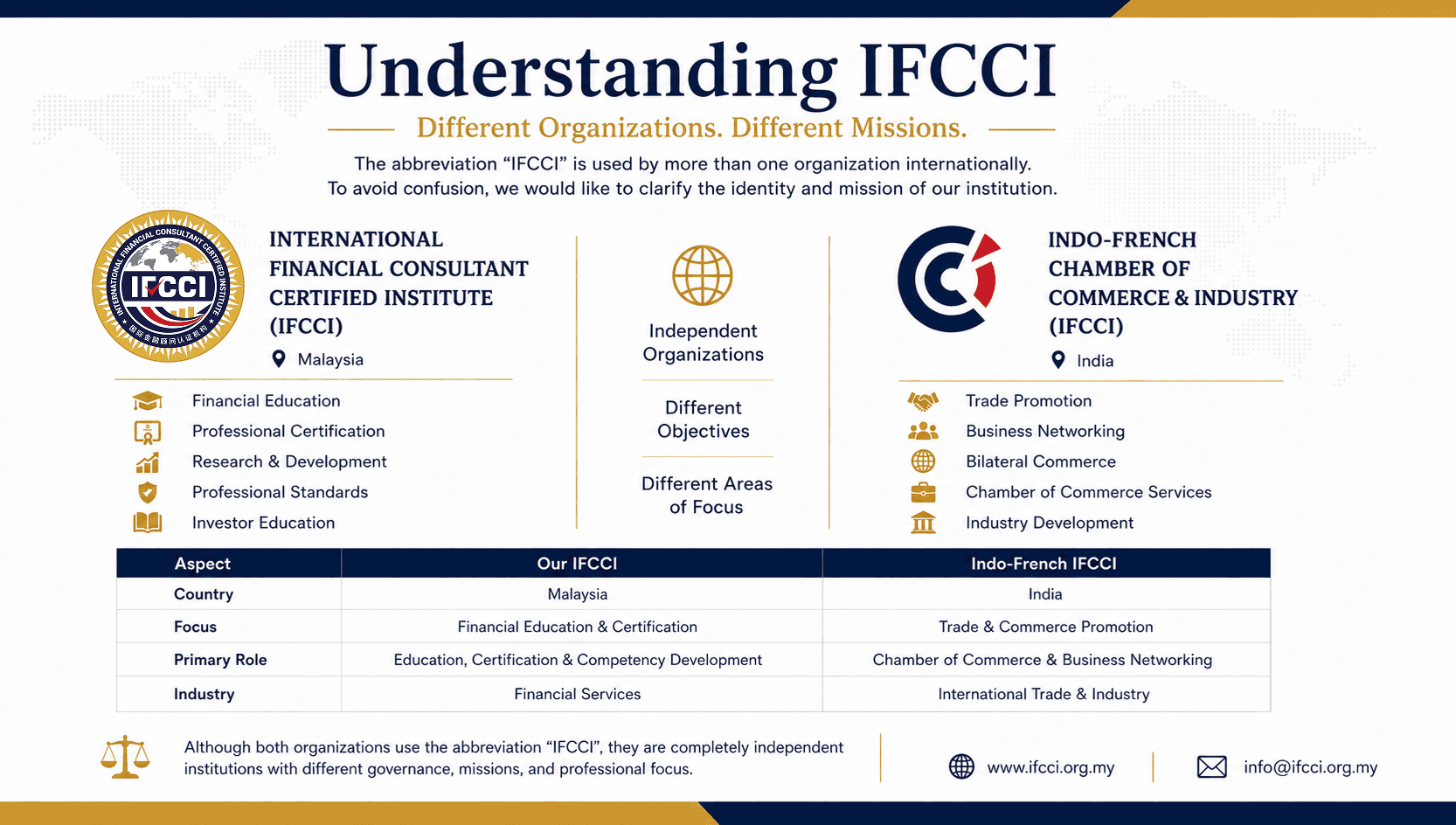
Understanding IFCCI: International Financial Consultant Certified Institute and Other Organizations Using the IFCCI Acronym
27 Jul 2026

Why International Financial Skills Championships Matter in Developing Global Financial Excellence
13 Jul 2026