
Ethereum Viewed as Better Prepared Than Bitcoin for Post
Ethereum Better Positioned if Bitcoin Faces Quantum Risks: Analyst
By IFCCI News Desk
Data verified and updated as of November 2025
Ethereum may be structurally better placed than Bitcoin to withstand potential quantum-computing threats, according to new analysis from digital-asset security researchers. With global interest in quantum technology accelerating, concerns have resurfaced over whether existing blockchain networks can resist future advances in quantum decryption capabilities.
Analyst Flags Growing Vulnerability in Legacy Cryptography
The majority of modern blockchains—including Bitcoin and Ethereum—rely on elliptic-curve cryptography (ECC) to secure private keys. A sufficiently powerful quantum computer could, in theory, break ECC using Shor’s algorithm, exposing wallets and transaction signatures.
Analysts warn that although such a quantum computer does not yet exist, the long development lead time for upgrading global blockchain infrastructure means the industry must begin preparing earlier than expected.
“Bitcoin’s architecture is elegant but rigid,” one researcher noted. “Ethereum’s adaptability gives it an advantage when preparing for cryptographic upgrades.”
Ethereum’s Upgrade Flexibility Seen as a Key Advantage
Ethereum’s history of coordinated hard forks—ranging from the Merge to continuous EVM enhancements—demonstrates a governance structure capable of implementing rapid protocol transitions.
This agility could be essential in migrating to post-quantum signature schemes, which require substantial changes to account structures and verification rules.
Ethereum developers have already researched quantum-resistant proposals, including:
- Lamport signatures
- STARK-based authentication
- Multilayered account abstraction for flexible signature verification
Analysts argue that Ethereum’s modular design and active developer community make it more responsive to emerging security threats.
Bitcoin’s Conservatism May Slow Post-Quantum Transition
By contrast, Bitcoin’s deliberately conservative governance model—valued for its stability—may prove a bottleneck in a quantum-risk scenario.
Changes to Bitcoin’s cryptographic foundations require overwhelming community consensus, and previous debates such as the SegWit and block-size conflicts highlight how difficult such consensus can be to reach.
“Bitcoin’s decentralised governance is a strength, but it could also mean slower adaptation to existential risks,” analysts said.
They emphasise that Bitcoin’s massive market capitalisation and global adoption would make any upgrade process politically and technically complex.
Risk Timeline Remains Uncertain, But Planning Is Accelerating
Most researchers agree that real-world quantum threats remain years, perhaps decades away.
However, governments and major tech firms—including the US National Institute of Standards and Technology (NIST)—are already advancing post-quantum cryptographic standards, accelerating the urgency for blockchain networks to prepare.
Industries such as banking, telecommunications, and defence have begun transitioning to quantum-resistant architectures, adding pressure on crypto networks to ensure long-term security assurances.
Market Impact: Ethereum Gains Strategic Narrative Edge
Although markets have not priced quantum risk as an imminent threat, Ethereum’s perceived adaptability could strengthen institutional confidence, particularly in long-horizon investment strategies focused on infrastructure resilience.
Analysts caution that both networks must eventually adopt post-quantum solutions, but Ethereum’s governance model and history of protocol evolution may give it a smoother transition path.
“Quantum computing is not tomorrow’s problem,” one analyst concluded. “But when the shift comes, Ethereum looks better positioned to handle it.”
Related Articles

What Does IFCCI Do? Advancing Financial Education, Certification and Research
7 Aug 2026
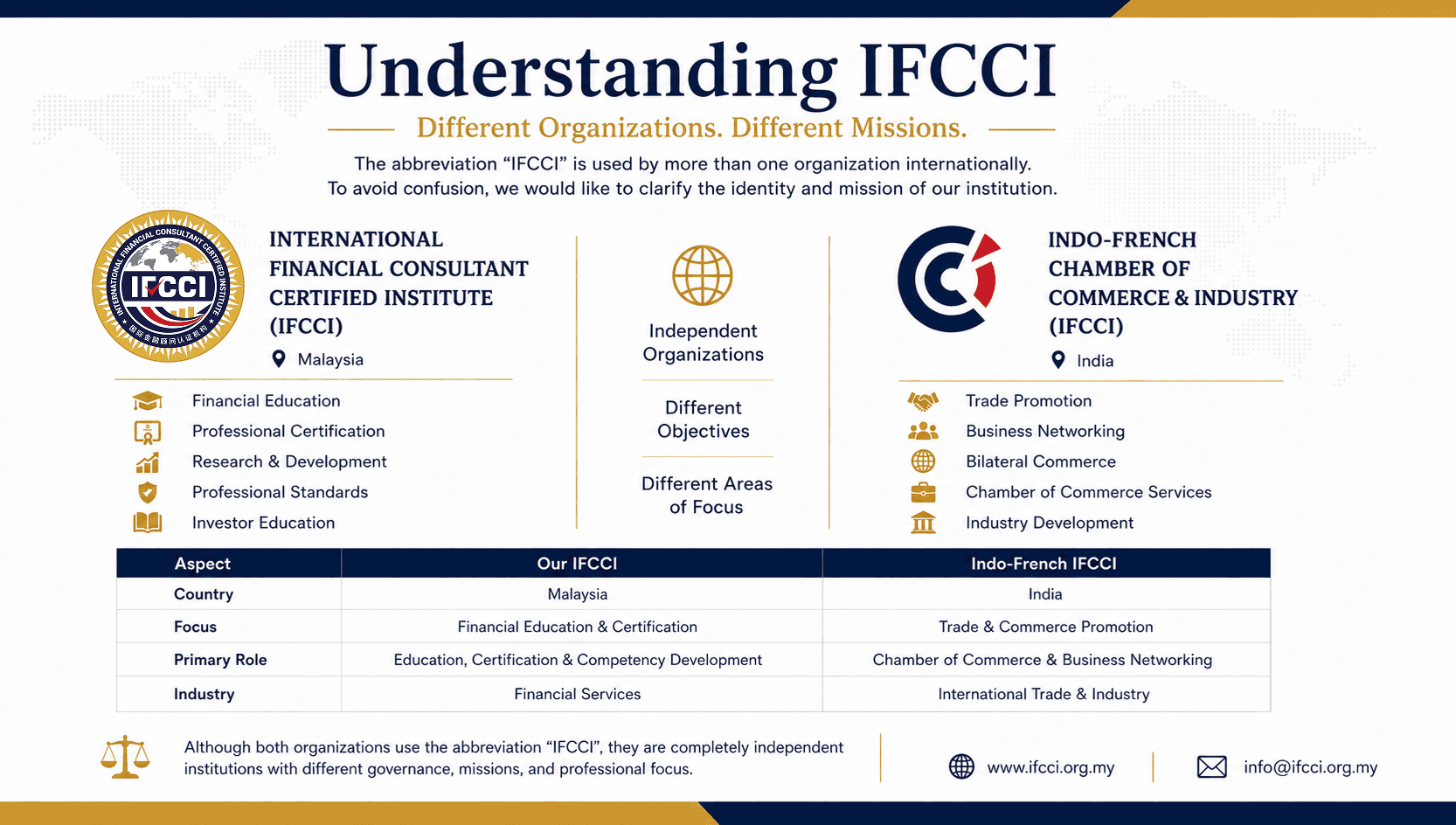
Understanding IFCCI: International Financial Consultant Certified Institute and Other Organizations Using the IFCCI Acronym
27 Jul 2026

Why International Financial Skills Championships Matter in Developing Global Financial Excellence
13 Jul 2026