
ECB’s de Sees Balanced Growth Risks, Flags Geopolitics
Balanced Growth Outlook
European Central Bank Vice President Luis de Guindos has stated that risks to euro area economic growth are currently balanced, signalling that downside pressures have moderated relative to previous quarters.
The assessment suggests that while the euro zone economy remains fragile, recession risks are no longer viewed as dominant under baseline projections.
Geopolitics as the Primary Risk Variable
Despite balanced domestic growth dynamics, de Guindos emphasised that geopolitics remains the principal threat to the outlook.
Key geopolitical channels affecting the euro area include:
- Energy supply stability
- Trade fragmentation and tariffs
- Supply-chain disruptions
- Security tensions impacting investor confidence
Europe’s economic structure, with its heavy reliance on trade and energy imports, leaves it particularly exposed to external shocks.
Inflation and Policy Context
The remarks come as inflation across the euro area has moderated significantly from peak levels. With price pressures easing, the ECB has shifted its focus toward:
- Ensuring inflation convergence toward target
- Avoiding premature policy loosening
- Monitoring wage developments
Balanced growth risks reduce pressure for aggressive stimulus, while geopolitical threats argue for maintaining policy flexibility.
Growth Drivers and Constraints
Current euro zone growth is supported by:
- Gradual recovery in real household incomes
- Stabilising manufacturing activity
- Improved financial conditions relative to 2024
However, constraints remain:
- Weak external demand
- Structural productivity challenges
- Demographic pressures
The interplay between these factors supports a cautious but not pessimistic baseline outlook.
Market Implications
Financial markets are likely to interpret de Guindos’ comments as:
- Reinforcement of a data-dependent ECB stance
- Reduced urgency for emergency policy action
- Continued sensitivity to geopolitical headlines
Bond markets may remain stable if inflation continues trending lower, while equity markets will closely monitor geopolitical developments.
IFCCI Assessment: Stable Baseline, External Fragility
The IFCCI Research Division assesses that the ECB’s current macro stance reflects improving internal stability but persistent external fragility.
Key conclusions:
- Domestic growth risks are no longer asymmetrically negative
- Geopolitical uncertainty remains the dominant tail risk
- Policy flexibility will remain central to ECB strategy
The euro area appears to be transitioning from cyclical stress toward cautious stabilisation, though external shocks could quickly alter that balance.
Conclusion
Luis de Guindos’ remarks underscore a euro zone economy that is stabilising internally while remaining exposed to global geopolitical turbulence. Balanced growth risks suggest reduced recession probability, but external factors continue to define the broader risk landscape.
As 2026 progresses, geopolitical developments will likely exert greater influence on European financial markets than purely domestic macro indicators.
Related Articles

What Does IFCCI Do? Advancing Financial Education, Certification and Research
7 Aug 2026
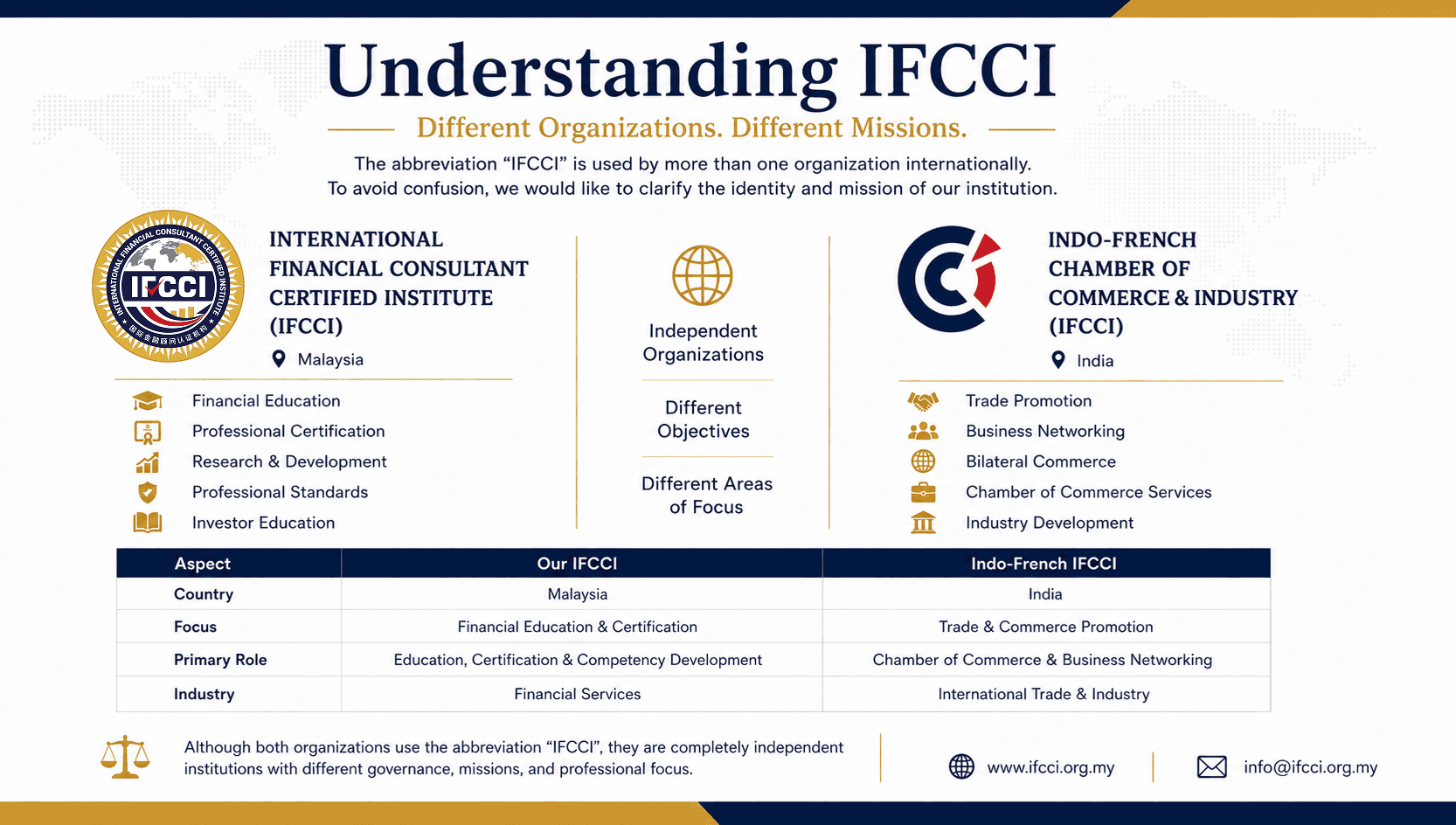
Understanding IFCCI: International Financial Consultant Certified Institute and Other Organizations Using the IFCCI Acronym
27 Jul 2026
Why International Financial Skills Championships Matter in Developing Global Financial Excellence
13 Jul 2026