
Divided Federal Prepares for Contentious Policy Debate
A Divided Fed Faces Its Most Contentious Meeting in Years
The Federal Reserve enters its upcoming Federal Open Market Committee (FOMC) meeting facing a rare and increasingly public internal split, marking what analysts describe as the most contentious policy confrontation within the central bank in more than a decade. With inflation moderating but still uneven, growth showing surprising resilience, and financial markets pricing in aggressive easing for 2026, policymakers are divided on whether the next move should be to cut rates, hold steady, or signal renewed vigilance against inflation.This division is not unprecedented, but the scale, openness, and policy implications surpass previous episodes. The stakes for the global economy, capital markets, and institutional investors are substantial.
The New Fed Divide: Three Emerging Factions
Analysis of recent speeches and policy research indicates that the Federal Reserve has fractured into three broad camps, each presenting sharply different arguments:
1. The “Caution First” Hawks
A significant group remains concerned that declaring victory over inflation is premature. Their views focus on:
- Services inflation remaining above target
- Wage pressures persisting in sectors with labour shortages
- Housing inflation normalising more slowly than forecast
- Concerns that rate cuts could reignite asset bubbles
These policymakers prefer signalling a higher-for-longer stance and warn that premature easing risks jeopardising hard-won inflation progress.
2. The “Measured Easing” Moderates
The centre bloc argues that inflation has slowed sufficiently to justify one or two precautionary rate cuts in 2026. Their reasoning:
- Monetary policy remains restrictively tight
- Real rates are still above equilibrium
- Household and business credit conditions are tightening
- Global growth is weakening
This group seeks to maintain credibility by anchoring expectations while avoiding recession risks.
3. The “Growth Protection” Doves
A third faction is increasingly vocal, warning that monetary policy risks becoming overly restrictive. Their arguments include:
- Signs of softening labour demand
- Downtrend in job openings
- Slowing manufacturing and services output
- Declining small-business confidence
- Market stress evident in long-duration credit
They support clearer forward guidance for 2026 rate cuts to stabilise financial conditions.
Why This Meeting Matters More Than Usual
The dispute arises at a delicate moment. The Fed’s next move will shape expectations globally, affecting currency markets, sovereign yields, and institutional investment portfolios.
1. Inflation Is No Longer the Only Policy Driver
For the first time since the pandemic-era surge, inflation is not the sole dominant factor. The Fed must now balance:
- Moderating inflation
- Strong but uneven employment data
- Fiscal uncertainty
- Geopolitical risks
- Tightening credit conditions
This broad set of variables increases the probability of disagreement.
2. Markets Expect Cuts — But the Fed May Not Deliver
Derivatives markets are pricing in multiple cuts in 2026, but hawkish Fed members argue that:
“Market expectations have run ahead of what the data justifies.”
This disconnect enhances the risk of volatility in:
- USD index (DXY)
- Treasury yields
- Equity valuations
- Crypto markets
3. Long-Term Rate Strategy Is Under Review
The Fed is reassessing neutral rates (r-star), prompting debate about:
- Whether structural inflation has risen
- Whether global savings and investment dynamics have shifted
- The long-term consequences of high fiscal deficits
The meeting may produce fresh insights into how policymakers view equilibrium rates for the decade ahead.
Key Issues Likely to Drive the Debate
1. Labour-Market Rebalancing
Recent employment reports show:
- Lower hiring intentions
- Reduced wage growth
- Rising part-time employment
- Normalisation of job openings
Doves interpret this as growing economic fragility, while hawks argue the labour market remains historically strong.
2. Services Inflation: The Sticking Point
Core services inflation — especially non-housing services — remains above target.
- Healthcare pricing is climbing
- Transport services inflation remains persistent
- Leisure and hospitality wages remain elevated
This is the main justification for policy caution.
3. Housing and Shelter Costs
Shelter inflation, a lagging indicator, is expected to cool, but hawkish members believe forecasting reliability is limited.
The meeting may clarify whether the Fed is willing to look through shelter data or prioritise it heavily in models.
4. Consumer Behaviour and Credit Stress
Recent data shows:
- Rising credit-card delinquencies
- Higher auto-loan defaults
- Weakening discretionary spending
- Softer retail sales
Moderates view this as a warning sign; hawks argue the stress is contained.
5. Global Growth and External Risks
Factors exerting pressure:
- Eurozone stagnation
- Slowing Asian manufacturing
- Elevated geopolitical tensions
- Uncertain Chinese recovery
This strengthens the case for flexibility in policy signalling.
Implications for Markets
1. US Dollar (USD)
If the Fed remains divided with a tilt toward hawkish language:
- The USD could strengthen
- Risk-sensitive assets may face pressure
Conversely, clear guidance toward easing could trigger a broad USD correction.
2. Treasuries and Bond Markets
This meeting is pivotal for fixed-income investors:
- Hawkish outcomes could push 10-year yields higher
- Dovish revisions could steepen the yield curve
- Any mention of “term premium” may recalibrate valuations
3. Equities
Equity markets prefer policy certainty. A divided Fed could:
- Increase volatility in rate-sensitive sectors
- Boost defensive plays
- Reduce appetite for high-duration growth stocks
4. Cryptocurrency Markets
Crypto markets are acutely sensitive to Fed forward guidance.
- Hawkish tone → downward pressure on BTC and ETH
- Dovish tone → risk-on flows may return
Recent market fragility suggests heightened sensitivity to policy signals.
What Investors Should Watch for in the Statement
Institutional and professional investors will scrutinise:
1. Wording on “inflation progress”
Any shift from “modest” to “solid” progress would be meaningful.
2. Updated economic projections
Particularly:
- Core PCE forecasts
- Unemployment trajectory
- Long-run fed funds rate
3. Dot Plot for 2026
The primary source of potential market volatility.
4. Chair’s press conference tone
Subtle shifts in messaging historically move markets far more than the policy decision itself.
IFCCI’s Forward View
Based on current data and policy communication patterns, IFCCI Research adopts the following outlook:
- Probability of no immediate policy change: High
- Probability of hawkish-leaning statement: Medium
- Probability of clear forward guidance toward 2026 cuts: Moderate
- Probability of major consensus breakdown: High
The upcoming meeting will shape macroeconomic expectations into early 2026 and may define the Fed’s policy approach for the next phase of the global cycle.
Conclusion
The Federal Reserve’s upcoming meeting represents the most ideologically and technically divided moment since the post-2008 recovery era. With policymakers split on inflation risks, economic fragility, and the appropriate path for interest rates, the meeting will act as a key inflection point for global markets.
For institutional investors, asset allocators, and financial strategists, this is a pivotal moment requiring heightened attention to policy language, economic projections, and the evolving ideological fault lines within the Fed.
Related Articles

What Does IFCCI Do? Advancing Financial Education, Certification and Research
7 Aug 2026
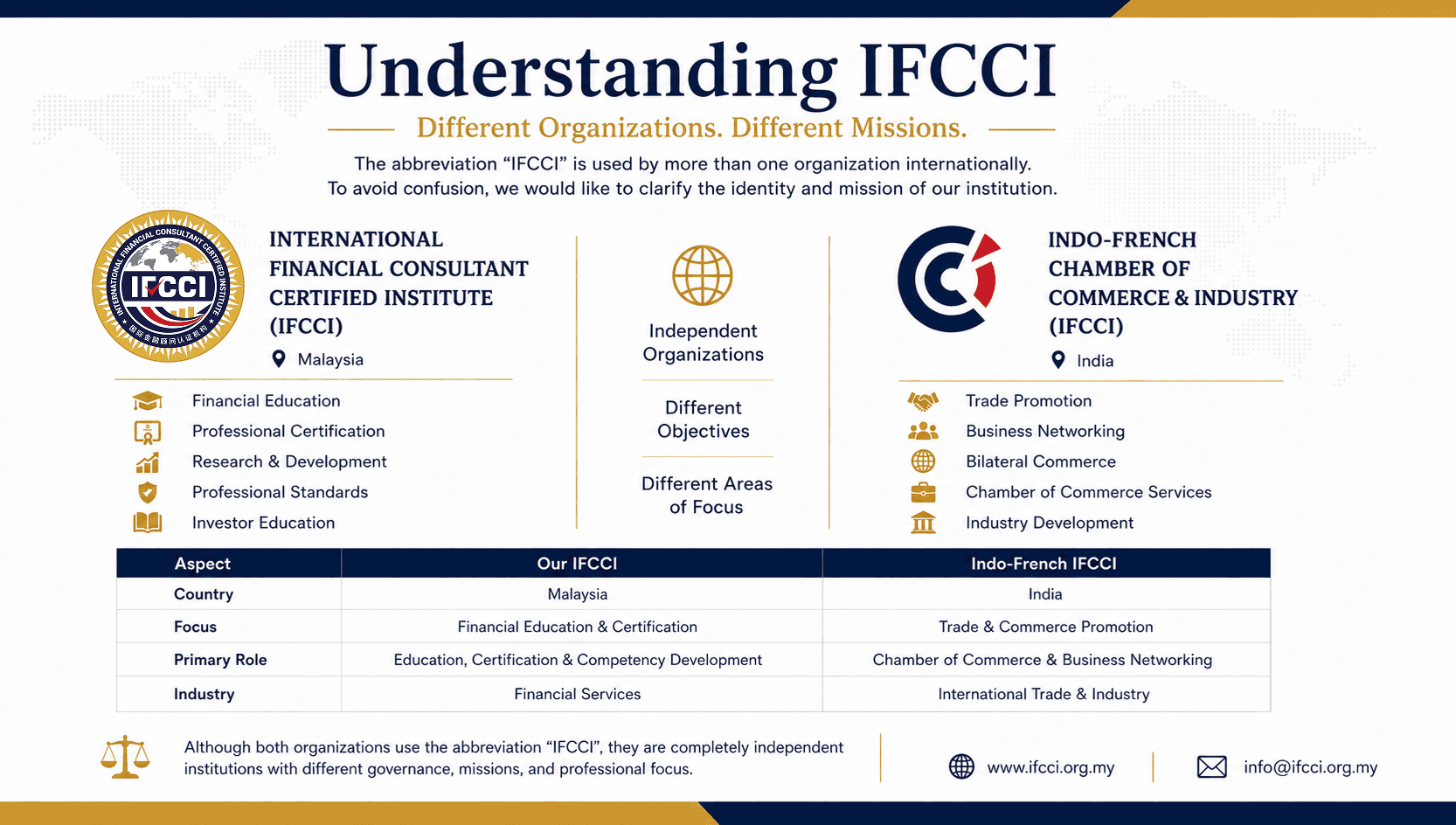
Understanding IFCCI: International Financial Consultant Certified Institute and Other Organizations Using the IFCCI Acronym
27 Jul 2026

Why International Financial Skills Championships Matter in Developing Global Financial Excellence
13 Jul 2026