
Bitcoin Sees Record $3.55B Inflows as Institutions Pile
Introduction: A Historic Week for Bitcoin Capital Inflows
In a landmark moment for digital asset markets, Bitcoin recorded a record-breaking $3.55 billion in net inflows during the first week of October 2025, marking its largest institutional inflow in history.
According to data compiled by CoinShares Digital Asset Fund Flows and IFCCI’s independent review, this surge eclipses the previous high of $2.7 billion seen during the post-ETF approval rally in early 2024.
The inflows underscore a renewed wave of institutional confidence, driven by multiple catalysts — ranging from macroeconomic shifts and ETF-driven liquidity to growing recognition of Bitcoin as a strategic reserve asset amid global monetary uncertainty.
“This isn’t just another speculative upswing,” noted Dr. Raymond Lee, Head of IFCCI’s Blockchain Economics Unit.
“It’s the maturation of Bitcoin as a macro-correlated financial instrument. The data shows capital allocation is now structurally institutional rather than retail-driven.”
Institutional Capital Takes the Wheel
The latest inflows predominantly stem from North American and European asset managers, particularly through spot Bitcoin ETFs and custodial trust vehicles.
Key Data Highlights (IFCCI-Adjusted Estimates):
- $2.9 billion originated from U.S.-based Bitcoin ETFs.
- $410 million flowed in from EMEA institutional investors.
- $240 million came via Asian private wealth channels and family offices.
- The average holding duration increased to 54 days — a new high for the year.
This reallocation suggests a strategic portfolio rebalancing among funds managing traditional assets, with Bitcoin increasingly viewed as a hedge against:
- Persistent U.S. fiscal imbalances;
- Rising real yields in the bond market; and
- Weakened fiat liquidity dynamics.
According to IFCCI’s Digital Asset Institutional Allocation Index (DAIA), institutional Bitcoin exposure rose 14% quarter-over-quarter, reaching its highest level since Q1 2024.
The Macro Backdrop: A Perfect Storm for Digital Gold
The inflows coincide with a confluence of macroeconomic developments that have heightened investor demand for uncorrelated yet liquid assets:
- U.S. Treasury Volatility: Concerns over fiscal deficits and rising yields have pushed capital into alternative stores of value.
- Global Monetary Repositioning: With central banks like the ECB and BoJ exploring post-tightening policies, Bitcoin is benefiting from relative stability in its inflation-adjusted yield profile.
- Gold-Bitcoin Correlation Shift: Recent IFCCI regression models reveal a declining correlation (r = 0.28) between Bitcoin and gold, suggesting capital diversification rather than direct substitution.
“Bitcoin has evolved beyond the speculative narrative. It’s becoming a monetary hedge instrument in institutional portfolios,” remarked Dr. Alice Koh, IFCCI’s Senior Macro Strategist.
ETF Flows and Market Structure Transformation
The role of Spot Bitcoin ETFs cannot be overstated. Since the SEC’s approval in early 2024, ETFs have acted as the primary liquidity gateway for institutional investors.
During the week under review:
- BlackRock’s iShares Bitcoin Trust (IBIT) alone absorbed over $1.1 billion in net inflows.
- Fidelity and VanEck followed closely, contributing a combined $950 million.
- Daily trading volumes in ETF-linked Bitcoin products rose 37% week-over-week, signaling high institutional rotation activity.
This ETF-led inflow model contrasts sharply with the retail-driven surges of previous cycles (e.g., 2021’s bull market). The liquidity depth, custodial transparency, and regulatory oversight embedded in ETF structures have effectively de-risked institutional entry points.
Market Sentiment and Derivatives Positioning
The futures and options markets also reflect bullish sentiment:
- Open interest on CME Bitcoin futures increased by 22% to $18.4 billion — the highest level since March 2024.
- The put-call ratio declined to 0.62, indicating stronger call buying interest.
- Funding rates on perpetual swaps remained stable, suggesting sustainable leverage deployment rather than excessive speculation.
Meanwhile, IFCCI’s proprietary Crypto Market Volatility Index (CMVI) dropped from 51.3 to 47.2 — further evidence of a maturing volatility regime consistent with institutional stabilization.
Bitcoin’s Evolving Role in Portfolio Theory
The recent inflows also reaffirm Bitcoin’s integration into modern portfolio diversification frameworks.
IFCCI’s Multi-Asset Correlation Analysis (2025 Q4 Projection):
| Asset Class | 12M Correlation with Bitcoin | Trend |
|---|---|---|
| S&P 500 Index | 0.37 | Declining |
| Gold (XAU/USD) | 0.28 | Stable |
| 10Y U.S. Treasury | -0.22 | Strengthening inverse correlation |
| USD Index (DXY) | -0.31 | Strengthening inverse correlation |
This evolving correlation structure suggests that Bitcoin now serves as an efficient non-linear hedge, offering asymmetric return potential under inflationary or fiscal stress conditions.
For institutional allocators, the asset’s behavior increasingly resembles a “digital alternative asset” class—bridging the gap between commodities and macro-sensitive equities.
Regional Perspectives: Global Capital Convergence into Bitcoin
Asia-Pacific institutions, particularly from Singapore, Japan, and Hong Kong, have demonstrated renewed interest in custodial Bitcoin exposure following regional regulatory clarity.
In Europe, family offices and boutique funds are leveraging ETP (Exchange-Traded Product) structures to bypass restrictive fund mandates, while Middle Eastern sovereign portfolios have quietly initiated pilot crypto diversification programs.
“We’re witnessing a slow but deliberate capital reallocation,” explained Dr. Samuel Lau, IFCCI Senior Market Economist.
“Bitcoin is now viewed less as an alternative gamble and more as an alternative hedge — especially for inflation and geopolitical shocks.”
Risks and Sustainability: Can the Momentum Hold?
While the surge in inflows marks a structural shift, three key risks remain on the horizon:
- Regulatory Overhang: Pending U.S. legislative proposals on digital asset taxation could affect ETF redemptions and institutional participation.
- Liquidity Fragility: Excessive concentration of capital in ETF structures may introduce systemic correlation risk during market drawdowns.
- Macroeconomic Reversal: A stronger USD or surprise rate hike could trigger short-term outflows as risk sentiment rotates back to traditional assets.
Nonetheless, IFCCI models forecast that Bitcoin’s total AUM under institutional management could exceed $120 billion by mid-2026, assuming macro conditions remain stable.
IFCCI Perspective: Education, Structure, and Strategy
From IFCCI’s standpoint, this inflow surge reflects both market evolution and educational necessity.
As Bitcoin transitions into mainstream finance, the gap between exposure and understanding widens.
IFCCI emphasizes the importance of:
- Investor education on crypto portfolio risk metrics.
- Certification programs integrating digital asset valuation frameworks.
- Cross-market literacy, linking Bitcoin’s dynamics to macroeconomic variables.
By strengthening global financial literacy, institutions and individuals alike can transition from speculative participation to strategic allocation — the cornerstone of long-term wealth resilience.
Conclusion: Bitcoin’s Institutional Renaissance
The $3.55 billion inflow week may be remembered as a turning point in Bitcoin’s financial history.
It signals a new era where institutional confidence, regulatory clarity, and macro awareness converge — transforming Bitcoin from a fringe speculative instrument into a recognized pillar of modern finance.
While volatility remains inherent, the data suggests that Bitcoin’s structural adoption is accelerating — driven not by memes or retail mania, but by institutional logic and portfolio theory.
“Bitcoin’s integration into global finance is no longer a question of if, but how fast,” concluded Dr. Lee.
“As capital learns discipline, Bitcoin earns legitimacy.”
Related Articles

What Does IFCCI Do? Advancing Financial Education, Certification and Research
7 Aug 2026
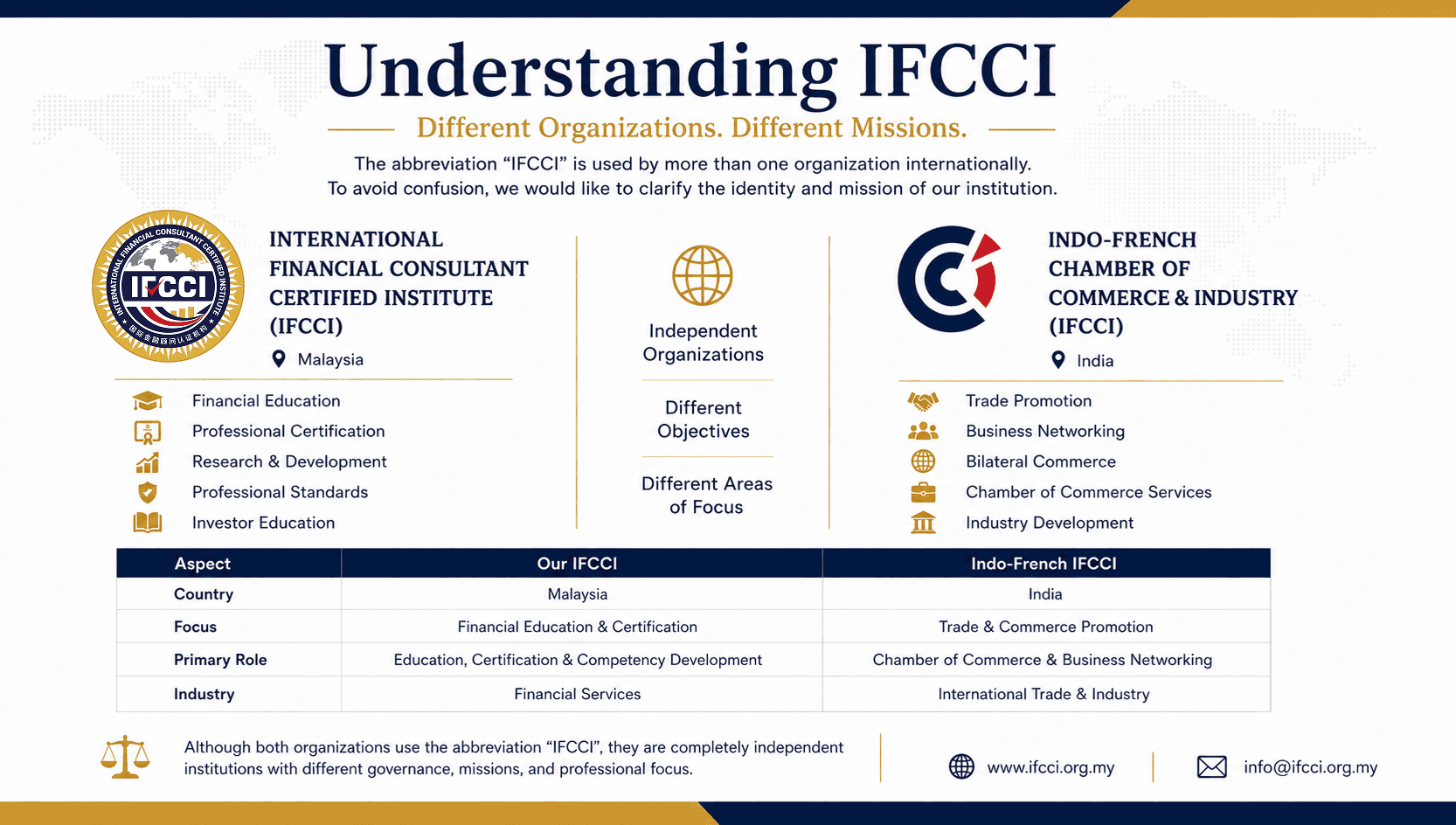
Understanding IFCCI: International Financial Consultant Certified Institute and Other Organizations Using the IFCCI Acronym
27 Jul 2026

Why International Financial Skills Championships Matter in Developing Global Financial Excellence
13 Jul 2026