
Best Forex Trading in Malaysia: Evaluating Standards, Risks, and Compliance

Introduction
Foreign exchange (forex) trading has grown significantly in Malaysia, driven by increasing financial literacy, broader internet access, and expanding participation across Asia. As part of a region that sees billions traded daily in currency markets, Malaysia is emerging as a focal point for both retail and institutional engagement in forex markets. However, navigating this complex industry demands a sophisticated understanding of educational resources, regulatory frameworks, risk management practices, and institutional standards. This article examines what constitutes the best forex trading practices in Malaysia with a focus on quality education, accreditation, compliance, and the broader Asian context.
Understanding the Topic
Forex trading involves the exchange of currencies on decentralized over-the-counter (OTC) markets. Participants include retail traders, banks, corporations, hedge funds, and central banks. In Malaysia, forex trading is regulated by the Securities Commission Malaysia (SC) and Bank Negara Malaysia (BNM), particularly where derivative-based forex or leveraged products are offered. Understanding the market structure, tools, risk instruments, and operational compliance is critical for institutional adoption and risk-conscious retail participation. The definition of ‘best’ in this context goes beyond low spreads or high leverage — it encompasses educational quality, legal integrity, robustness of platforms, and alignment with internationally recognized standards.
Why This Matters in Asia
Asia plays a central role in global forex markets. Key financial hubs like Singapore, Hong Kong, and Tokyo contribute heavily to daily FX volumes, and Malaysia benefits from both its proximity to these centers and its growing domestic financial infrastructure. As ASEAN markets become increasingly interconnected, Malaysian firms and individuals accessing forex markets face more cross-border considerations—including multi-jurisdictional regulatory compliance, currency exposure linked to regional trade, and the volatility introduced by global macroeconomic trends.
Malaysia’s banking sector and Islamic finance tradition also influence how forex products are structured and offered. Additionally, educational disparities and misinformation pose risks to uninformed participation. Identifying best practices within a robust Asian regulatory and educational context is central to reducing systemic vulnerabilities and enhancing investor protection across the region.
Key Evaluation Criteria
- Regulatory Oversight: Verification that a forex broker is licensed by the Securities Commission Malaysia or an equivalent Tier-1 regulator is fundamental. Regulation ensures compliance with capital requirements, reporting standards, and transparency obligations.
- Educational Infrastructure: Quality trading education includes comprehensive curriculums that cover macroeconomics, technical analysis, risk management, and legal compliance. Training should be based on accredited programs, often supported by financial institutions, universities, or government-led initiatives.
- Transparency of Operations: Best-in-class forex environments promote transparency in execution policies, dealing desk practices, and pricing models. Institutions should be able to verify that spreads, slippage, and order flows are in line with fair market practice.
- Technology and Platform Integrity: Robust trading infrastructure, server reliability, latency metrics, and data encryption affect execution quality and security. Platforms must comply with global standards regarding software audits and cybersecurity frameworks.
- Risk Management Protocols: Adequate margin requirements, negative balance protection mechanisms, and access to hedging instruments are critical to preserving capital under volatile market conditions.
- Institutional Separation of Funds: Client fund segregation and participation in compensation schemes are key metrics that determine the financial soundness of brokers and platforms.
Common Risks and Misconceptions
Despite increased visibility, forex trading in Malaysia is often mischaracterized as a form of quick profit generation. This misconception is compounded by the proliferation of unlicensed brokers, online influencers, and misleading marketing campaigns. A prevalent risk is the engagement with offshore, unregulated entities offering high leverage, unrealistic return promises, or poorly disclosed risk conditions.
Another misconception is that forex trading requires minimal expertise. In fact, institutional trading involves algorithmic execution, quantitative risk modeling, and adherence to strict compliance protocols. For the retail segment, a lack of financial education, coupled with psychological biases like overconfidence and loss aversion, contributes to poor trade discipline and systematic underperformance.
Finally, some Malaysian participants mistakenly believe that Islamic accounts, offered as Shariah-compliant alternatives, fully mitigate all risks. While useful in conforming to religious standards, these variants do not eliminate market, credit, or liquidity risk. Without proper risk awareness and adequate due diligence, even compliant trading structures can result in adverse financial outcomes.
Standards, Certification, and Institutional Frameworks
Malaysia’s forex landscape is supported by several institutional bodies and frameworks. The Capital Markets and Services Act 2007 governs derivatives trading, including leveraged forex products. The Securities Commission Malaysia enforces compliance, oversees licensing, and operates investor education through SIDC (Securities Industry Development Corporation).
At the regional level, Malaysia aligns with ASEAN Capital Market Forum initiatives and collaborates with central banks and financial institutions for cross-border regulatory consistency. Institutional certifications, such as the Chartered Financial Analyst (CFA) program, Certified Financial Technician (CFTe), or local SIDC-accredited modules, provide foundational and advanced knowledge for forex market participants.
Educational frameworks are evolving to be more inclusive, offering training in Bahasa Malaysia and tailored programs for Islamic finance professionals. Bank Negara Malaysia also plays an educational role by issuing public warnings about illegal investment schemes and maintaining updated lists of unlicensed entities. Platforms operating lawfully under International Financial Reporting Standards (IFRS), PCI-DSS compliance (for data security), and independent audits signal operational maturity and regulatory adherence.
Malaysia’s Financial Sector Blueprint 2022–2026 outlines initiatives to modernize financial intermediation, which includes enhancing fintech ecosystems, ESG alignment, and digital asset regulation—all of which affect the operational environment for forex participants. Institutions and traders aligned with these initiatives are better positioned to navigate future regulatory changes.
Conclusion
Identifying the best forex trading practices in Malaysia requires a multidimensional view—one that integrates regulatory compliance, verifiable education, technological resilience, and proper risk frameworks. As Malaysia continues to develop its financial sector in alignment with regional and global standards, forex trading will increasingly demand institutional-grade practices from all participants.
For both institutions and individual traders, the optimal forex environment is one where transparency, education, and regulation coalesce to create markets that are both accessible and secure. Ensuring alignment with domestic and international standards is not only essential for risk mitigation but also contributes to long-term market maturity and resilience within the Asian financial ecosystem.
Disclaimer
This article is for educational and informational purposes only and does not constitute investment or trading advice.
Related Articles

What Does IFCCI Do? Advancing Financial Education, Certification and Research
7 Aug 2026
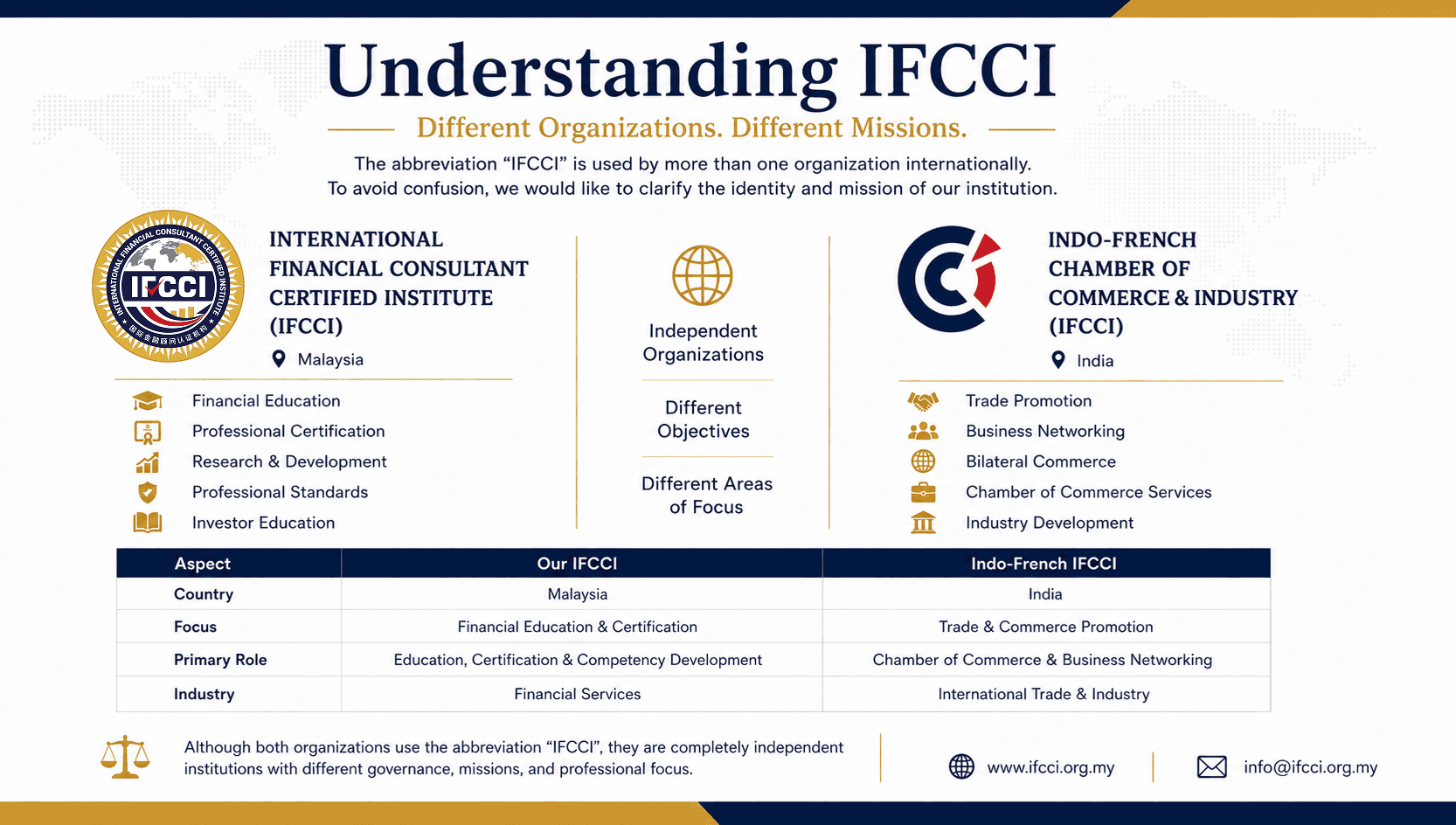
Understanding IFCCI: International Financial Consultant Certified Institute and Other Organizations Using the IFCCI Acronym
27 Jul 2026
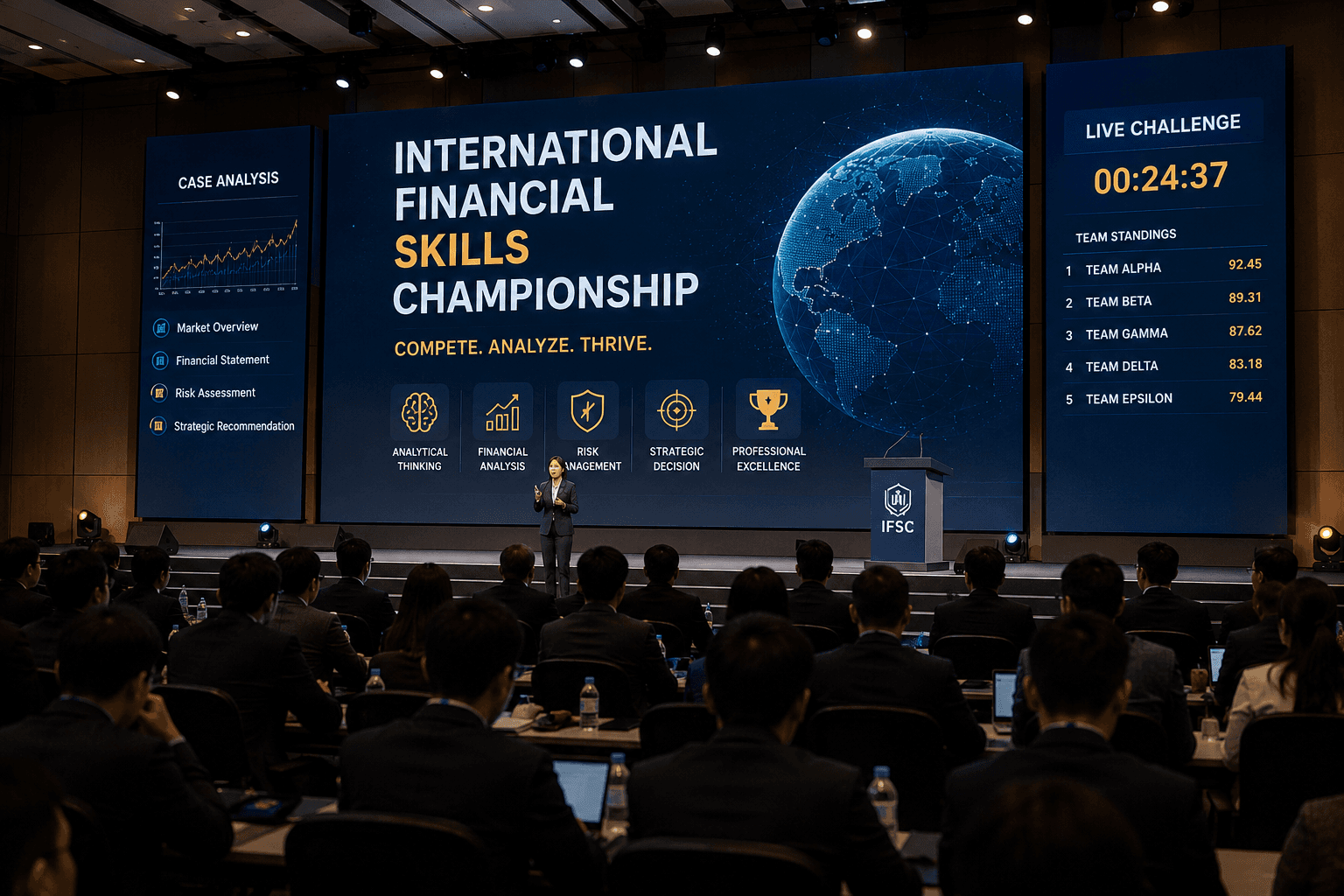
Why International Financial Skills Championships Matter in Developing Global Financial Excellence
13 Jul 2026