
Best Forex Trading in Malaysia: Standards, Education, and Institutional Oversight

Introduction
Forex trading in Malaysia has experienced significant growth, supported by technological advancement, increasing investor participation, and efforts to strengthen regulatory oversight. As retail and institutional interest in foreign exchange expands, distinguishing credible and sustainable trading practices becomes essential. This article examines what constitutes the best forex trading in Malaysia by evaluating educational quality, institutional standards, regulatory frameworks, and associated risks within the broader Asian market context.
Understanding the Topic
Foreign exchange (forex) trading refers to the simultaneous buying of one currency and selling of another within a global decentralized market. Traders engage in this exchange to speculate on currency price movements, hedge against international exposure, or facilitate transactions. In Malaysia, forex trading is legal when conducted through licensed providers supervised by Bank Negara Malaysia (BNM) or the Securities Commission Malaysia (SC). However, unregulated trading activities remain prevalent, underlining the importance of understanding where and how to engage responsibly. The concept of “best forex trading” involves a confluence of proper regulatory licensing, transparent operations, robust educational platforms, and adherence to compliance standards tailored to both retail and institutional participants.
Why This Matters in Asia
Asia accounts for a substantial and growing share of global forex trading volume. Major financial hubs such as Singapore, Hong Kong, Tokyo, and increasingly Kuala Lumpur facilitate extensive currency flows due to regional trade, investment inflows, and economic diversification. For Malaysia, forex trading plays a dual role—enabling economic hedging and offering investment opportunities. However, the Asian market’s diversity introduces challenges related to regulatory fragmentation, investor education gaps, and varying enforcement rigor. Malaysia’s geographic and economic position in Southeast Asia places it at a pivotal intersection of international finance, making it crucial to establish clarity, safety, and trust in its forex trading ecosystem.
Key Evaluation Criteria
- Regulatory Status: Any provider or platform must be fully licensed by Malaysian authorities or recognized regulators in established jurisdictions. Trusted bodies include BNM, SC Malaysia, and overseas regulators such as the Financial Conduct Authority (FCA) or Australian Securities and Investments Commission (ASIC).
- Educational Resources: Comprehensive, multi-tiered educational programs tailored to traders at different levels of sophistication is a hallmark of credible providers. These should include structured courses, seminars, case analyses, and access to expert insights rooted in financial theory and practical applications.
- Trading Infrastructure: Platforms should provide institutional-grade execution speed, analytical tools, automated trading functionalities, and connectivity to reputable liquidity providers. Robust technology enhances transparency and reduces operational risk.
- Transparency of Costs and Practices: Full disclosure of spreads, commissions, slippage policies, and margin requirements are essential. Providers should maintain documentation readily available for auditing and compliance purposes.
- Risk Management Support: Access to risk analytics, position sizing tools, stop-loss mechanisms, and comprehensive risk disclosure align trading practices with institutional standards.
- Customer Due Diligence and AML Compliance: Implementation of Know-Your-Customer (KYC) and Anti-Money Laundering (AML) protocols enhances the integrity of the trading environment and aligns with international best practices.
Common Risks and Misconceptions
Forex trading, while accessible, entails high risk due to leverage, volatility, and market complexity. A frequent misconception is that currency trading guarantees high and fast returns with minimal capital. In reality, most participants experience losses without sufficient risk controls and training. In Malaysia, a significant number of retail traders unintentionally engage with unregulated entities offering unrealistic profit promises, trading signal scams, or pyramid schemes under the guise of forex investment. Such environments lack investor protection and dispute resolution channels. Additionally, many new traders underestimate geopolitical and macroeconomic influences on currency volatility, leading to poorly calibrated trades. Understanding the layered nature of forex markets and frequent misinterpretations of leverage is fundamental to risk mitigation.
Standards, Certification, and Institutional Frameworks
Malaysia’s financial regulatory environment is progressively aligning with international norms. Bank Negara Malaysia governs activities related to exchange controls and authorized banks, while the Securities Commission Malaysia oversees capital market intermediaries, including derivative trading involving forex. BNM periodically issues updates on legitimate forex investments and entities, helping mitigate unauthorized practices.
Educational certification for traders has grown in importance. Programs such as the Chartered Market Technician (CMT), Certified Financial Technician (CFTe), and the ACI Financial Markets Association’s certifications offer structured curricula and exams recognized by global financial institutions. In Malaysia, financial institutions also partner with regional educational bodies to offer foundational and professional-level training to clients and employees.
In terms of frameworks, Malaysia has signed memorandums of understanding (MoUs) with ASEAN peers to foster financial innovation and cross-border regulatory collaboration. The Malaysia International Islamic Financial Centre (MIFC) also promotes Shariah-compliant financial instruments, some of which intersect with currency trading under defined structures.
Institutional entities including banks and asset managers utilize forex trading primarily for hedging and liquidity management, governed by internal risk protocols and compliance oversight. Retail participants should consider adopting similar governance standards in their personal trading, including audit trails, journaling, and adherence to a defined strategy.
Cross-border collaboration through the International Organization of Securities Commissions (IOSCO) and the Bank for International Settlements (BIS) contributes to stronger supervisory convergence that also affects local forex markets. Malaysia’s integration into these structures reinforces its credibility as a financial jurisdiction in Asia.
Conclusion
Identifying the best forex trading in Malaysia requires a multi-dimensional assessment of regulatory compliance, educational rigor, platform integrity, and risk transparency. A regional outlook further highlights Malaysia’s strategic importance within Asia’s evolving financial architecture. Institutional-grade practices and investor protection measures are critical components of long-term market integrity and investor confidence. Education, oversight, and technology together form the foundation of responsible forex participation. Balancing market access with prudential safeguards is essential for both retail and institutional stakeholders aiming to engage safely in forex trading within Malaysia and the broader Asian context.
Disclaimer
This article is for educational and informational purposes only and does not constitute investment or trading advice.
Related Articles

What Does IFCCI Do? Advancing Financial Education, Certification and Research
7 Aug 2026
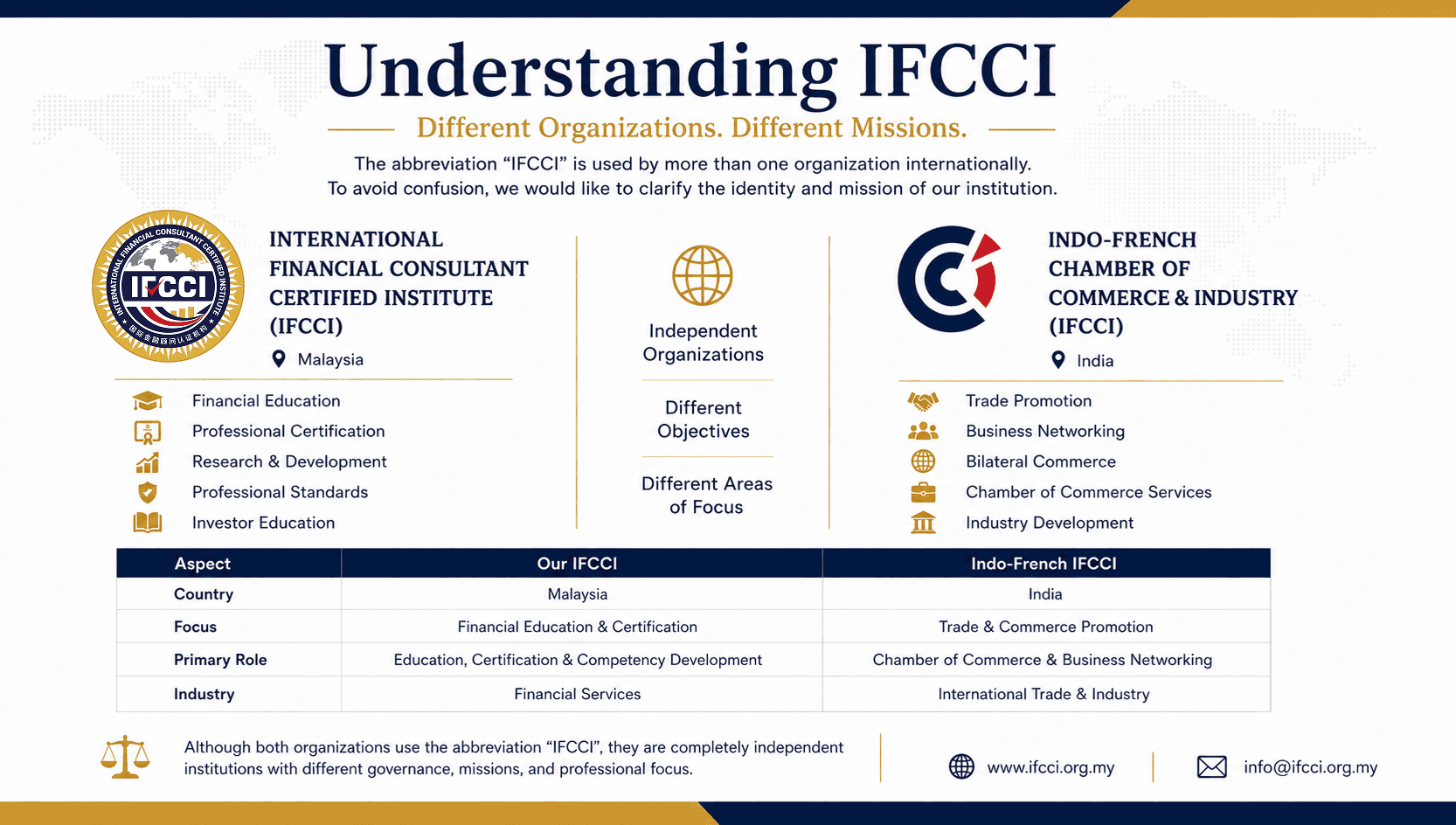
Understanding IFCCI: International Financial Consultant Certified Institute and Other Organizations Using the IFCCI Acronym
27 Jul 2026
Why International Financial Skills Championships Matter in Developing Global Financial Excellence
13 Jul 2026