Best Forex Trading in Malaysia: Education, Regulation, and Institutional Standards

Introduction
The forex market is one of the largest and most liquid financial markets in the world. In Malaysia, growing retail and institutional interest in foreign exchange trading has brought attention to the quality, regulation, and educational infrastructure that supports forex trading. As part of a regionally interconnected financial hub in Southeast Asia, Malaysia’s regulatory posture, trading infrastructure, and institutional frameworks play a pivotal role in defining what constitutes the best forex trading practices. This article provides a comprehensive examination of the core components, standards, and risks associated with forex trading in Malaysia, catering to institutional stakeholders, educators, and compliance professionals.
Understanding the Topic
Forex trading, or foreign exchange trading, involves the exchange of currencies in the global financial market. Traders speculate on currency price movements through platforms provided by brokers or institutional dealers. In Malaysia, forex trading is primarily conducted through over-the-counter (OTC) markets, with retail access facilitated via online trading platforms regulated by authorities such as the Securities Commission Malaysia (SC) and Bank Negara Malaysia (BNM).
Malaysians are permitted to trade forex through licensed institutions, and foreign brokers wishing to offer services must comply with local financial regulations. The Malaysian forex ecosystem includes individual traders, proprietary trading firms, educational academies, and international brokerage services. A strong regulatory environment, quality education standards, and institutional governance mechanisms define the boundaries for legal and high-standard forex trading activity.
Why This Matters in Asia
Asia accounts for a significant portion of global forex trading volume, with financial centers such as Singapore, Hong Kong, and Tokyo driving institutional liquidity. Malaysia’s strategic location within ASEAN provides proximity to these global hubs and positions it as a growing participant in the Asian forex market. The harmonization of regulatory oversight with regional counterparts contributes to cross-border capital flow governance, investor protection, and educational equivalence.
Within Asia, forex trading practices vary widely, especially in terms of licensing requirements, technology infrastructure, and risk control standards. Malaysia’s coordinated oversight through BNM and SC provides a model of moderated accessibility balanced with compliance and supervision. This is increasingly important as regional integration under initiatives like the ASEAN Capital Markets Forum (ACMF) continues to evolve the cross-border trading environment.
Key Evaluation Criteria
- Regulatory Compliance: Traders and institutions should ensure that brokerage providers are licensed by the Securities Commission Malaysia or equivalent regulatory bodies. Regulation under BNM is particularly relevant for institutions involved in currency conversion and derivatives trading.
- Quality of Educational Programs: Institutional training providers must offer structured curricula covering macroeconomics, trading strategies, technical and fundamental analysis, and risk management frameworks. Accreditation by regional or international standards agencies enhances credibility.
- Platform Integrity: Trading platforms should comply with cybersecurity protocols, offer real-time market data, and meet stability benchmarks. Institutions should evaluate whether platforms integrate analytical tools, automated execution capabilities, and follow acceptable latency standards.
- Risk Management Infrastructure: Institutions and traders must implement robust risk control mechanisms including leverage limits, capital adequacy assessment, and exposure diversification strategies in line with Basel III principles and BNM guidelines.
- Transactional Transparency: Brokerages and intermediaries should maintain full transparency in pricing structures, execution models, and conflict disclosures. Straight-through processing (STP) and no dealing desk (NDD) models are preferred in institutional contexts.
- Institutional Support and Governance: The presence of compliance officers, internal audit systems, and adherence to anti-money laundering (AML) and counter-terrorism financing (CTF) laws ensures institutional integrity.
Common Risks and Misconceptions
Forex trading in Malaysia is often subject to misinterpretation, especially among retail participants. One recurrent misconception is that all forms of online forex trading are legally permitted. In reality, retail traders are restricted from engaging with unlicensed offshore brokers under Malaysian law. Using unauthorized platforms exposes users to regulatory penalties and loss of capital without redress.
Another common risk is excessive leverage. While some platforms offer leverage ratios exceeding 1:500, this amplifies exposure to rapid market fluctuations. Regulatory restrictions such as those proposed under SC Malaysia’s guidelines aim to cap leverage and reduce systemic risk.
Furthermore, trading schemes involving guaranteed profits or multi-level marketing (MLM) structures surrounding forex investments are prevalent in unregulated segments. These should be scrutinized rigorously as many fall under financial scams prohibited under the Interest Schemes Act 2016 and guided by the Guidelines on Recognized Markets.
Standards, Certification, and Institutional Frameworks
Malaysia’s regulatory architecture is bifurcated between Bank Negara Malaysia (BNM) and the Securities Commission Malaysia (SC). BNM oversees financial stability, currency policy, and licensed banks involved in foreign exchange activities, while SC supervises capital markets, digital investment services, and derivatives trading.
Forex trading within Malaysia must also observe the Financial Services Act 2013, which mandates licensing for institutions offering financial advisory, dealing in derivatives, or facilitating forex transactions. Offshore CFD and forex brokers must not solicit Malaysian clients directly without regulatory clearance.
From an educational perspective, certified forex and financial market programs are increasingly prevalent. Recognized certifications such as the Chartered Financial Analyst (CFA), Certified Financial Technician (CFTe), and Financial Risk Manager (FRM) provide global validation for forex-focused professionals. Locally, institutions such as the Financial Markets Association of Malaysia (Persatuan Pasaran Kewangan Malaysia, or ACI Malaysia) offer training based on international forex dealing codes and ethics.
In alignment with global frameworks, the Global FX Code of Conduct (published by the Bank for International Settlements) and IOSCO principles serve as international benchmarks. Institutions providing trading services are expected to model due diligence, client suitability assessments, disclosure of conflicts, and adherence to fair trading practices.
Finally, the role of digital transformation cannot be ignored. As algorithmic and high-frequency trading solutions evolve in Malaysia, regulatory sandboxes under frameworks like the SC’s Digital Investment Management guidelines provide controlled environments for testing fintech solutions, including AI-driven forex strategies.
Conclusion
The best forex trading in Malaysia is predicated upon adherence to regulatory standards, institutional governance, and the integration of high-quality educational infrastructure. While forex markets offer significant liquidity and opportunity, they also require strict discipline, transparent operations, and risk-informed strategies. For institutions, educators, and regulators operating within Asia, the Malaysian context provides a structured and scalable foundation to promote responsible forex participation. Through the continued harmonization of standards, accreditation frameworks, and stakeholder accountability, Malaysia is poised to play a constructive role in Asia’s evolving forex landscape.
Disclaimer
This article is for educational and informational purposes only and does not constitute investment or trading advice.
Related Articles

What Does IFCCI Do? Advancing Financial Education, Certification and Research
7 Aug 2026
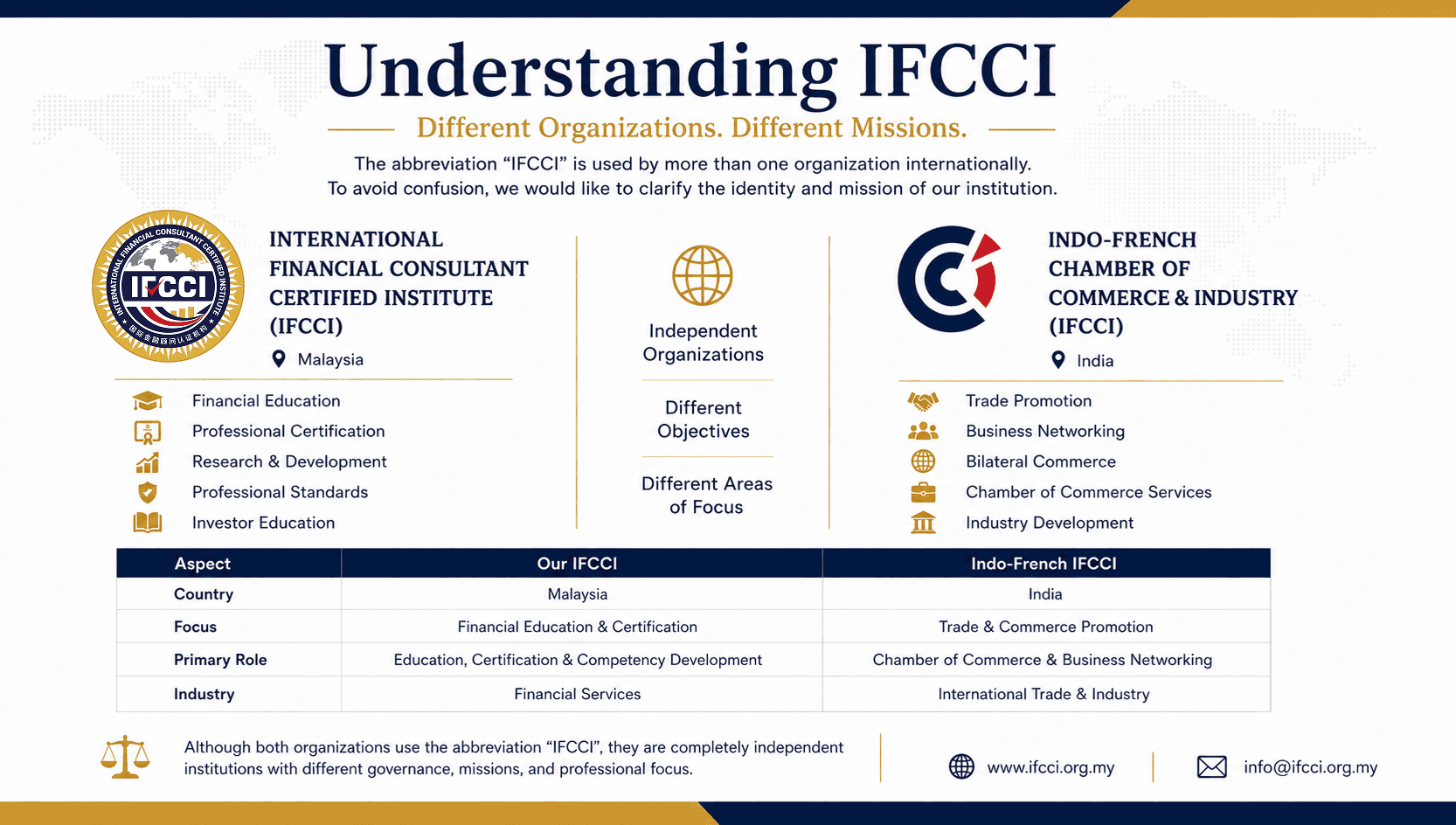
Understanding IFCCI: International Financial Consultant Certified Institute and Other Organizations Using the IFCCI Acronym
27 Jul 2026
Why International Financial Skills Championships Matter in Developing Global Financial Excellence
13 Jul 2026