
America’s $100T RWA Tokenization on Ethereum Rails
America’s RWA Tokenization Drive Could See $100T on Ethereum Rails
September 2025 – Global Markets Desk – The U.S. financial system is on the brink of a historic transformation as policymakers, banks, and blockchain developers converge on one of the most ambitious ideas in capital markets: real-world asset (RWA) tokenization. Analysts estimate that as much as $100 trillion in assets could eventually be tokenized and settled on Ethereum rails, reshaping liquidity, transparency, and accessibility across global finance.
What Is RWA Tokenization?
Real-world asset tokenization refers to the digital representation of tangible and intangible assets—such as real estate, bonds, equities, commodities, and even intellectual property—on a blockchain. Instead of trading these assets through traditional clearing systems, they can be fractionalized into tokens that are instantly transferable, transparent, and programmable.
Ethereum, with its mature smart contract infrastructure, has become the default blockchain of choice for tokenization pilots in the U.S., from private equity funds to U.S. Treasuries.
Why $100 Trillion?
The $100T figure comes from combining several major markets that could migrate onto blockchain rails:
- Global Bond Markets: $133T outstanding debt, with U.S. Treasuries leading adoption.
- Equities: $115T global market capitalization.
- Real Estate: $326T in global assets, with tokenized REITs gaining momentum.
- Private Markets & Alternatives: An estimated $20T globally.
Even a fractional migration—5–10%—would result in trillions of dollars circulating on Ethereum or Ethereum-compatible layers.
U.S. Policy Tailwinds
The U.S. Treasury, SEC, and Federal Reserve are closely studying tokenization. Recent regulatory discussions point to:
- Clearer Compliance Standards: For securities-backed tokens.
- Pilot Programs: Banks and asset managers testing tokenized U.S. Treasuries.
- Institutional Interest: BlackRock, JPMorgan, and Franklin Templeton have already experimented with Ethereum-based tokenized funds.
“Tokenization could do for capital markets what the internet did for media—reduce friction, expand access, and unlock efficiency,” said one senior U.S. regulator.
Why Ethereum?
Ethereum dominates because of:
- Smart Contract Flexibility: Token standards like ERC-20 and ERC-1400.
- Liquidity Pools: DeFi protocols that can integrate RWAs instantly.
- Security Track Record: Despite high fees, Ethereum remains the most battle-tested.
Other blockchains like Solana and Avalanche are competing, but most large institutions are building directly on Ethereum or using Ethereum L2s.
Challenges That Remain
- Regulatory Uncertainty: Especially around securities law and cross-border settlement.
- Custody & Compliance: Ensuring tokenized assets meet KYC/AML rules.
- Technology Risks: Smart contract exploits or scalability bottlenecks.
- Market Education: Convincing conservative institutions to embrace blockchain rails.
The Road Ahead
While timelines remain uncertain, industry insiders believe 2025–2030 will be the decade of tokenized finance. If America leads, global adoption could follow—cementing Ethereum as the backbone of a new digital financial order.
For investors, consultants, and financial planners, RWA tokenization represents both an opportunity and a challenge. Those who master the technology, compliance, and advisory aspects will be best positioned to capture value from this $100T revolution.
Related Articles

What Does IFCCI Do? Advancing Financial Education, Certification and Research
7 Aug 2026
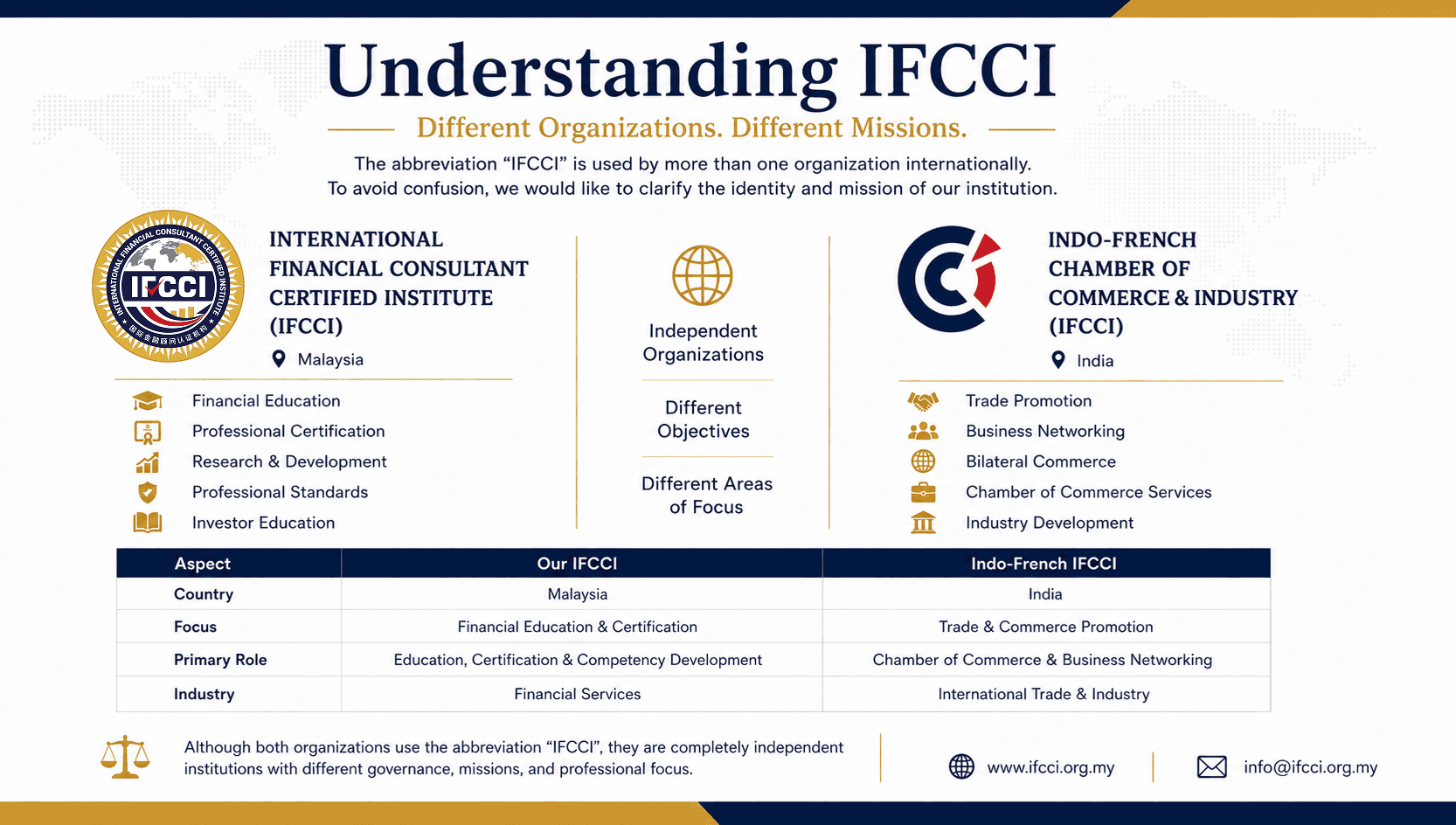
Understanding IFCCI: International Financial Consultant Certified Institute and Other Organizations Using the IFCCI Acronym
27 Jul 2026

Why International Financial Skills Championships Matter in Developing Global Financial Excellence
13 Jul 2026