
15 Million Tokens Vanish From Exchanges in 30 Days
Major Outflows Point to Rising Accumulation
In the past 30 days, more than 15 million Chainlink (LINK) tokens — valued at approximately US$225 million — have been withdrawn from centralised exchanges, according to on-chain data from Santiment and Glassnode. The trend suggests a potential supply shock scenario as investor balances on trading platforms continue to decline sharply.
The exodus of LINK from exchanges is widely interpreted as a sign of accumulation by long-term holders and institutional investors. Historically, sustained outflows of this magnitude have preceded bullish price momentum, as available liquidity diminishes and circulating supply tightens.
Institutional Interest in Oracle Infrastructure Grows
The growing attention toward Chainlink coincides with increasing demand for decentralised oracle networks — a crucial component in the infrastructure layer of decentralised finance (DeFi) and tokenised asset ecosystems. Chainlink’s oracles enable smart contracts to securely interact with real-world data, providing pricing feeds, proof-of-reserve systems, and cross-chain interoperability.
Institutional sentiment appears to be turning favourable, particularly following the expansion of Chainlink’s Cross-Chain Interoperability Protocol (CCIP) partnerships with global enterprises such as SWIFT, ANZ Bank, and BNP Paribas. These integrations reinforce Chainlink’s position as a bridge between traditional financial systems and decentralised blockchain applications.
“We are witnessing the early stages of institutional-scale infrastructure adoption in DeFi,” noted an analyst from IFCCI’s Digital Asset Research Division.
“Chainlink’s utility extends far beyond token speculation — it underpins the next evolution of programmable finance.”
Exchange Balances at Multi-Year Lows
Data from CryptoQuant shows that total LINK balances held on exchanges have fallen to their lowest level since early 2021, dropping below 17% of circulating supply. The reduction in sell-side liquidity could create upward pressure on price should demand continue to rise.
Meanwhile, Glassnode recorded a consistent transfer of LINK to self-custodial wallets and staking contracts — indicating confidence in the network’s long-term fundamentals. With Chainlink Staking v0.2 now live, users are able to participate in node validation and earn yield directly through protocol incentives.
This staking mechanism has drawn attention from both retail and institutional participants seeking stable on-chain returns amid a subdued broader crypto market.
Analysts Caution on Short-Term Volatility
Despite the optimistic accumulation trend, some analysts urge caution, noting that short-term volatility remains a significant risk. The broader digital asset market continues to be influenced by macroeconomic developments, including shifting U.S. interest rate expectations and fluctuating risk appetite across emerging markets.
Kaiko Research observed that while LINK’s on-chain metrics are strengthening, spot liquidity depth remains thin, and leverage ratios across derivatives markets have increased — suggesting potential vulnerability to short-term corrections.
Nonetheless, analysts highlight that the on-chain accumulation narrative aligns with longer-term network growth indicators.
Fundamentals Strengthened by Enterprise Integration
Chainlink’s recent ecosystem developments have reinforced its technological moat. In October, the project announced multiple integrations across leading blockchain platforms — including Polygon, Arbitrum, Base, and Avalanche — expanding data oracle functionality for developers and decentralised applications.
The SWIFT CCIP pilot, which demonstrated cross-chain communication between global financial institutions, has further strengthened investor conviction that Chainlink may become a key infrastructure layer for future tokenised finance.
“Chainlink’s core value lies in its ability to connect blockchain systems with real-world financial data,” commented Dr. Eleanor Hayes, Senior Research Fellow at IFCCI.
“As tokenisation becomes mainstream, the networks that reliably bridge traditional and decentralised systems will capture significant economic value.”
Market Implications and Outlook
If the current rate of exchange outflows continues, LINK’s liquid supply could face meaningful tightening by year-end. Historical data suggests that sustained supply contraction often precedes periods of heightened volatility and, eventually, price appreciation.
However, experts caution that macroeconomic headwinds — including U.S. monetary policy adjustments and ongoing regulatory scrutiny of DeFi protocols — could temper immediate upside momentum.
In the longer term, Chainlink’s integration into institutional frameworks, growing staking participation, and robust oracle demand position it as one of the most critical assets in the DeFi infrastructure space.
Related Articles

What Does IFCCI Do? Advancing Financial Education, Certification and Research
7 Aug 2026
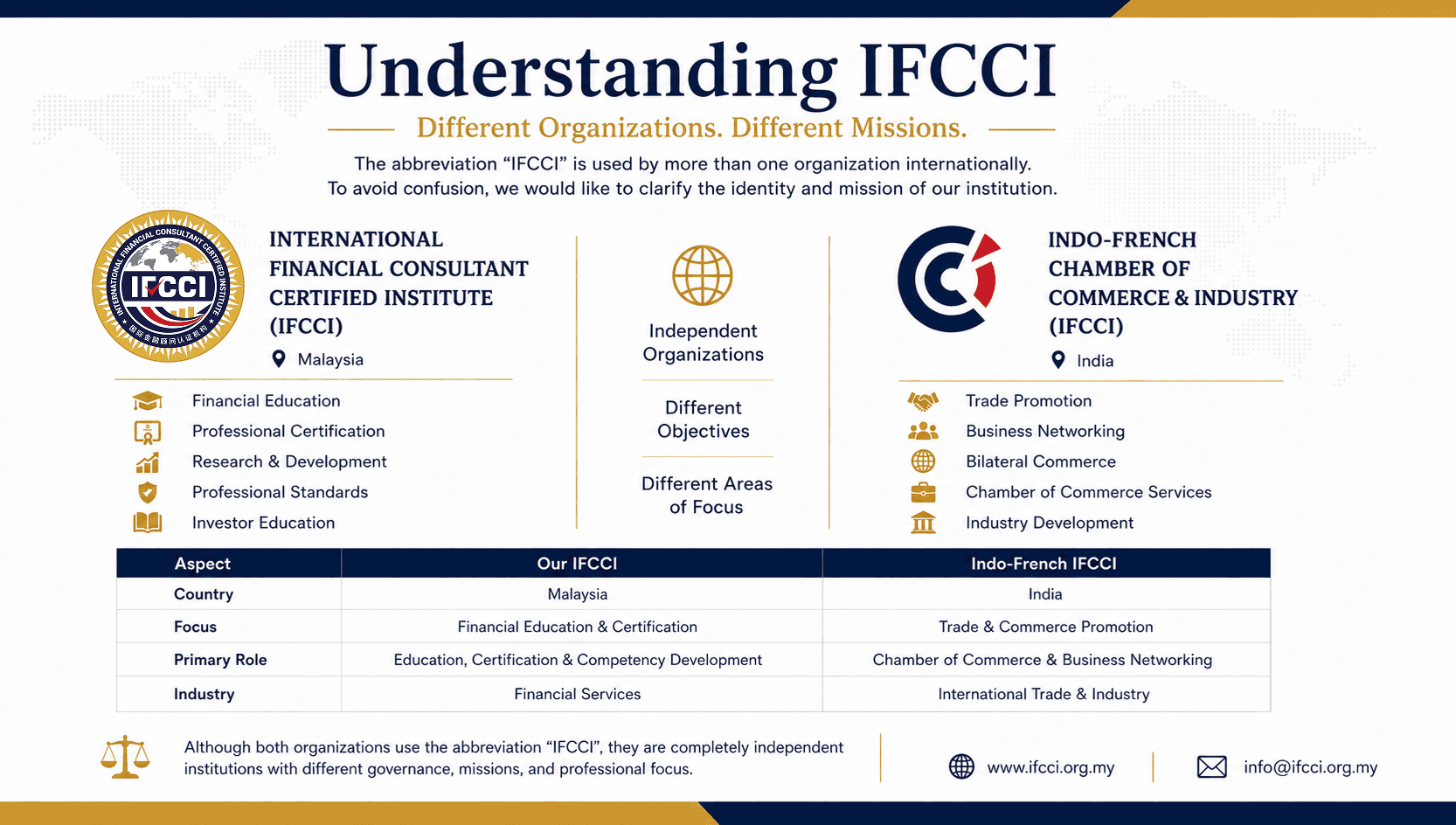
Understanding IFCCI: International Financial Consultant Certified Institute and Other Organizations Using the IFCCI Acronym
27 Jul 2026
Why International Financial Skills Championships Matter in Developing Global Financial Excellence
13 Jul 2026